Whose Story Is It To Tell? The Quasimodo Question and the Future of Inclusive Casting
When the bells of NOTRE DAME ring out this month at the Prince Edward Theatre, the music will stir familiar emotions. Alan Menken’s soaring score, with its echoes of Out There and God Help the Outcasts, has long been celebrated as one of Disney’s most ambitious musical undertakings. Yet, as the long-awaited UK concert staging prepares to introduce Ben Joyce and Oliver Hewing as alternating Quasimodos, another kind of resonance has been set in motion, one that reverberates far beyond the gothic arches of the story.
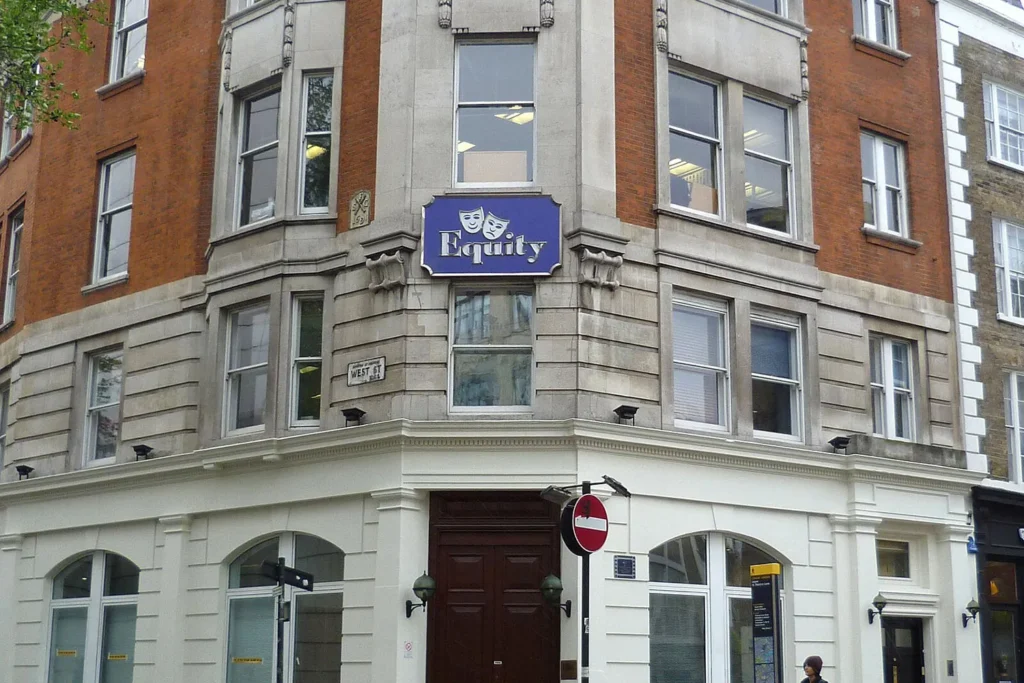
Equity has issued a statement questioning why one of theatre’s most recognisable disabled characters has once again been cast with non-disabled actors. In doing so, it has reopened a conversation that is both profoundly simple and maddeningly complex: who gets to tell the stories of disabled lives on stage?
This is not merely a matter of creative freedom or artistic interpretation. It speaks to structural access, historical exclusion, and the future of representation in British theatre.
The Shadow of Authenticity
Theatre has long wrestled with the balance between storytelling and authenticity. Quasimodo has always occupied a liminal space, simultaneously celebrated for his humanity and defined by his physical difference. Victor Hugo wrote him as a character whose disability was inextricable from his place in society, and the Disney adaptation translated that into a figure at once sympathetic and grotesquely misunderstood.
The argument raised by Equity is stark: when such a role is played by non-disabled performers, disabled actors lose not only a rare opportunity for visibility but also the chance to frame their own narrative truth. As Natalie Amber, chair of Equity’s Deaf and Disabled Members Committee, put it, “representation is not a trade-off”.
Historically, disabled roles have often been appropriated as awards bait for non-disabled actors. The cultural shorthand of “acting disabled” has won countless accolades, reinforcing a cycle where performance of disability is treated as virtuosity, while actual disabled artists remain under-employed and under-seen.
The decision to cast two non-disabled actors here may be defended by creative precedent. In a 2016 Sacramento staging, a Deaf actor embodied Quasimodo’s spoken dialogue while a singer performed the score. The London concert similarly promises integration of British Sign Language interpreters and a company including neurodivergent and Romani performers. Yet the criticism is clear: highlighting one form of inclusion should not mean ignoring another.
A History of Missed Chances
Theatre is often slow to reckon with its blind spots. The Deaf West production of SPRING AWAKENING in 2015 demonstrated how Deaf and hearing actors could share a stage in a way that deepened the text rather than distracted from it. That production was hailed as groundbreaking, yet ten years on, similar experiments remain too rare.
In Britain, disability-led theatre companies such as Graeae have long championed authentic casting, proving that artistic innovation and inclusion are not mutually exclusive. And yet, mainstream musical theatre often defaults to the safest, most conventional choices, particularly when dealing with short-run concerts where the commercial risk is lower.
Why, then, did this production not seize the chance to make history? HUNCHBACK has never before been staged professionally in the UK. The cultural milestone of its arrival could have been paired with a genuine step forward in representation. Instead, as Amber noted, a pivotal opportunity seems to have been missed.
It is important to acknowledge the nuance. Disability is not a monolith. Quasimodo is written as both deaf and physically disabled, and there is debate about whether one lived experience must always stand for another. But this is precisely why an open, accessible casting process matters. Without it, producers risk entrenching the very structural barriers that Equity warns against.
The Ripple Effect
Theatre does not exist in isolation. The way roles are cast shapes the ambitions of future generations. When young disabled performers see Quasimodo embodied without them, it reinforces an industry where they remain outsiders. When casting directors defend choices as “practical” or “interpretive”, it signals that authenticity is negotiable for some identities but not for others.
It is worth asking: would the industry accept a non-Black actor playing Coalhouse Walker in RAGTIME, or a non-Jewish actor portraying Tevye in FIDDLER ON THE ROOF, on the grounds of “artistic interpretation”? The outcry would be instant. Yet disabled characters often occupy a greyer area, where authenticity is still treated as optional.
What complicates matters further is the producers’ simultaneous effort toward inclusion. The concert boasts BSL interpretation, a neurodivergent cast member, and Romani representation, gestures that should not be dismissed. They are important and laudable. But as Amber observed, diversity is not a trade-off. You cannot compensate for the erasure of one group by highlighting another. True inclusivity demands breadth, not substitution.
Towards a New Model
Perhaps the most compelling argument is not about what this production has done wrong, but about what theatre can do better. Disability-led casting does not limit creativity, it expands it. It allows new aesthetics, new performance vocabularies, and new ways of connecting with audiences.
Imagine a Quasimodo whose physical difference is not a performance choice but a lived reality. Imagine the visceral impact of Hugo’s words embodied by someone who has navigated similar prejudice. Imagine how much richer the storytelling could become, how much more layered the performance.
As the concerts play out to packed houses, the conversation will continue. Equity’s statement, and the responses it has sparked, will linger long after the final bell has tolled at the Prince Edward Theatre. It is a reminder that theatre’s greatest power lies not only in what it presents on stage, but in what it chooses to reveal about the world off stage.
The bells of NOTRE DAME have always called audiences to reflect on beauty, monstrosity, and the thin line between them. This summer’s London concert does so again, but in ways its creators may not have intended.
The debate around Quasimodo’s casting is not just about one production. It is about an industry at a crossroads, deciding whether inclusion is a marketing slogan or a structural commitment. It is about recognising that disability, like any identity, deserves not just to be represented but to be represented by those who live it.
In the end, the question remains: whose story is it to tell? For an industry that prides itself on empathy and imagination, the answer should be clear.