From Eras to Ensembles: Could Taylor Swift Be Preparing Her First Musical?
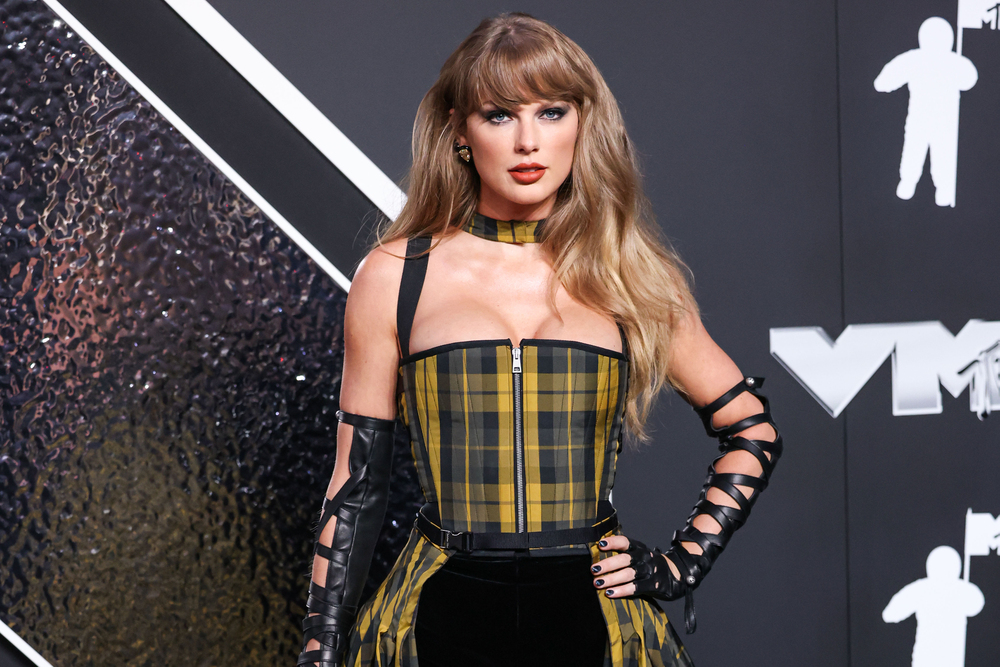
Theatre has always borrowed from pop culture, and pop culture has always circled back to the theatre. Somewhere between the curtain calls of Broadway and the stadium lights of global tours lies a fertile space where the two worlds meet. Few contemporary artists straddle this space as naturally as Taylor Swift, a songwriter who builds narratives like acts in a play, leaving clues in plain sight for those devoted enough to piece them together. Now, thanks to a single throwaway remark and a curious trademark filing, speculation is mounting that Swift’s next stage may literally be the stage itself.
It is not unusual for Swift to tease. She is famous for her breadcrumb trail of hidden references, the so-called Easter eggs embedded in her albums, music videos and speeches. What makes this latest hint different is its specificity. On a recent appearance on the New Heights podcast, she openly acknowledged that when she plants these cryptic signals, they are almost always linked to “music, or a musical”. That one word has set both the theatre and pop communities buzzing. Add to this the fact that she trademarked the phrase “Female Rage: the Musical” during her record-breaking Eras tour, and suddenly a pop star’s playful self-mythologising looks a lot like preparation.
A Theatre Kid at Heart
It is easy to forget that before she was a global superstar, Swift was a theatre child. She cut her teeth performing in community productions, and the discipline of character and narrative never left her. Even as she climbed the ladder of country and then pop stardom, her work showed a dramaturg’s instinct. Each album was not merely a collection of songs but a fully staged concept with motifs, costumes and recurring characters. The Eras Tour only underlined this, with its multi-act structure and spectacular set design explicitly inspired by musical theatre.
Her brief but memorable turn as Bombalurina in the film version of CATS, while not universally acclaimed, gave her a foothold in the world of stage-to-screen adaptation. She also co-wrote BEAUTIFUL GHOSTS with Andrew Lloyd Webber, showing both reverence for and confidence within the musical theatre canon. And years earlier she auditioned for the film adaptation of LES MISÉRABLES, a detail that positions her less as an interloper and more as someone who has been circling the wings for quite some time.
Swift is not the only pop artist to flirt with theatre. David Bowie, Cyndi Lauper, and Elton John all ventured into composing for the stage. What sets Swift apart is her ability to cultivate a parasocial conversation with her audience, teasing them with fragments that beg to be assembled. In this sense she is already writing a kind of musical, only spread across social media posts, live concerts and lyric booklets. Formalising that into a book musical or a jukebox-style narrative feels almost inevitable.
Why Now?
The timing is intriguing. Swift is about to release her new album, The Life of a Showgirl, created in Sweden with long-time collaborator Max Martin, whose fingerprints are all over the hit-filled score of & JULIET. That show has demonstrated how well Martin’s pop structures can be reimagined in a theatrical context. If Swift is working with him again, and with fellow producer Shellback, the sonic palette is already leaning toward theatrical storytelling.
She has also surrounded herself with younger collaborators who grew up in the liminal space between pop and stage. Sabrina Carpenter, herself a former theatre kid, features on the album’s title track. These connections suggest an intentional bridging of communities. A project branded “Female Rage: the Musical” could easily blend Swift’s fiercely autobiographical songwriting with the satirical or cathartic edge of contemporary musical theatre.
The title alone points to an angle rarely explored on commercial stages. Musicals have often celebrated female resilience but have shied away from portraying female anger as a driving force. A Swift-led exploration of that theme would resonate across both fan bases and could potentially push the artform into bolder emotional terrain. The theatre world has been clamouring for new voices that move beyond safe nostalgia, and Swift, armed with her immense cultural capital, could be the artist to give it mainstream viability.
What Form Could It Take?
Speculation abounds about what kind of musical Swift might deliver. A jukebox project, in the vein of & JULIET or MOULIN ROUGE!, seems obvious. Her back catalogue is practically begging for narrative reassembly, and songs like All Too Well or The Archer already feel like showstoppers. Yet Swift may not be satisfied with recycling her greatest hits. Her comments about planning and constructing new material hint at the possibility of an original book musical, perhaps incorporating unreleased songs or tracks written specifically for the stage.
Her team’s recent trademarking efforts point towards branding a fully realised concept, not just a themed tour or one-off performance. The legal groundwork is there, and the artistic groundwork has arguably been laid across two decades of increasingly theatrical pop albums. If this comes to fruition, Swift would join a small but potent group of mainstream musicians who successfully crossed into theatre while still at the height of their recording careers.
The Ripple Effect
Should Swift launch a stage project, the impact would ripple far beyond Broadway or the West End. Her audience, famously multigenerational and devoted, would flood into theatres, many for the first time. The so-called “Swiftie effect” could mirror what HAMILTON did for younger audiences a decade ago, but on a much larger scale. Theatre producers, long anxious about attracting new demographics, would be watching closely.
At the same time, traditionalists may bristle. Musical theatre has often struggled with balancing commercial spectacle and artistic daring. Some may worry that a Swift musical could lean too heavily on pop culture hype. Yet her history suggests she takes storytelling seriously. If she applies her meticulous craft to the medium, the result could be a game-changer that both honours and expands the form.
Curtain Call?
Whether her offhand podcast remark was another clever tease or a genuine breadcrumb towards an imminent announcement, Swift has once again positioned herself at the centre of cultural conversation. The theatre industry, perpetually searching for ways to broaden its reach without diluting its art, may find in her a partner who can do both.
For now, all that is certain is the release of The Life of a Showgirl this October. But if there is one thing theatre has taught us, it is to read between the lines. Swift’s life and career have always played out like a grand narrative, each era setting the stage for the next. The question now is whether her next act will finally bring her home to the theatre, not just as a fan or performer, but as the architect of a story sung live before an expectant audience.
In the end, the prospect of Taylor Swift, pop icon and lifelong theatre devotee, writing or starring in a musical is not merely gossip. It is a reminder that theatre thrives on reinvention, and that sometimes the most surprising collaborators are the ones who understand storytelling best. Swift has already mastered the art of suspense. The theatre world is waiting to see if she can master the art of the overture.