Beyond the Mask: Why LW Entertainment Marks More Than a Rebrand
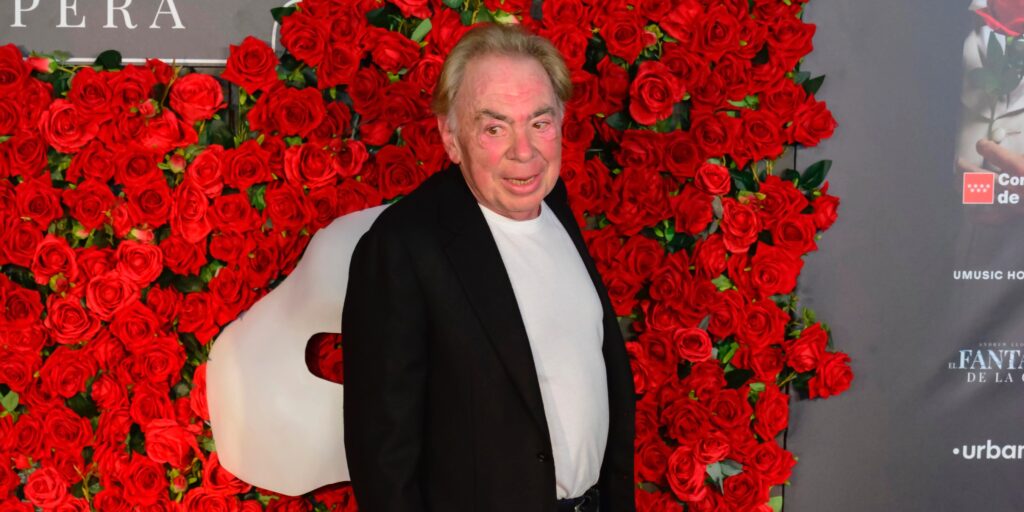
In the crowded landscape of global theatre, corporate name changes usually pass with little more than a press release and a polite round of applause. Yet the recent transformation of Andrew Lloyd Webber’s long-standing Really Useful Groupinto LW Entertainment feels like a moment that deserves more than a footnote. It is not just a shift in branding but a signal of intent, one that points towards a broader cultural repositioning of Lloyd Webber’s empire for a new theatrical era.
At a time when audiences are questioning what theatre can look like in a digital-first age, LW Entertainment’s formation reflects both the resilience of Lloyd Webber’s catalogue and its capacity for reinvention. The musicals we think we know inside out, from THE PHANTOM OF THE OPERA to CATS and EVITA, are being reimagined in unexpected ways. If theatre is often accused of being nostalgic or backward-looking, this rebrand pushes the Lloyd Webber legacy forward with surprising momentum.
A Legacy Reframed
The Really Useful Group was born in the 1970s as the machinery behind a young composer who seemed destined to dominate the West End and Broadway. Over decades it became both custodian and gatekeeper of one of the most valuable catalogues in musical theatre history. The new identity, LW Entertainment, suggests something less dusty and more expansive, positioned not just as a rights management company but as a creator of multi-format cultural experiences.
CEO James McKnight has spoken of aligning business strategy with creativity, and while that might sound like corporate jargon, there are already signs that the approach has substance. The immersive project MASQUERADE, currently previewing Off-Broadway, takes the bones of THE PHANTOM OF THE OPERA and refracts them through the lens of experimental theatre akin to SLEEP NO MORE. That is not just recycling familiar work, it is interrogating its DNA and repackaging it for audiences who crave interactivity as much as spectacle.
What is striking is how deliberate this reframing is. The revival of SUNSET BOULEVARD has stormed both the West End and Broadway, fuelled by a new generation of performers and a directorial style that embraces darkness rather than glossy nostalgia. Meanwhile, CATS: THE JELLICLE BALL, a radical reimagining of Lloyd Webber’s feline fantasia—is set to arrive on Broadway in 2026, reinterpreting the material through a contemporary cultural lens. These are not museum-piece productions. They are fresh attempts to test how malleable Lloyd Webber’s canon really is.
The Family Business Grows Up
Another dimension often overlooked in theatre coverage is the significance of the Lloyd Webber family’s direct involvement. While many creative dynasties fade after their founder’s prime, LW Entertainment is doubling down on being a family business. Madeleine Lloyd Webber, group president, has positioned the company as one intent on challenging and disrupting as much as entertaining. Lloyd Webber’s sons Alastair and Billy are steering the music exploitation side, which has already delivered chart-topping cast albums. His daughters Imogen and Isabella contribute on the board too, ensuring that succession is not a question of inheritance but of active participation.
This family structure gives LW Entertainment a texture absent from the more corporate behemoths of global theatre. It suggests longevity and continuity, but also a certain personal stake in how the work evolves. For Lloyd Webber himself, who has often spoken of preferring composition to management, the arrangement frees him to focus on writing, with THE ILLUSIONIST announced as his next musical. If the past decade saw him absorbed in consolidating his empire, the future may allow him to re-emerge as a purely creative force.
Innovation or Repetition?
For all the optimism surrounding LW Entertainment, there are also questions. Does repackaging THE PHANTOM OF THE OPERA as an immersive experience represent bold artistic innovation, or is it simply another way of monetising a brand that has already conquered every major theatre market? When the JELLICLE BALL arrives, will it be celebrated as visionary or derided as gimmickry?
The answer may lie in how these projects are received outside London and New York. One of the overlooked aspects of Lloyd Webber’s influence is the way his shows seep into regional theatre and amateur performance circuits, creating a cultural footprint far larger than the professional productions alone. If LW Entertainment’s new ventures generate models that can trickle down—whether through licensing, music, or immersive formats—it could alter how communities across the globe interact with theatre. The ripple effect might be less about Broadway headlines and more about reshaping grassroots access.
Moreover, the company’s explicit commitment to reinvesting theatre profits into maintaining historic venues, through LW Theatres, ensures that bricks and mortar are not forgotten in the rush towards global branding. At a time when many theatre owners are squeezed by real estate pressures, this balance between commercial ambition and preservation is worth watching.
The Mask Slips
The renaming of the Really Useful Group to LW Entertainment is not, on its own, revolutionary. What makes it noteworthy is the context. Theatre is at a crossroads, balancing nostalgia with reinvention, live performance with digital experimentation, and financial survival with artistic daring. Lloyd Webber’s catalogue, once accused of being overly commercial or bombastic, is now being retooled as a proving ground for what twenty-first-century musical theatre can be.
It would be easy to dismiss the rebrand as corporate spin. Yet to do so overlooks the quiet audacity of what is unfolding. From immersive PHANTOM experiences to radical reinterpretations of CATS, LW Entertainment is gambling that a body of work forged in the late twentieth century can still shape the cultural conversations of the twenty-first. That is more than a branding exercise. It is a wager that musical theatre itself still has the power to surprise us, provided we are willing to look beyond the mask.