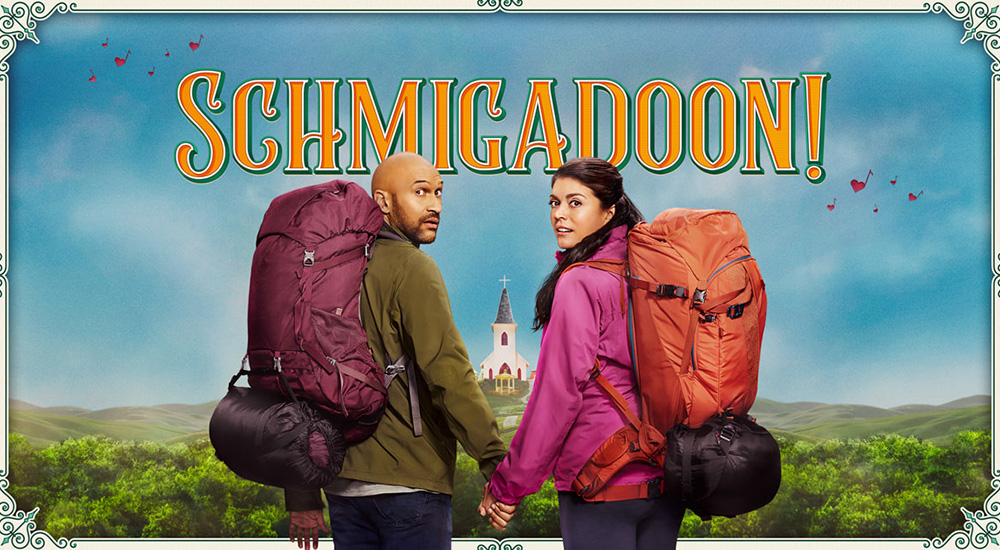
Schmigadoon! Was Too Musical for the Algorithm, and That’s Exactly Why It Mattered
There is something quietly tragic about the way Schmigadoon! ended. Not because it failed, but because it succeeded in exactly the way musical theatre so often does, by being specific, nerdy, emotionally sincere, and therefore easy to overlook in a world chasing scale.
Schmigadoon! was never trying to be background television. It asked something of its audience. It asked you to listen, to catch references, to lean into heightened emotion, and to remember why people fell in love with musicals in the first place. In an era where algorithms reward familiarity over affection, that alone made it an outlier.
At its best, Schmigadoon! understood a truth many modern adaptations miss. Musicals are not silly because they are earnest. They are powerful because they are earnest. The show’s creators, Cinco Paul and Ken Daurio, were not mocking Broadway history from a distance. They were writing from inside it. Every joke landed because it came from someone who knew exactly how these shows worked, and why they mattered.
Season one’s Golden Age pastiche was deceptively smart. By placing modern cynicism inside a Brigadoon style moral universe, Schmigadoon! exposed how uncomfortable sincerity has become for us. The humour did not come from pointing at old musicals and laughing. It came from watching contemporary characters realise they no longer know how to feel uncomplicated joy without irony.
Then came season two, and with it a creative leap most shows never attempt. Schmigadoon! did not repeat itself. It evolved. Schmicago’s Cabaret soaked cynicism and moral murkiness felt like a genuine conversation with musical theatre history rather than a victory lap. That the same performers returned in entirely new roles only deepened the joke, and the affection.
The casting was not stunt casting. It was a knowing embrace of Broadway royalty. Seeing performers like Kristin Chenoweth, Alan Cumming, Ariana DeBose, Aaron Tveit, and Tituss Burgess fully commit to parody songs that were, inconveniently, very good, was part of the thrill. Schmigadoon! never hid behind irony. It trusted that great performers singing strong material would do the work.
Which is why the cancellation hurts. Not because season two was the end of the road, but because the show was clearly accelerating. A third season parodying the excess and ambition of 1980s and 1990s mega musicals was not just logical. It was inevitable. That era, dominated by Andrew Lloyd Webber, Alan Menken, and Stephen Sondheim, is already half parody, half opera, half pop concert. Schmigadoon! was uniquely positioned to unpack that chaos with affection rather than contempt.
The reality, of course, is less romantic. Apple TV+ did not cancel Schmigadoon! because it misunderstood it. It cancelled it because the modern streaming economy does not reward passion projects that serve a defined audience rather than a maximal one. Musicals have always been a niche, and Schmigadoon! leaned into that rather than sanding itself down for broader appeal.
There is a wider lesson here. Streaming platforms love to talk about originality, but originality that cannot be flattened into an easily marketable category is increasingly disposable. Schmigadoon! required sets, costumes, choreography, and reinvention every season. It demanded money, time, and taste. In a tightening market, those are luxuries.
And yet, this is exactly why Schmigadoon! deserves to be seen now more than ever. It is complete enough to be satisfying. It is clever enough to reward repeat viewing. It is generous with its love for musical theatre history, and unashamedly joyful about it.
Perhaps Schmigadoon! was never meant to be a long running franchise. Perhaps it was always destined to be a cult favourite, whispered about by theatre fans who wonder why no one else seems to know it exists. That would be fitting. After all, musical theatre itself has survived for over a century by being stubbornly, gloriously niche.
If you care about musicals, Schmigadoon! is not just a show you should watch. It is a reminder of what happens when artists are allowed to love their medium out loud.