Why Theatre in 2026 Feels Bolder, Stranger, and More Urgent Than Ever
There is a particular electricity that runs through a theatre season when it stops trying to be polite. Reading through the slate of plays and musicals audiences are lining up for in 2026, it is hard to miss the feeling that something has shifted. This is not a season chasing consensus or comfort. It is a season hungry for friction, contradiction, and surprise.
What stands out first is the refusal to separate art from the world it inhabits. Theatre in 2026 is not pretending politics, grief, violence, or identity are abstract ideas. They are front and centre. Milo Rau’s Hate Radio, recreating the broadcasts that helped fuel the Rwandan genocide, arrives at a moment when propaganda and language are again being weaponised globally. Its timing feels brutal and necessary. Likewise, Seagull: True Story transforms Chekhov into a living document of exile, censorship, and survival, reminding us that artists are still fleeing regimes for daring to speak too loudly.
Alongside this political urgency is a deep fascination with the body, particularly bodies that have historically been smoothed over or sidelined. Aya Ogawa’s Meat Suit, or the Shitshow of Motherhood does not aestheticise motherhood, it explodes it. Heather Christian’s Animal Wisdom promises something almost ritualistic, where sound, flesh, faith, and transformation collide. Even Rheology, with its meditative exploration of sand, science, and mortality, insists that lived experience belongs on stage alongside intellect.
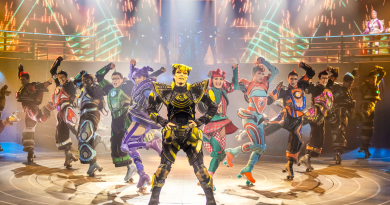
This is also a season fascinated by legacy and reinvention. Cats: The Jellicle Ball should not work on paper. A long running Andrew Lloyd Webber musical reimagined through queer ballroom culture sounds like a dare rather than a plan. And yet, it seems to unlock something essential about spectacle, community, and excess, turning an object of parody into a genuine celebration. That same impulse runs through Schmigadoon!, a musical adaptation of a television parody of musicals. Theatre eating itself should feel exhausting, but here it feels joyous, like a form finally confident enough to laugh at its own history.
Star casting is present, but noticeably secondary to ideas. John Lithgow anchoring Giant adds weight, but the draw is the uncomfortable question at its core: how do we reckon with artists whose brilliance coexists with moral failure. Similarly, Proof returns not because audiences crave familiarity, but because the collision of intellect, grief, and doubt remains painfully recognisable, especially in a culture obsessed with genius and productivity.
Perhaps the most telling pattern is how many of these works resist neat emotional closure. What We Did Before Our Moth Days reunites Wallace Shawn and André Gregory not to offer nostalgia, but to interrogate memory, ageing, and the quiet terror of reflection. Cold War Choir Practice filters paranoia through a child’s perspective, where fallout shelters sit uneasily beside Pound Puppies. Even The Wild Party, drenched in Jazz Age decadence, returns as a reminder that excess has always been a mask for desperation.
Taken together, this is not a season built to reassure audiences that everything will be fine. It is a season that trusts them to sit with discomfort, contradiction, and beauty in equal measure. Theatre in 2026 feels less interested in being liked and more interested in being felt.
That may not be the safest strategy, commercially or emotionally. But it is a thrilling one. And it suggests that live performance, far from retreating into nostalgia or spectacle alone, is once again willing to ask dangerous questions in a room full of strangers.
That, more than any individual title, is why this feels like a season worth paying attention to.
Photo Credit: DepositPhotos.com