London Theatre 2026, A Season That Refuses To Play It Safe
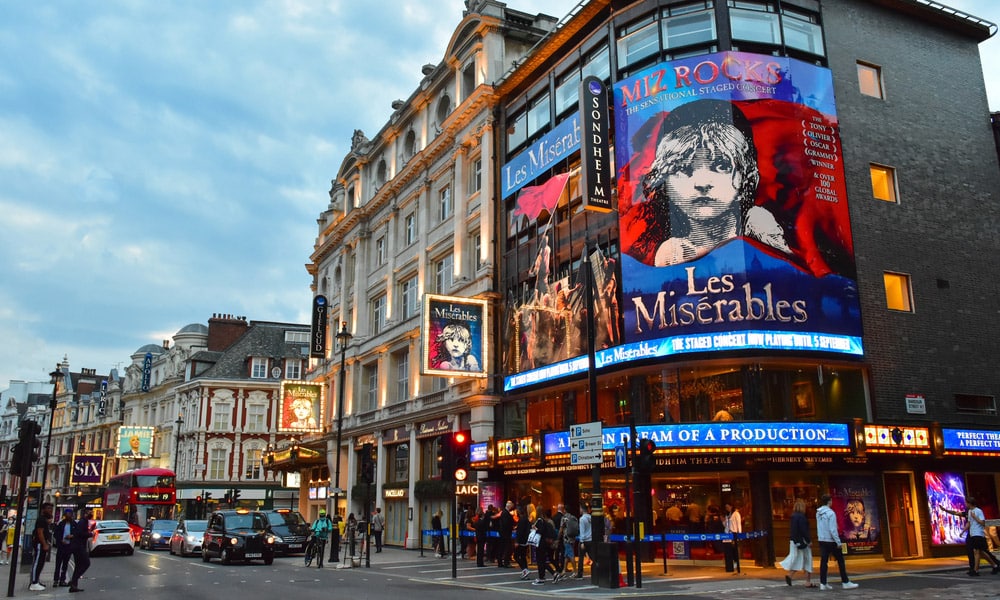
London theatre in 2026 feels less like a season and more like a statement. This is a year that seems determined to remind audiences why this city still claims to be the world’s most vital theatrical ecosystem. Not because everything is new, but because everything feels argued for. Every revival, transfer and reimagining arrives with intent, as if the industry has collectively decided that safe is no longer enough.
What strikes first is the sheer confidence. Bringing Cirque du Soleil back to the Royal Albert Hall with OVO is not a novelty booking, it is a declaration that spectacle still matters. At the other end of the scale, venues like the Young Vicand Royal Court Theatre are doubling down on work that interrogates power, care and identity with uncomfortable precision. London in 2026 is not choosing between entertainment and provocation, it is insisting on both.
Musicals, often accused of being the soft option, are unexpectedly sharp this year. American Psycho returning to the Almeida Theatre feels less like nostalgia and more like a warning shot. Its blend of glossy surfaces and moral rot lands harder in a decade defined by curated identities and hollow ambition. Likewise, Kinky Boots and Avenue Q remind us that joy and satire can coexist with social commentary, even when wrapped in sequins or puppets. These shows endure because they say something, not because they hum nicely.
There is also a clear hunger for reinterpretation. Directors like Robert Icke dragging Romeo and Juliet into a world of surveillance and digital noise feels inevitable, but that does not make it any less necessary. Shakespeare, Ibsen and Miller are not being dusted off, they are being stress tested against the present moment. When A Doll’s House references unpaid credit card bills and contemporary anxieties, it acknowledges that patriarchy is not a museum piece, it is still operational.
Perhaps most telling is the confidence in audiences themselves. Programming Cleansed, Broken Glass or CARE is not an attempt to fill seats with comfort viewing. It is a wager that London audiences want to be challenged, unsettled and sometimes exhausted. Even the return of Cats at Regent’s Park Open Air Theatre is framed not as a lazy revival but as a chance to reclaim something bruised by pop culture misfires and give it meaning again through form and place.
Transfers dominate the year, but they do not feel like corporate land grabs. Inter Alia arriving in the West End suggests that commercial stages are finally willing to embrace contemporary writing that asks difficult questions about justice and responsibility. The line between subsidised and commercial theatre continues to blur, and that is no bad thing for audiences.
Taken together, London theatre in 2026 feels restless, political and unapologetically ambitious. It is not chasing consensus. It is daring disagreement. In a city that often feels paralysed by cost, noise and contradiction, the stage remains a place where those tensions can be turned into art. If you live here and you are not going, the question is not what is on, but why you are missing it.
Photo Credit: DepositPhotos.com