Lander 23 and the Future of Theatre-Game Hybrids
When audiences step into a Punchdrunk production, they rarely know where reality ends and theatre begins. Since its inception, the company has made its name by breaking the walls of traditional performance, crafting immersive worlds where spectators wander freely, piecing together fragmented narratives. With LANDER 23, opening at Punchdrunk’s Woolwich home this September, the company takes its boldest leap yet, merging live theatre with video gaming to create a multiplayer stealth adventure.
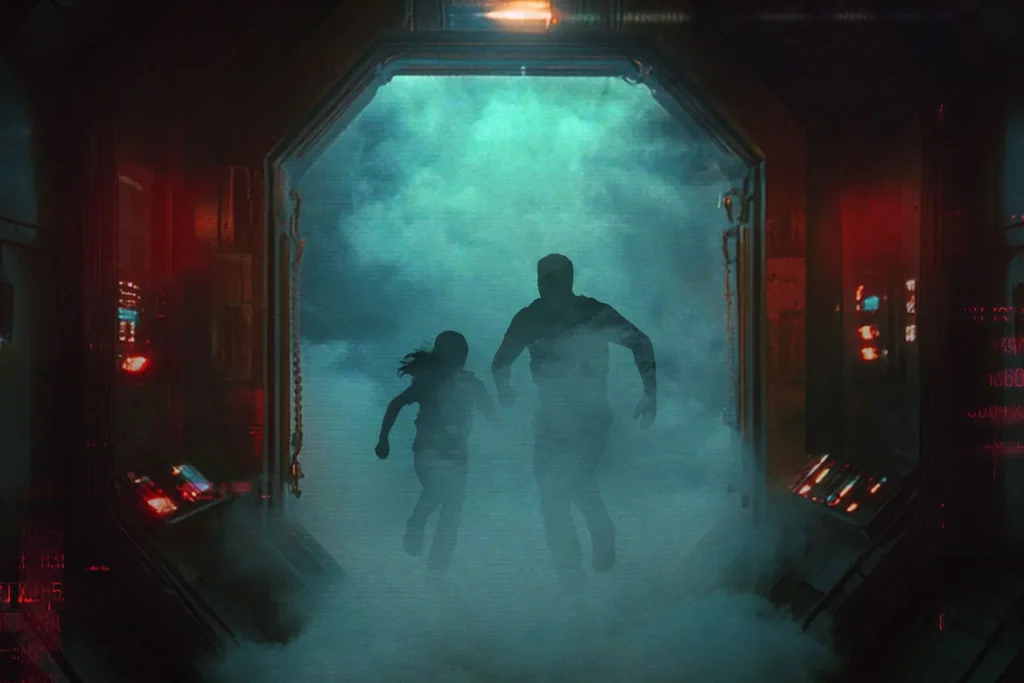
On the surface, the premise reads like a science fiction mission. Teams of players are sent to investigate the disappearance of a lost crew on a distant planet. Roles are divided into Command, who remain aboard the ship providing guidance, and Ground Team, who venture into the alien landscape. Together, players must navigate danger, cooperate, and occasionally swap positions to survive. Yet what makes LANDER 23 remarkable is not just the narrative but how it blurs the borders between performer and participant, theatre and technology, storytelling and play.
The Rise of Theatre as Game
Theatre has long borrowed the language of games. Elizabethan audiences threw fruit at bad actors, vaudeville performers thrived on audience dares, and immersive companies have always played with choice and consequence. But LANDER 23 formalises this exchange, pulling mechanics from video games and transplanting them into live space. Players have maps, limited lives, and the possibility of regeneration. These are not theatrical metaphors but literal systems designed to mimic gaming experiences in real time.
The appeal is clear. Video games are the dominant cultural form of the 21st century, commanding more attention and revenue than film or theatre combined. Yet gaming and theatre share an essential DNA. Both create temporary worlds governed by rules. Both demand a suspension of disbelief. Both rely on collaboration, whether between actor and audience or gamer and console. LANDER 23 makes that kinship explicit, staging theatre as a live action co-operative mission.
For Felix Barrett, Punchdrunk’s artistic director, this hybridisation is a logical evolution. His company has always been interested in giving spectators agency, whether wandering through the myth-soaked ruins of THE BURNT CITY or exploring the noir labyrinth of SLEEP NO MORE. But agency in immersive theatre has often been illusory, confined within carefully controlled boundaries. LANDER 23 promises something different: genuine power to shape outcomes, victories earned or squandered through decision-making rather than passive observation.
World-Building, Repurposed and Reimagined
In a typically resourceful move, Punchdrunk has repurposed elements of its vast Troy landscape from THE BURNT CITY as the setting for LANDER 23. This recycling of creative infrastructure reflects not only pragmatism but also an emerging philosophy of theatrical sustainability. Why should meticulously designed sets vanish after one production, when they can be reshaped to tell new stories? Just as video game developers build engines reused across sequels and spin-offs, Punchdrunk now experiments with its own theatrical engine.
This continuity also strengthens the mythology of the company’s worlds. Audiences who visited Troy will find echoes of its architecture in LANDER 23, now transformed into alien terrain. In doing so, Punchdrunk creates a layered multiverse that mirrors the way game franchises expand across iterations. It is theatre borrowing not only the mechanics of video games but also their approach to world-building, where environments evolve, adapt, and invite players back for new adventures.
Early Access and the New Economics of Theatre
Perhaps the most intriguing element of LANDER 23 is not on stage at all but in its ticketing model. The production is launching with an “early access” phase, echoing the gaming industry’s strategy of releasing works-in-progress to the public. Tickets during this preview period are priced at £23, explicitly lower to encourage participation and feedback. From October, full pricing will apply once the show has evolved in response to its audience-players.
This is an unprecedented move for theatre. Where traditional previews are about refining pacing and ironing out mistakes, here the audience is explicitly acknowledged as co-developers, their choices and feedback shaping the very fabric of the piece. It signals a shift towards a more fluid, collaborative form of production where theatre resembles software, continuously updated and adjusted based on user interaction.
Critics may argue that this undermines the purity of artistic vision, reducing theatre to a product beta-tested by consumers. Yet others will see it as a thrilling expansion of theatrical democracy, where audiences no longer simply witness but participate in shaping the art they consume. It may also point towards new economic models for theatre, where flexibility in pricing and participation engages communities who might otherwise be excluded.
Between Agency and Illusion
Of course, the promise of “genuine agency” raises difficult questions. How much control can a theatre company realistically relinquish without losing its narrative coherence? Will LANDER 23 truly allow players to change the story, or will outcomes remain pre-scripted within carefully curated branches? The history of immersive theatre is full of claims about choice that ultimately collapse into spectacle. Punchdrunk’s challenge is to push past illusion and deliver an experience that genuinely responds to its players, even if that means embracing unpredictability.
This unpredictability is, perhaps, the point. Unlike traditional theatre, which aspires to repeatable excellence, LANDER 23 courts failure as part of the experience. Lives can be lost, missions can collapse, teams can falter. Failure is not a mistake but a designed possibility, much as in gaming. That, in itself, is a radical shift for theatre, which has traditionally built its value on consistency. Here, inconsistency becomes part of the thrill.
A Glimpse of Theatre’s Future
LANDER 23 may not be the first attempt to fuse theatre and gaming, but it could prove the most influential. It arrives at a moment when audiences are hungry for new forms of connection and storytelling. Younger generations raised on gaming culture may find in it a bridge to live performance that feels authentic rather than antiquated. Older theatregoers may be startled but intrigued by its promise of playfulness and risk.
Punchdrunk’s experiment suggests that the future of theatre may be less about preserving tradition and more about absorbing the languages of other art forms. Just as film once borrowed from theatre before becoming its own medium, so theatre now borrows from gaming, risking reinvention in the process. Whether LANDER 23 is remembered as a successful production or a noble failure, its impact will ripple across the industry. It challenges us to imagine theatre not as a fixed art form but as a flexible system of rules, stories, and shared invention.
Playing for Keeps
As LANDER 23 prepares for launch, it represents more than another ambitious Punchdrunk experiment. It is a glimpse into what theatre might become if it fully embraces interactivity, sustainability, and audience collaboration. The project dares to ask whether theatre can function like a video game, where players make choices, fail, retry, and carve their own paths.
For those who worry that theatre is at risk of losing its identity, LANDER 23 suggests that reinvention is survival. For those excited by the blurring of boundaries, it is a thrilling sign that the medium still has surprises up its sleeve. In a cultural landscape often dominated by safe revivals and cautious programming, Punchdrunk once again insists that theatre should not only be watched but played. And in that sense, LANDER 23 may prove less an experiment and more a template for the next generation of live performance.