The Artist’s Lab’s Broadway and West End Experience Returns in 2026 with a Focus on Craft, Confidence and Career Longevity
There is no shortage of training programs promising access, inspiration and industry insight for emerging performers, but what continues to distinguish The Artist’s Lab’s Broadway and West End Experience is its commitment to something deeper than surface level polish. At the centre of the 2026 program is a philosophy that places technique, individuality and long term artistic development at equal value, not as competing priorities, but as essential parts of the same journey.
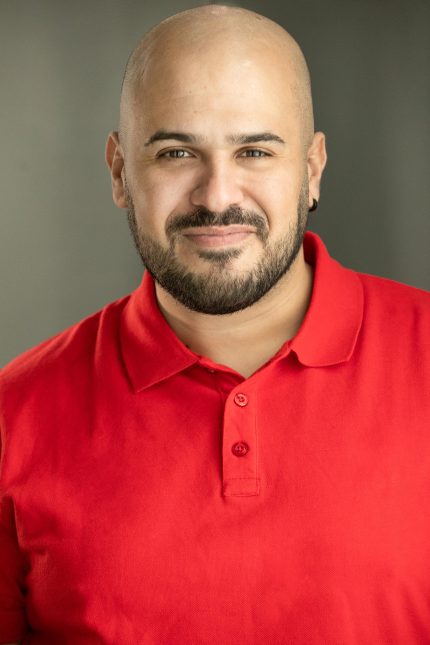
That ethos is perhaps best articulated by performer and mentor Paul Tabone, whose international career includes more than 1,800 performances in The Phantom of the Opera in London, alongside work across the world. For Tabone, the conversation always begins at the foundation. Technique is not a decorative extra, nor a rigid academic exercise. It is the base that allows everything else to happen.
“Technique is the foundation of everything,” he says. “If a singer feels vocally secure, if they understand how their instrument actually works, confidence comes naturally. I spend a lot of time making sure their voice is stable, free, and doing what it’s meant to do without tension. Once that’s in place, something really interesting happens, they stop worrying about getting it right and start actually communicating.”
It is a telling distinction, and one that will resonate with many young performers who have spent years trying to bridge the gap between technical control and expressive freedom. Tabone’s approach does not treat those ideas as opposites. Instead, he sees technical security as the condition that makes real artistry possible. When singers are no longer preoccupied with surviving the mechanics of a song, they can begin to tell a story, make choices and bring something of themselves to the work.
“That’s where personality comes in,” he says. “I always say, no one is paying to see a perfect exercise, they’re paying to feel something. So I push them to make choices, to take risks, to bring their own story into the work. The balance is really about giving them the technical tools so they’re not guessing, and then giving them permission to be human on top of that.”
That tension between discipline and humanity sits at the heart of The Artist’s Lab’s Broadway and West End Experience, which returns to Sydney from 9 to 13 April 2026. Designed for singers, actors and dancers aged 12 and over, the five day intensive brings together leading figures from Broadway, the West End and the Australian musical theatre industry for more than thirty hours of multidisciplinary training. Held at AMPA Studios and Theatre in Surry Hills, the program culminates in a professional showcase presented in front of producers, directors and agents, a rare opportunity that gives participants both practical experience and direct visibility within the industry.
Yet what emerges most strongly from Tabone’s reflections is that the workshop is not simply about chasing a showcase moment. It is about building artists from the inside out, with a level of care and honesty that acknowledges both the beauty and the difficulty of this profession.
“What I really want them to feel during the week is clarity and possibility,” he says. “A lot of young performers come in overwhelmed, comparing themselves, not really understanding why things aren’t working. My goal is that by the end of the week, they feel like I get it now, I know what I need to do.”
There is a generosity in that ambition. It speaks not only to training outcomes, but to the emotional experience of learning in an industry that can be as destabilising as it is exhilarating. So much of a performer’s early life is shaped by uncertainty, by comparison, by trying to decode what is expected and whether they are enough. Tabone is clear that creating a high standard environment does not require stripping away encouragement. In fact, he suggests the opposite.
“Beyond that, I want them to feel seen and supported,” he says. “This industry can be tough, and if you don’t have the right guidance early on, it can knock your confidence quite quickly. So the environment we create is one where high standards exist, but so does genuine encouragement.”
That sense of encouragement, rooted in rigour rather than sentimentality, feels central to the ongoing appeal of The Artist’s Lab. Over the years, the organisation has built a reputation not only for the calibre of artists involved, but for the seriousness of its intent. This is not a casual brush with industry glamour. It is a program designed to demystify the work, sharpen the tools and help emerging performers understand the level required to sustain a career.
“The spark I hope it lights is a long term one,” Tabone says. “Not just that was a great week, but a shift in how they approach their training and their career. A sense that this is achievable, but only if they commit properly to the work. If they leave inspired, but also with a clear understanding of the level required and the tools to get there, then we’ve done our job.”
There is perhaps no better phrase for what serious training should offer than “clarity and possibility.” One without the other can be unhelpful. Possibility without clarity can feel vague, seductive and fleeting. Clarity without possibility can become cold or discouraging. What Tabone describes is a workshop experience that gives students both a realistic sense of what the industry asks of them and a practical understanding that those demands can be met through disciplined, informed work.
It also reflects a broader vision of what it means to mentor the next generation. When asked what he most hopes young performers walk away with, Tabone’s answer reaches well beyond songs, agents or immediate opportunities.
“The biggest thing I want them to walk away with is perspective,” he says. “Not just how do I sing this song better or how do I get an agent, but a real understanding of what a life in this industry actually looks like.”
That perspective matters. For many emerging artists, the dream of a performance career is often framed through milestones, auditions, castings, contracts, applause. But Tabone points to the less glamorous, more sustaining qualities that underpin a life in the arts.
“This career can be incredible, but it also requires resilience, discipline, and a very strong sense of self,” he says. “So for me, it’s about helping them realise that their worth isn’t tied to whether they book a job that week. It’s about building people who are grounded, who understand their instrument, and who can handle both the highs and the setbacks without losing themselves.”
It is a striking and valuable message, particularly in an era where young performers are often asked to measure themselves constantly, against peers, against casting trends, against the curated illusion of success online. Tabone’s emphasis is refreshingly human. Technical excellence matters. Professional conduct matters. Preparation matters. But so too does the ability to remain steady in a business built on uncertainty.
“Of course we’re developing them as performers, but just as importantly, we’re helping them become professionals,” he says. “How to behave in a room, how to prepare, how to look after their voice, how to communicate, how to keep going when things don’t go their way.”
This is where The Artist’s Lab’s broader ecosystem appears especially significant. Tabone notes that the organisation is now teaching close to 100 students around the world, all grounded in proper classical technique. For him, that scale is not just a marker of growth, but of impact.
“At The Artists Lab, we’re working with close to 100 students around the world, all grounded in proper classical technique, and what’s so rewarding is seeing that ripple effect. When healthy, stable vocal practice is being taught globally, you’re not just building better singers, you’re building more confident, capable people who can sustain a career long term.”
That idea of a “ripple effect” captures something important about the workshop’s role. The five days in Sydney may be intensive and finite, but the intention is clearly much larger than a single week. The training is meant to reshape habits, deepen understanding and equip young performers with frameworks they can carry into future auditions, classes, rehearsals and professional rooms.
The showcase element is, of course, one of the program’s major drawcards. The chance to perform in front of producers, directors and agents is undeniably exciting, and for many participants it will feel like one of the most high stakes moments of their training to date. Yet Tabone is careful to reframe what success in that room really means.
“I actually say to them very honestly, the panel doesn’t need another version of someone else. They’re not looking for perfection, they’re looking for clarity.”
Again, the word returns, clarity. Not the polished emptiness of imitation, but the unmistakable presence of an artist who knows what they are doing and why they are doing it. For Tabone, nerves often stem from the mistaken belief that a performer has to prove something artificial in the room.
“Nerves usually come from feeling like you have to prove something, or be something you’re not. So we strip that back. If your technique is in place and you’ve done the work, then your job in that moment is simply to communicate. That’s it.”
It is elegant advice, and perhaps deceptively difficult advice too, because it requires preparation, trust and self knowledge. But it also cuts through many of the anxieties that can make showcase settings feel paralysing. When performance is reduced to communication, the room changes. The goal is no longer to impress through force, but to connect through honesty.
“I remind them that everyone in that room wants them to do well. No one is sitting there hoping they fail. And more often than not, what stands out isn’t the perfect performance, it’s the one that feels honest and connected.”
For young performers, that may be one of the most liberating ideas to encounter. In industries where the panel can feel distant and all powerful, it is easy to imagine judgement as hostile. Tabone’s reorientation is both practical and compassionate. He insists on preparation, but he also asks students to trust the work they have done and to trust that their individuality has value.
“So we focus on preparation and trust,” he says. “Preparation gives you the security, and trust allows you to let go. If they can walk into that showcase knowing exactly what they’re doing technically, and then allow themselves to be present and tell the story, that’s when the magic happens.”
There is no false promise here, no suggestion that one showcase magically guarantees a career. Instead, what Tabone offers is more substantial, a framework for meeting opportunity with readiness, and for understanding that the real point of training is not to erase who you are, but to support it.
“And ultimately,” he says, “if you can stand in front of a panel like that and be fully yourself, that’s already a win. Because that’s the artist they’re actually interested in.”
Further underscoring the professional value of the 2026 Broadway and West End Experience is the presence of Pella Gregory, Executive Producer of Musical Theatre and Commercial at Opera Australia, who will attend the final showcase. For participants, the opportunity to perform in front of a senior figure of that calibre speaks to the genuine industry pathways the program can offer, with the showcase designed not simply as a culmination of the week, but as a meaningful point of professional exposure.
The wider Artist’s Lab ecosystem also extends beyond the workshop itself. In addition to leading the training program, Paul Tabone heads The Artists Lab Agency, which currently represents performers working internationally across Europe and the West End in productions including The Phantom of the Opera, Pretty Woman, The Lion King and The Twelve Tenors. Selected artists from the workshop may also be considered for representation, adding another layer of opportunity for those ready to take the next step in their professional development.
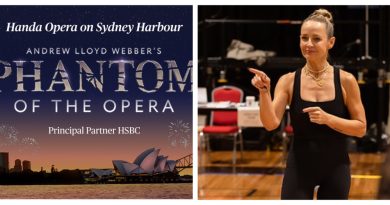
This year’s workshop will also be shaped by a special artistic focus, with the 2026 program centred on the musicals of Andrew Lloyd Webber. With Simone Sault currently working on the 40th anniversary harbour production of The Phantom of the Opera, participants will explore excerpts from that landmark work, alongside a number from Cats featuring new choreography by Sault. The theme gives the week a clear creative throughline while immersing participants in repertoire that demands theatricality, musical precision and stylistic confidence.
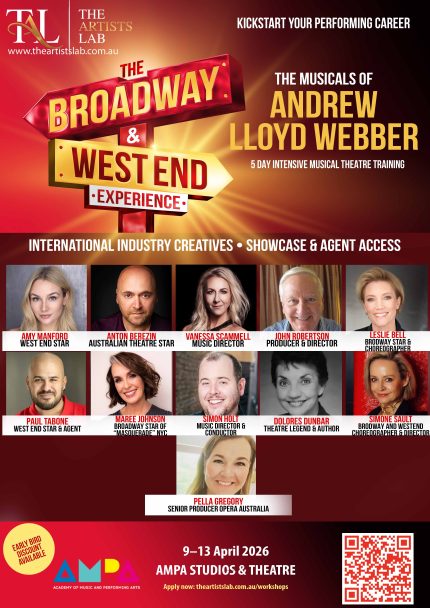 For those considering the 2026 Broadway and West End Experience, that may be the most compelling invitation of all. Not simply the chance to train with respected international practitioners, though that in itself is significant. Not simply the promise of a professional showcase, though that is undeniably valuable. But the opportunity to spend a week in an environment where rigorous technique, truthful performance and sustainable professional practice are treated as inseparable.
The Artist’s Lab has built its reputation by connecting emerging performers with high level training and with the realities of the profession they hope to enter. In 2026, that mission feels more relevant than ever. For singers, actors and dancers ready to sharpen their craft, challenge their habits and gain a clearer sense of where they are headed, this workshop offers more than inspiration. It offers structure, perspective and the kind of guidance that can alter the course of a young artist’s development.
Applications for The Artist’s Lab Broadway and West End Experience 2026 are now open. The program runs from 9 to 13 April 2026 at AMPA Studios and Theatre in Sydney, with places limited and demand expected to be high. The Early Bird discount has been extended until 30 March, with the code EARLYBIRDAUSSIETHEATRE2122.
If Tabone’s words are any indication, participants can expect a week that does not just ask them to perform, but invites them to understand themselves more deeply as artists and as future professionals. In an industry that often rewards polish before process, that kind of training may be exactly what makes the difference.
Book: www.theartistslab.com.au/workshops
Date: 9-13 April 2026
Venue: AMPA Studios & Theatre, Sydney NSW
Early Bird Discount: Finishes April 3, 5pm.
Contact: info@theartistslab.com.au or 0470578224