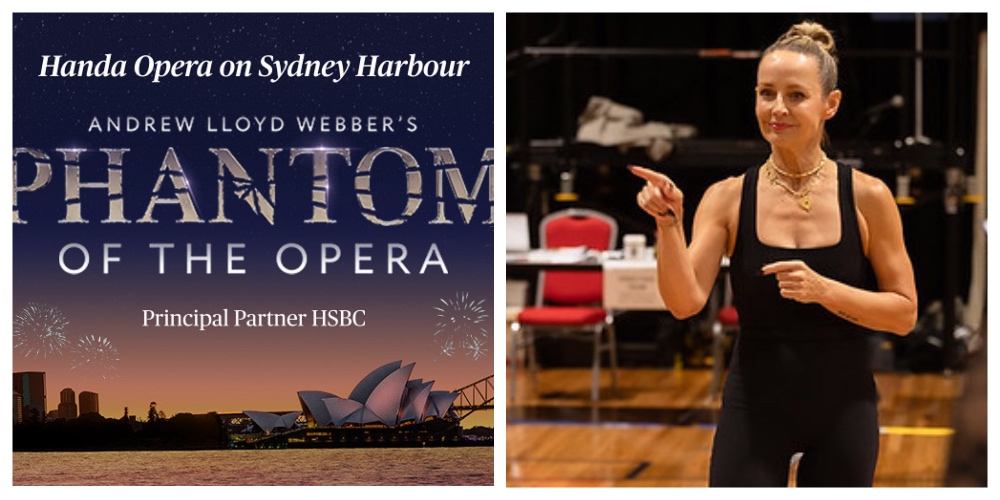
Simone Sault Gives a Glimpse Behind the Mastery of THE PHANTOM OF THE OPERA
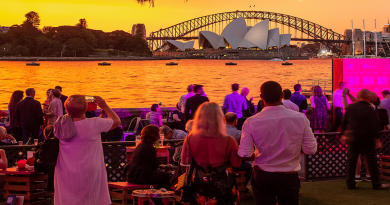
Few productions carry the enduring appeal asTHE PHANTOM OF THE OPERA, a work that has captivated audiences across generations with its sweeping score, emotional intensity, and visual grandeur. In this expansive outdoor staging on Sydney Harbour, that legacy is both honoured and reimagined, demanding a scale of storytelling that matches its iconic status. Pivotal to this vision is choreographer and associate director Simone Sault, whose journey with the production spans decades, from an eager young usher to a leading creative voice shaping its contemporary life.
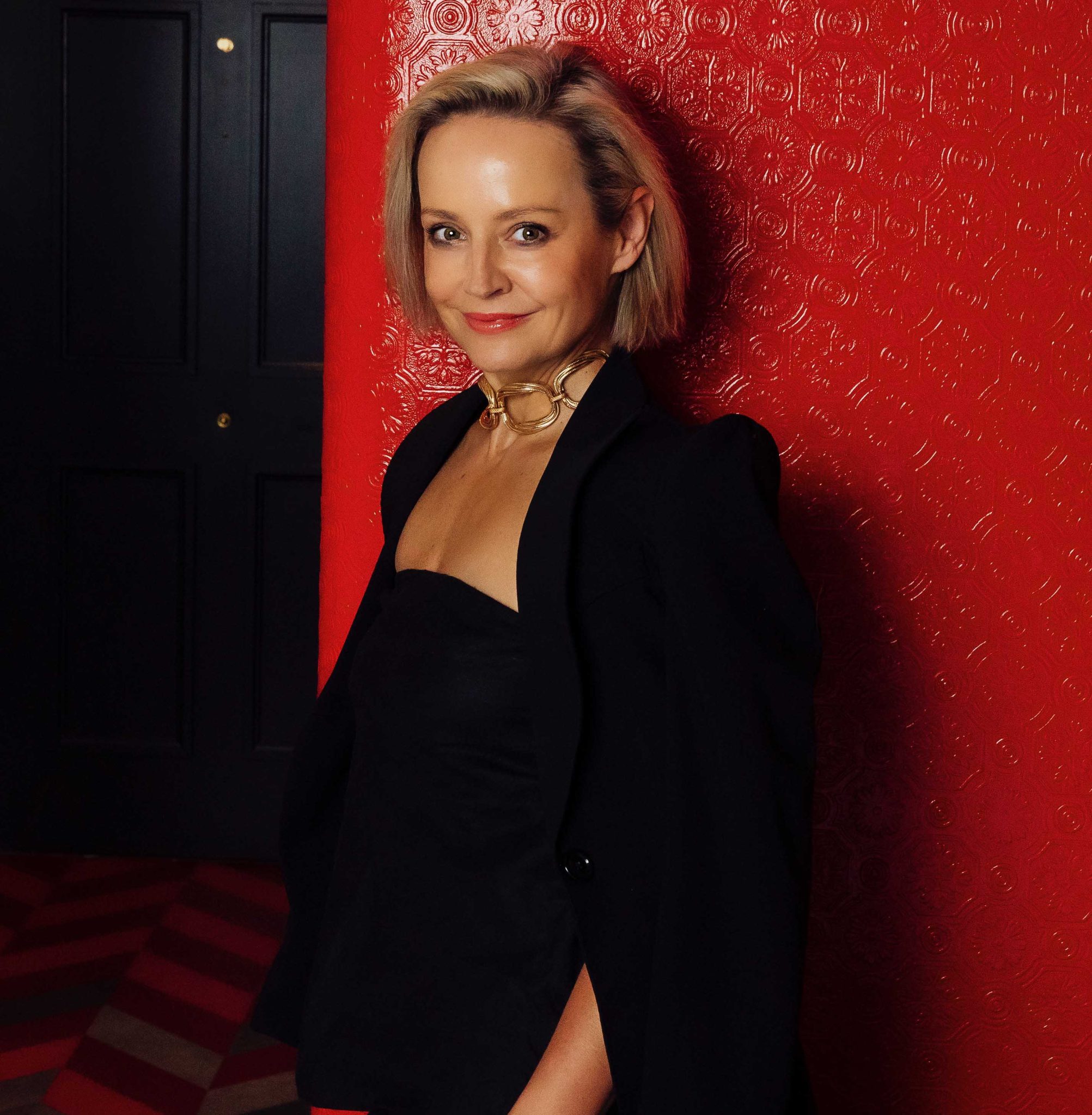
What emerges is not simply a retelling, but a deeply personal interpretation grounded in lived experience, technical mastery, and a profound respect for the material. Sault’s approach reveals how movement, spectacle, and emotional truth can coexist, even in one of the largest performance environments imaginable. Her work navigates the delicate balance between honouring tradition and embracing the possibilities of scale, ensuring that the heart of the story remains intact.
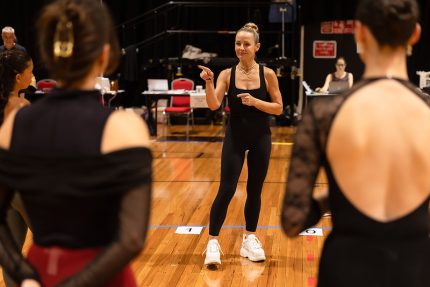
Photo by Carlita Sari
You’ve experienced PHANTOM OF THE OPERA from the front-of-house as an usher, through to performer, and now as a creative leader. How has that full-circle journey shaped the way you approach storytelling in this production?
It’s shaped it in the way that it’s not even a job for me. It is such a labour of love because of my back catalogue and connection with the show. I remember how passionate I was when I was an usher. Looking back, I was fully responsible for ruining the audition that I did for The Phantom of the Opera in 1990 because as a ballet dancer, I had never sung in my life, so I failed the vocal audition dismally. I vowed to myself there and then that when they gave me the call up, I would have gotten on top of singing lessons and I did. Now working on the creative team, I certainly haven’t tampered with any of the storytelling because it isn’t broke. It just allows me the luxury and absolute privilege of paying this evergreen of a show homage on a football field, or so it would seem, in front of the harbour.
The Handa Opera on Sydney Harbour staging is known for its scale and spectacle. How does choreography evolve when you’re working in such an expansive, outdoor environment compared to a traditional theatre?
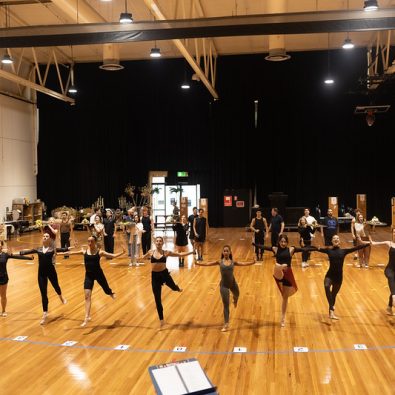
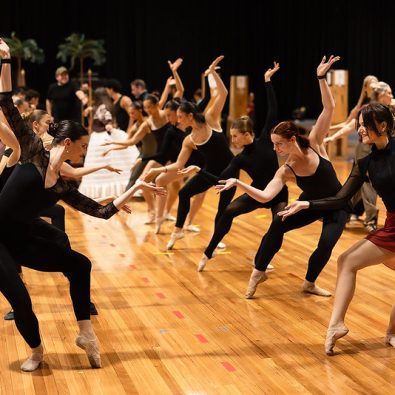
This is probably one of the biggest challenges I face as it’s the antithesis to a normal size theatre. I’m very blessed with having such a vast space to fill and occupy. We have almost triple the number of dancers that they have in the original. I’ve come at it in a very Busby-Berkeley and kaleidoscopic way, because the stage is on such a rake, and the way that the seating is established, it is very much patterns all over the floor, all the time. Whether it be Hannibal, or especially Masquerade, because that incorporates the entire company of the 46 players we have.
PHANTOM is often thought of as a vocal and musical powerhouse. Where does movement sit in that hierarchy for you, and how do you ensure choreography enhances rather than competes with the score?
It absolutely enhances because it is a trip back to this era and as it should be. In any of the big major companies of the world, the ballet portion of that company was integral to the overall productions. Hence why when we have the transition from the auction into Hannibal, it is a massive transition of the present day back in time. I feel like I’ve managed to incorporate that with the choreography.
You’ve worked across film, television, and live performance at the highest level. What creative instincts do you find yourself leaning on most when returning to a work like PHANTOM, which has such a strong legacy?
For me, it’s always truth and honesty. Whether I’m wearing the hat of a director or associate director or choreographer. I will always say to the actor or the dancer: We don’t go for something that is right. We go for something that is real and if it feels real and honest well, then it is right.
Having danced in Phantom internationally, what nuances or emotional beats do you now notice as a choreographer that you might not have fully appreciated as a performer?
I feel very blessed to have had the opportunity to work as choreographer and associate director on this outdoor production of Phantom back in 2022. So now returning to it with the same creative team and the same director, I find that movement wise, we’ve been able to merge the two.
This production brings together opera and musical theatre audiences. Does that crossover influence how you shape movement language and physical storytelling?
I’m very aware that I’m working with beautiful female and male ensemble members who can sing the stars down out of the sky, yet when a choreographer walks into a room and says dance, now start doing that, we talk in a very different language. So, for me it’s all about establishing from the get-go a place of safety and one of protection for them to feel extremely comfortable by the time I put all the movement on their bodies. For an ensemble number like masquerade, I also remind them that with simple elements of the choreography, it’s there for them to take ownership of and actually enjoy every single night rather than fear it.
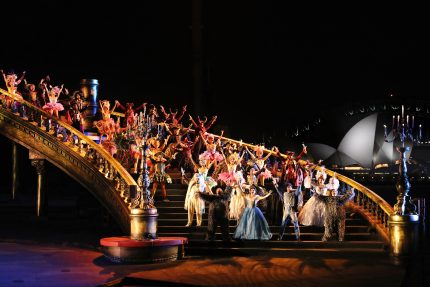
Photo by Prudence Upton
Your career has spanned everything from the London Olympics to Disney films. How do you balance spectacle with intimacy, especially in a story as psychologically driven as PHANTOM?
I was trained as a ballet dancer so that level of training and passion and drive and dedication is one of honesty whether it be a large-scale production like the Olympics or Disney films. Funnily enough, in my direct experience working with Danny Boyle on “The Green and Pleasant Land” for 2012 London Olympics Opening Ceremony of it still came from a place of honesty and truth. We know that there has to be an emphasis on sheer spectacle but when we’re dealing with something like PHANTOM, why it’s still running and we’re celebrating its 40th year is because the essence of it is a love story. The story is integral to the spectacle and vice versa.
As Associate Director as well as choreographer, how do you collaborate across departments, particularly with music and design, to ensure a cohesive vision in such a technically complex production?
I’m very lucky to have worked with Simon Phillips on a couple of other productions, notably LOVE NEVER DIES, so he knows very much how I work and vice versa. He is the captain of the ship, rightly so.
When it comes to the music, I’m very blessed because it isn’t broke. Guy Simpson, our musical director was the one that first gave me my job when I was 18, some 30 something years ago. So musically, it’s all there, but I know it inside and out as part of my DNA, so it’s been brilliant for me to find my little secret beats and nuances. As an associate director it’s a labour of love, so I’m so invested in the players that we’ve cast in the show and the show itself.
PHANTOM is a story rooted in obsession, longing, and duality. How do you translate those themes physically, especially in moments where dialogue and lyrics step back?
Because less is more, everything that should be there on that stage and within the score and within the script already exists. You’ll find something in watching, it’s pure magic. To watch Simon, direct something like Music of the Night is pure magic. It is an evergreen, so the subtleties and nuances that the principals use in that scene is enough, but it goes hand in hand, you can’t have one without the other now.
For emerging dancers and creatives, your journey from usher to international creative is incredibly inspiring. What key mindset or lesson has carried you through each stage of your career?
This business owes you nothing. If you want it, it doesn’t matter how many knockbacks you get, how many no’s, how many people’s opinions that differ with yours, it isn’t written anywhere in this world that you won’t go on and do what it is that drives you. Having said that though, it’s not for everyone, so the level of dedication, commitment and passion is insurmountable, but gosh it’s worth it.
THE PHANTOM OF THE OPERA
For more information and tickets CLICK HERE