
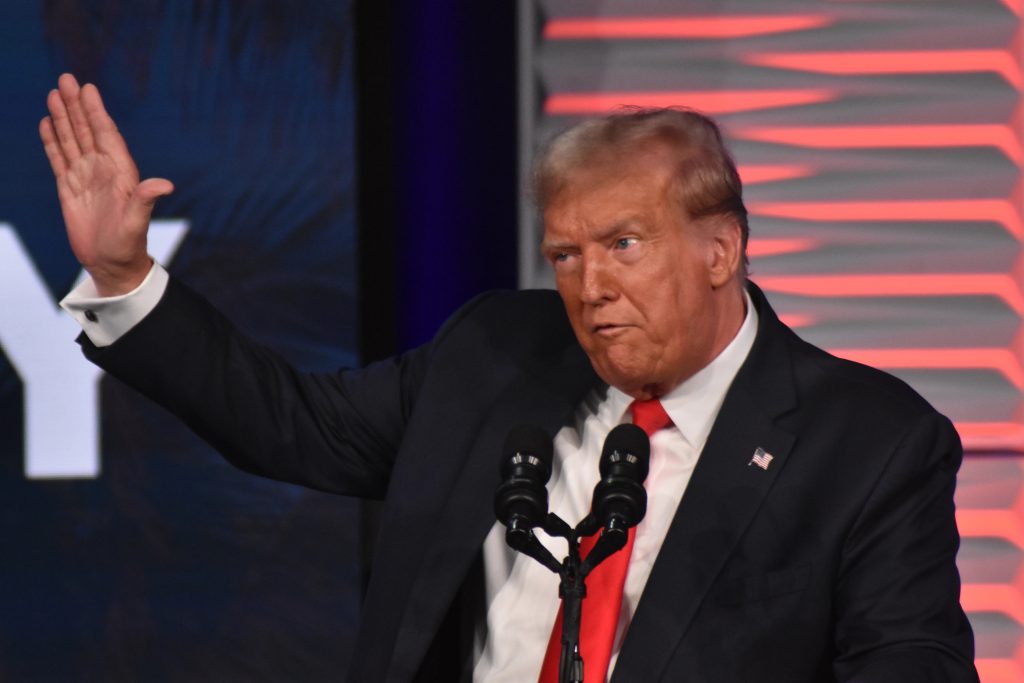
Trump’s Plot to Take Over the Kennedy Center
Have you ever opened your inbox to find an announcement so staggering, so out of left field, that you actually double-checked the date to make sure it wasn’t April Fools’? That’s precisely how I felt when I first heard rumours that Donald Trump—fresh from retaking the White House—was plotting to seize control of Washington D.C.’s famed John F. Kennedy Center for the Performing Arts. Now that the theatre’s statement has landed in my inbox, there’s no denying the extraordinary turn this saga has taken. As a theatre columnist, I’ve seen plenty of eyebrow-raising developments come across my desk, but this one ranks right up there with the time an understudy replaced a lead at interval, live on stage, without the audience noticing. Dramatic? You bet. But before we get ahead of ourselves, let’s unravel how we got here.
A Venue With Presidential Ties
For context, the Kennedy Center is no stranger to high-profile political involvement. Various American presidents have long taken an interest in its board appointments. Typically, though, these appointments are shared between the two major parties, keeping things (more or less) balanced. Currently, it’s an evenly split 36-member board, featuring philanthropic heavyweights, corporate bigwigs, and arts aficionados. Stepping into the role of board chair since 2010 has been David M. Rubenstein, a financier well-known for championing philanthropic causes. Originally appointed by President George W. Bush, his term was slated to continue until September 2026.
But then came a plot twist: over the last month, a flurry of termination notices reached numerous board members, apparently paving the way for Donald Trump to install his chosen leaders and, ultimately, put himself at the helm. Yes, you read that right. The man who once parted ways with the Presidential Committee on the Arts and the Humanities now wants to reignite his relationship with the arts—this time, by calling the shots at America’s national cultural centre. For a venue that symbolises bipartisan artistic excellence, this move strikes many as akin to upending the conductor’s baton in the middle of a symphony.
The “Why” Behind The Takeover
If you’ve been following Donald Trump’s rhetoric since his second inauguration, you’ll know he’s made no secret of his intentions to roll back much of what Joe Biden accomplished. That includes diversity, equity, and inclusion programmes, which Trump has promptly rescinded via executive orders. Now, the big question for theatre lovers is: what does that have to do with the Kennedy Center?
Well, according to Trump himself, it’s all about drag performances that took place at the venue. In a post on his platform Truth Social, Trump declared,:
Just last year, the Kennedy Center featured Drag Shows specifically targeting our youth—THIS WILL STOP.
Within the same breath, he reaffirmed his belief that there are “only two sexes, male and female,” doubling down on his administration’s objective to curtail LGBTQ+ content, especially when aimed at young audiences.
While the Center’s statement is relatively diplomatic, acknowledging Trump’s legal prerogative to replace board members, the subtext is clear: they view this as an unprecedented move with ramifications far beyond simply appointing new trustees. After all, the Kennedy Center might be a non-profit, but 16% of its budget comes from federal appropriations to maintain the building (considered a national monument). That figure, though not a majority of the theatre’s funding, gives the administration a notable foothold in how the venue operates.
A Non-Partisan Mission Under Threat?
Historically, the Kennedy Center has prided itself on its non-partisan stance. Its statement even underscores how the institution has enjoyed a “collaborative relationship with every presidential administration” since its doors opened in 1971. Given that context, the abrupt shift towards a top-heavy appointment strategy is raising alarm bells. One longtime staffer told me off the record that it feels like “the stage is being commandeered mid-production.” Another, who preferred to remain anonymous, likened the situation to “pulling the scenic rug from under the dancers’ feet right in the middle of a number.”
Numbers suggest the Kennedy Center has a substantial economic and cultural impact on the city. According to an annual arts funding report, hundreds of thousands of visitors flock to its halls each year—attending ballets, concerts, musicals, operas, and more. Surrounding businesses like hotels, restaurants, and souvenir shops benefit from that foot traffic. Certainly, any massive shake-up could have trickle-down effects on both the local economy and the national arts landscape.
SCHMIGADOON! And A Bit Of Irony
If there’s one detail that encapsulates the irony of this situation, it’s that the Kennedy Center is currently hosting the world premiere of SCHMIGADOON!, a stage adaptation of the beloved musical-comedy series. The show’s entire premise is delightfully eccentric: a couple stumbles upon a magical town locked in a 1940s musical world, complete with all the tap-dancing, improbable coincidences, and heart-warming show tunes you’d expect.
Enter Ann Harada, a Broadway veteran starring in SCHMIGADOON!, who recently posted on Instagram:
Well I’m glad I got to play here one last time. I’m so sorry @kennedycenter for the inevitable disruptions, maybe for the destructions. We’ll never forget you.
Her sentiments echo the uncertainty swirling around the Centre—performers, staff, and patrons all wondering if this production might be the last unencumbered hurrah before the new administration’s policies start to bite.
For an Australian theatre columnist like me, the prospect of political forces influencing show content is reminiscent of historical episodes in various countries where governments used cultural funding to push certain ideologies. One can’t help but marvel at the surrealness of it all: a show that thrives on irreverent musical theatre shenanigans is overshadowed by a real-world political drama playing out just beyond the proscenium.
The Kennedy Centre’s Statement
Throughout our history, the Kennedy Center has enjoyed strong support from members of congress and their staffs—Republicans, Democrats, and Independents. Since our doors opened in1971, we have had a collaborative relationship with every presidential administration. Since that time, the Kennedy Center has had a bi-partisan board of trustees that has supported the arts in a non-partisan fashion.
While we are a living memorial to President Kennedy, we are also a unique public-private partnership. The Center is supported by federal annual appropriations for the upkeep and maintenance of the building as a federal memorial, or approximately 16% of the total operating budget. Support for the Center’s artistic programming comes from ticket sales, donations, rental income, and other revenue sources.
The Kennedy Center is aware of the post made recently by POTUS on social media. We have received no official communications from the White House regarding changes to our board of trustees. We are aware that some members of our board have received termination notices from the administration.
Per the Center’s governance established by Congress in 1958, the chair of the board of trustees is appointed by the Center’s board members. There is nothing in the Center’s statute that would prevent a new administration from replacing board members; however, this would be the first time such action has been taken with the Kennedy Center’s board.
Historical Context Worth Noting
To fully appreciate the magnitude of this, it helps to grasp how the Kennedy Center board usually functions. Typically, presidents from both parties make appointments, and these appointments last for six years. The goal is to ensure a mix of voices—from entrepreneurs with deep pockets to academics and patrons of the arts—who can all champion the Centre’s best interests. The last time such a sweeping reconstitution was mooted dates back decades, and even then, it was less about a single administration controlling the board and more about introducing new perspectives in step with the country’s evolving cultural landscape.
This time, it’s different. We’re looking at an explicit effort by Donald Trump to reshape the board so thoroughly that he, in effect, orchestrates the entire show. No pun intended.
Could The Funding Model Shift?
One interesting twist lies in the Centre’s reliance on federal support for building maintenance—only about 16% of its operating budget. Could an outright Trump takeover lead the Kennedy Center to move away from, or even lose, that federal piece, prompting it to become more self-sufficient? Perhaps. Some in the arts community speculate that a potential silver lining could be a more robust philanthropic drive. Major donors could step in to “liberate” the Kennedy Center from political meddling, turning it into a fully private institution—although that prospect comes with its own set of concerns about donor influence.
If the board shakes up the management style and tries to influence the programming, might we see a push to eliminate content that the new leadership disapproves of—like drag shows? Could that galvanise an even greater wave of support from progressive arts patrons who object to censorship? These questions might seem speculative now, but they’re the very discussions swirling among folks who care deeply about the intersection of arts and freedom of expression.
So here we stand, perched on the edge of a rather dramatic intermission. The next act hinges on Donald Trump installing his hand-picked board members and ousting those appointed by Joe Biden. Whether or not this results in actual programme changes or structural overhauls is still anyone’s guess. But if you ask me, this is a plot twist worthy of a grand theatrical production—replete with tension, high stakes, and an ensemble of characters whose allegiances could tip the narrative at any moment.
As we wait to see how the Kennedy Center’s story unfolds, I leave you with this thought: theatre is, at its core, a reflection of society—our hopes, our rifts, our collective imagination. Whether you’re in Brisbane, London, or Washington D.C., the interplay between politics and performance can reshape the cultural landscape in profound and unexpected ways. So here’s to SCHMIGADOON! shining bright for its remainder, here’s to the cast and crew giving it their all, and here’s to the indomitable spirit of live performance that finds a way to bring people together—even as forces conspire to pull them apart.

Wonderful article, THANK YOU!