The Rebirth of Cherry Lane: New York’s Oldest Off-Broadway Theatre
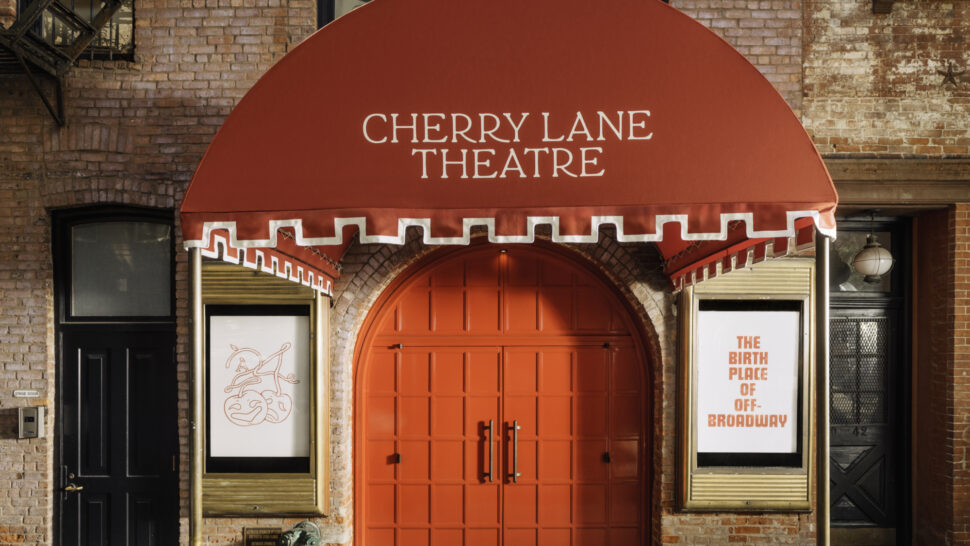
In a city that prides itself on constant reinvention, some places stand still long enough to become sacred. The Cherry Lane Theatre, tucked into a modest corner of Greenwich Village, is one of those rare spaces. This autumn, the theatre will officially reopen under new stewardship, marking not just a restoration of bricks and mortar, but a resurrection of spirit. Yet, what is most striking about Cherry Lane’s return is not simply that it is reopening, but how and why it is doing so, and what that says about the shifting soul of American theatre.
An Unlikely Survivor with a Radical Past
Founded in 1924 in a former brewery and box factory, the Cherry Lane Theatre is often celebrated as the birthplace of Off-Broadway. Over the decades, it gave a platform to bold voices before they were safe to bet on, from THE VAGINA MONOLOGUES to TRUE WEST, and playwrights such as Edward Albee, Sam Shepard, Lorraine Hansberry, and Amiri Baraka. The venue was scrappy, unafraid, and fiercely local. That mattered.
The theatre’s closure in 2021, amid pandemic upheaval and financial uncertainty, felt less like an isolated event and more like a symbolic loss. Another historic space, seemingly unable to withstand the economic pressures that continue to squeeze independent venues, especially those that do not conform to commercial moulds.
But now, Cherry Lane is back. The venue will not only continue operating as a performance space, but will do so under a renewed commitment to nurturing emerging writers. It is a revival that speaks volumes, not just about the value of the past, but about who gets to shape theatre’s future.
Preservation or Reinvention
What makes this reopening particularly compelling is the tension it holds between preservation and progress. Unlike commercial revivals that slap a fresh coat of paint on history and call it a tribute, Cherry Lane’s reawakening is deliberately programmed around continuity of mission.
The Lucille Lortel Foundation, which already oversees the nearby Lortel Theatre, has not announced a glitzy rebrand or pivot to more profitable fare.
This is not a glossy reopening with celebrity-driven vehicles. It is a restoration of values. In an industry increasingly obsessed with premieres, branding, and star-led transfers, Cherry Lane’s next chapter reminds us of another tradition, the theatre that listens more than it markets, and programs without needing to pander.
Still, the risks remain. Can a small venue in one of Manhattan’s most expensive neighbourhoods afford to programme radical work? Will it maintain artistic freedom without the pressures that come with brand preservation or institutionalisation? These questions linger.
Space as Power in the Theatre Ecosystem
Beyond nostalgia, Cherry Lane’s reopening underscores a fundamental reality of live performance: space is power. Who owns it, who controls it, and who can afford to risk it. While major Broadway houses are locked in the hands of a few corporate owners, independent spaces like Cherry Lane are rare, and increasingly endangered.
When such a space falls, it is not just a theatre that closes. It is a pipeline, a place where new voices find resonance, and where form is allowed to stretch and strain without needing to sell 1,200 tickets a night. The problem is, few such places remain. Many small theatres are now priced out of their neighbourhoods or forced to conform to audience-safe programming in order to survive.
That is what makes this particular comeback notable. Not because it is a triumph over adversity, but because it reframes what success might mean for a cultural institution. Cherry Lane is not returning with commercial ambition. It is not capitalising on its historic name with a jukebox crowd-pleaser or star vehicle. It is reclaiming its original mandate, to nurture daring new work, and doing so in a moment when that feels more endangered than ever.
A Model for a New Kind of Theatre Revival
There is a certain poetry in a theatre that has always stood slightly to the side of centre returning with a story not about itself, but about the artists it will serve. It is tempting to see Cherry Lane as a metaphor, a fragile survivor in a post-pandemic world, preserved not by sheer profit but by belief in purpose.
But there is something more pragmatic at play too. Its reopening raises the possibility that legacy spaces can be revived not as museum pieces, but as active, evolving parts of the cultural conversation. It dares other arts organisations to think less about capital campaigns and gala nights, and more about curatorial courage and community investment.
This does not mean sentimentality should rule. A space like Cherry Lane must adapt to be sustainable. New programming models, flexible usage, and technological integration may all be necessary. But if those evolutions come in service of artistic boldness rather than brand maintenance, then this small theatre may yet punch well above its weight.
As the doors reopen this September, the hope is not simply that the Cherry Lane Theatre survives. It is that it provokes. That it disturbs. That it inspires. And above all, that it remains, as it always has been, just a little bit dangerous.
Because that, in the end, is what Off-Broadway is meant to be.