SOUTH ASIAN SUMMER Coming to Stratford
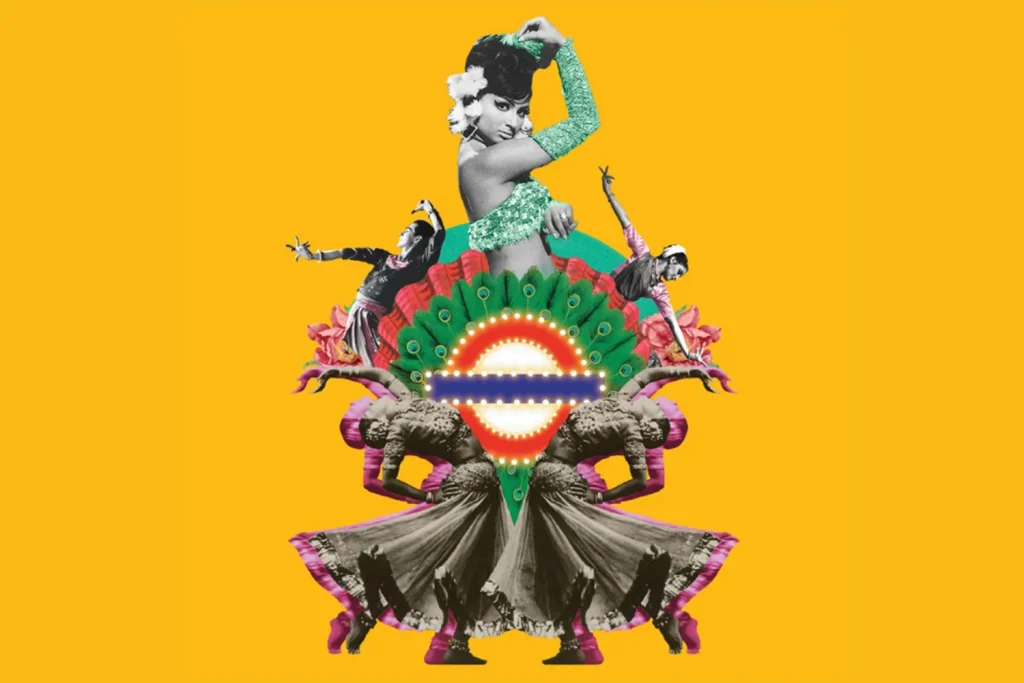
In July, Stratford East is handing over its stage to a festival that feels larger than a themed season and more purposeful than a one-off showcase. South Asian Summer will run from 8 to 18 July 2026, bringing together theatre, live music, comedy and cabaret across ten days at the east London venue. Read another way, it is a statement about range. Rather than presenting South Asian work as a single tradition or mood, the line-up moves from anti-colonial satire to contemporary drama, from stand-up to Bollywood celebration, then on to qawwali and an adults-only cabaret finale. Set within Lisa Spirling’s first season as artistic director and joint CEO, and in the theatre’s 140th year, the festival suggests a venue trying to widen the centre of its programming, not merely decorate the edges.
The opening night belongs to Kanpur: 1857, which arrives on 8 July carrying the kind of fringe pedigree that usually guarantees curiosity before the lights even go down. Stratford East is billing it as the Fringe First-winning sell-out that returns to London after earlier success, and the official production page leans into its volatility. Written by and starring Niall Moorjani, and co-directed by and starring Jonathan Oldfield, the play is set in the aftermath of the 1857 uprising against British colonial forces. Its central image is a potent one, an Indian rebel strapped to a cannon and forced into an accounting with a British officer. That sounds severe, yet the show is framed as comic satire, using wit to pick at colonial violence, gender politics and the ethics of making art during crisis. It is a fierce choice for the first night, and exactly the sort of opening that tells audiences this festival is not interested in being polite.
From 10 to 14 July, the mood shifts to the present with BLUE MIST, Mohamed-Zain Dada’s Olivier-nominated play, presented by Boundless Theatre in association with Tamasha. Stratford East’s listing calls it sharp and darkly funny, and the setup alone explains why it has travelled well since its Royal Court debut. Inside Chunkyz Shisha Lounge, three young men talk, hustle and test their loyalties, while aspiring journalist Jihad gets a chance to make his own documentary and tries to tell a story about his community on his own terms. The tension sits in the gap between self-representation and a media culture that thrives on fear, distortion and easy narratives. Directed by Milli Bhatia, BLUE MIST gives the festival a contemporary pulse. It is not there as a dutiful issue play, but as a live wire about trust, ambition and who gets to shape the public record.
Mid-festival, Stratford East swaps argument for release, though not without a point of view. Brown Sauce Comedy Club lands on 15 July, bringing with it a reputation already well established on the London circuit. The venue describes it as a legend of Asian comedy, with previous performers including Nish Kumar, Mawaan Rizwan, Ria Lina, Sindhu Vee and Ahir Shah, and says the night is built specifically to foreground the humour of Brown and Asian people. That matters, especially in a festival like this, because laughter here is not just relief, it is authorship. The following evening, Say Shava Shava marks 25 years since Kabhi Khushi Kabhie Gham with a concert-style tribute built around live vocals, dance and a reimagined audio-visual atmosphere. Stratford East is clear that this is not a stage adaptation of the film or a screening, but a theatrical event inspired by its soundtrack and legacy. For anyone who grew up with those songs, or knows how quickly a Bollywood number can collapse generations onto the same dancefloor, it looks likely to be one of the festival’s warmest nights.
On 17 July, the programme turns devotional and expansive with Qawwali LIVE, performed by the Hussain Brothers Qawwali Group. The company page describes the ensemble as ninth generation bearers of a Sufi musical lineage, led by Ashaz Hussain and shaped by the poetic tradition associated with Amir Khusro. The first half of the evening is devoted to classical Sufi qawwali, while the second moves into modern film songs and ghazals, drawing a line between inheritance and reinvention rather than pretending they are separate worlds. That arc feels particularly apt for Stratford East, a theatre whose history has often depended on finding fresh energy in established forms. The promise here is not simply of a concert, but of communal intensity, soaring vocals, rhythmic handclaps and the call-and-response electricity that makes qawwali feel less like performance than collective momentum.
The closing event, Heeramandi, looks set to end the festival in a very different register again, one that folds beauty, provocation and historical revision into the same room. Presented by Insaan Arts in collaboration with Amina Khayyam Dance Company on 18 July, the work draws on the history of Lahore’s Heeramandi quarter and the courtesans once celebrated there as artists, dancers and poets before British colonial morality recast them through shame and suspicion. Stratford East describes the evening as British Asian cabaret, fusing classical and contemporary dance, music, burlesque, comedy, pole and cage performance. It also positions the piece as a reclamation, confronting misogyny, moral policing and imperial control while centring female and LGBTQ+ empowerment. That combination of sensuality and political memory makes it a fitting full stop for the festival. It insists that pleasure, resistance and performance history belong in the same sentence, and probably on the same stage.
What makes South Asian Summer stand out is not simply that each event has its own appeal, though that is clearly true, but that the shape of the whole thing resists flattening. Too often, festivals built around identity end up implying a house style, as if a community can be best represented by one tone, one politics, one audience. Stratford East has programmed against that instinct. Here, satire sits beside journalism-driven drama, stand-up beside nostalgic spectacle, sacred musical tradition beside unruly cabaret. The result is a festival that feels less like branding and more like argument, one that says South Asian performance in Britain is popular, political, funny, musical, sensuous, devotional and gloriously unwilling to stay in one lane. Tickets start at £10, which only sharpens the invitation. For a theatre entering a new chapter, this looks like a confident way to begin.