
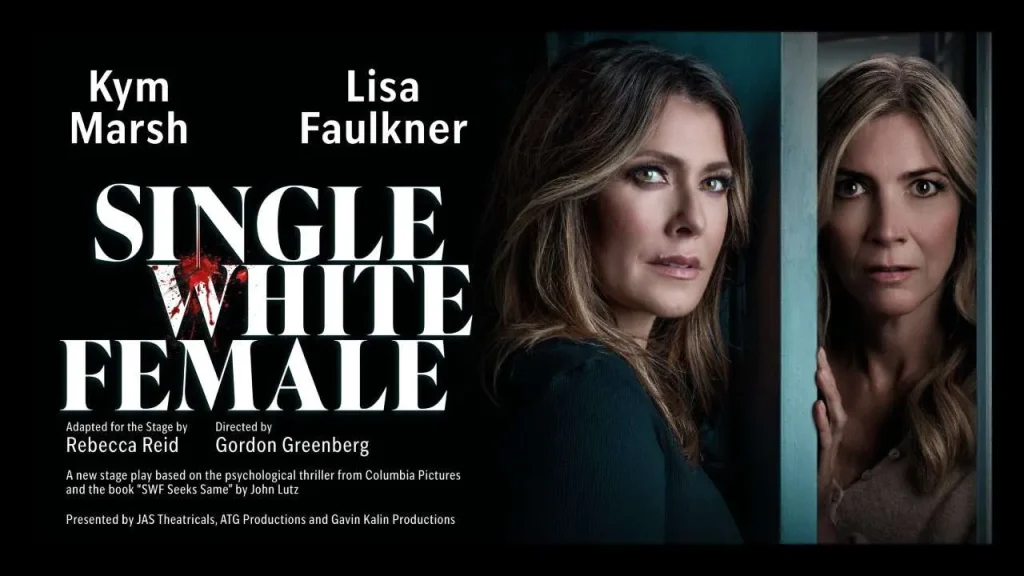
Single White Female tour gets a dramatic makeover
Psychological thrillers have a unique appeal: they invite audiences into the intimate lives of characters while exposing the thin line between trust and obsession. The stage adaptation of SINGLE WHITE FEMALE, touring the UK and Ireland later in 2026, builds on that tradition with a contemporary twist. The production stars Kym Marsh and Lisa Faulkner, two household names familiar to Australian TV audiences through shows like Coronation Street and Holby City. This new adaptation is written by Rebecca Reid, directed by Gordon Greenberg and promises to bring dark humour and modern anxieties to a story originally told on film more than thirty years ago.
The 1992 film SINGLE WHITE FEMALE starred Bridget Fonda as Allie Jones, a software designer who advertises for a roommate after discovering her fiancé’s infidelity. Jennifer Jason Leigh played the enigmatic Hedy Carlson, whose initial support soon turns sinister as she begins to adopt Allie’s appearance and identity. The story tapped into early ’90s fears about urban living, personal autonomy and the boundaries between roommates. Reid’s stage adaptation updates the premise for the digital age. In this version, Allie runs a tech start‑up and invites Hedy, portrayed by Kym Marsh, into her home as she tries to balance professional ambitions with single motherhood. As in the film, an initially benign arrangement devolves into obsession and deceit. However, the stage version emphasises the role of social media and the gig economy in shaping modern identity, infusing the thriller with commentary on how we curate our lives online.
Kym Marsh gained fame as a member of the pop group Hear’Say before pivoting to acting. She became a household name through her portrayal of Michelle Connor on Coronation Street, a role she inhabited for thirteen years. Marsh recently played Cruella de Vil in the UK and Ireland tour of 101 Dalmatians; her ability to shift from villainous glamour to vulnerability makes her a compelling choice for Hedy. Lisa Faulkner, known to Australian audiences for her work in Spooks and as a winner of Celebrity MasterChef UK, plays Allie. Faulkner’s stage experience is more limited—this marks her first major theatrical role in over two decades—yet her television presence and culinary success suggest she can bring nuance to a character torn between empathy and alarm.
The supporting cast includes Andro, Jonny McGarrity and Amy Snudden, actors with credits ranging from Shakespeare to contemporary drama. Greenberg, the director, is known for his work on Holiday Inn and Guys and Dolls; his knack for blending classic storytelling with modern sensibilities will likely enhance the thriller’s suspense. Reid’s script is said to balance homage to the original with new plot twists that challenge contemporary audiences. “We wanted to take the essence of the film’s obsession and reframe it through today’s technology and gig culture,” Reid noted in an interview. She added that the stage affords a unique intimacy: the audience witnesses the characters’ transformation up close, without the distancing effect of a camera.
The tour is ambitious, visiting major cities across the UK and Ireland. According to the official tour website, venues include the Wales Millennium Centre, the Grand Opera House York, the Opera House Manchester, Blackpool Grand Theatre, Cambridge Arts Theatre and the Gaiety Theatre Dublin. Each venue offers capacities between 800 and 1,800 seats, suggesting that producers expect strong interest. Tickets are being sold through a combination of theatre box offices and national ticketing services, with premium packages that include post‑show Q&A sessions. Such events allow audiences to discuss the play’s themes directly with the cast and creative team.
Will the show travel beyond Europe? Stage thrillers have a history of international tours, consider the play adaptation of Fatal Attraction and Wait Until Dark. If Single White Female proves successful in the UK and Ireland, producers may look toward markets where English‑language psychological dramas are popular. Australia has welcomed touring productions of The Woman in Black, Ghost Stories and Deathtrap, demonstrating a taste for spine‑tingling suspense. An Australian tour could feature local guest actors in supporting roles, much like how The Mousetrap incorporated homegrown talent. For now, fans will need to keep an eye on announcements, but the prospect of seeing this modern thriller on Australian stages seems plausible.
What sets this adaptation apart is its emphasis on contemporary anxieties. Reid’s script explores how social media and technology blur personal boundaries. Hedy’s stalking in the film relied on physical intrusion; in the play she can hack into Allie’s digital calendar, impersonate her on dating apps and gaslight her via group chats. This shift highlights how our online personas make us vulnerable to manipulation. In one scene, Hedy copies Allie’s hairstyle not by visiting a salon but by ordering the same wig from an online influencer. In another, she undermines Allie’s start‑up by posting negative reviews from fake accounts. These additions bring the thriller into the present while preserving the themes of identity theft and female autonomy.