
RICHARD II Takes The Spotlight At The Bridge
This staging, directed by the formidable Nicholas Hytner, has just begun performances at the Bridge Theatre and runs until 10 May. For a theatre devotee like me, there’s a particular thrill in witnessing a centuries-old text in the hands of a brand-new cast and creative team—each one determined to breathe fresh life into ancient verse. With its illustrious leading man and a host of powerhouse talents, RICHARD II is shaping up to be one of the most intriguing productions of the season.
Shakespearean revivals might make some eyes roll—“another one?”—yet they persist in every corner of the theatrical world. Data from the Shakespeare Birthplace Trust indicates that, on average, there are over 300 major Shakespeare productions staged globally each year. That’s a staggering volume for a playwright who’s been dead more than 400 years. Why do we keep coming back?
At the heart of it all, Shakespeare’s plays speak directly to the complexities of power, identity, and human frailty—issues that remain painfully relevant. RICHARD II is no exception. This story, steeped in questions of kingship and the divine right to rule, feels equally urgent in our age of political upheavals and shifting allegiances. That’s precisely why it continues to attract top-tier talents looking to put their own stamp on the Bard.
Jonathan Bailey As Richard
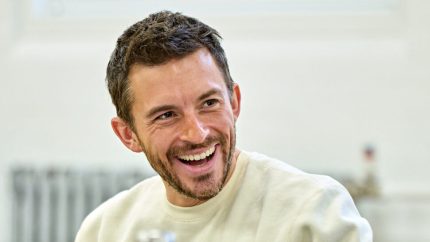
One of the biggest draws to this production is, without a doubt, the casting of Jonathan Bailey in the title role. Theatre insiders will recall Bailey’s meteoric rise through the West End, culminating in widespread acclaim for his work in musicals and drama alike. On screen, he’s delivered memorable performances—yet there’s something about watching him tackle the capricious, poetic lines of Richard II that ignites an entirely different fire.
From all accounts, Bailey has immersed himself in the emotional extremes demanded by the role. Those behind the scenes whisper in hushed tones about the fervour he brings to the rehearsal room: one moment a sensitive, poetic dreamer, the next a volatile figure grappling with the precarious nature of authority. RICHARD II’s story charts the fall of an impulsive king who believes himself nearly divine, only to lose control of his kingdom to the more pragmatic Henry Bolingbroke. The result is an examination of a person stripped bare of his grandeur—and, if the early buzz is accurate, Jonathan Bailey conveys that sense of heartbreak and confusion in spades.
Backing Bailey is a formidable ensemble. Royce Pierreson brings a sharp, no-nonsense urgency to Henry Bolingbroke, while Christopher Osikanlu Colquhoun as the Earl of Northumberland sets the stage for rebellion. Olivia Popica plays Queen Isabel, offering a portrait of loyalty, sorrow, and dignity against the crumbling edifice of Richard’s reign.
The Full Cast Roster
Of course, any Shakespearean production worth its salt relies on the synergy of its entire cast, not just the headliners. Joining Bailey is Amanda Root, taking on dual roles as Green and the Duchess of York, a chance to showcase her nuanced approach to loyalty and familial ties. Phoenix Di Sebastiani appears as Thomas Mowbray and Groom, delivering a deft balance of fierce pride and earnest support for the king. Meanwhile, Clive Wood gives the venerable John of Gaunt a gravitas that resonates particularly strongly with audience members who have followed his long career on stage.
The Bridge has also welcomed Michael Simkins back, this time as the Duke of York, which will doubtless delight those who recall his previous appearances in this very theatre. Rounding out the cast, you’ll find Adam Best as Sir John Bagot, Seamus Dillane as Lord Surrey, Vinnie Heaven as Aumerle, and Jordan Kouamé juggling dual roles as Sir John Bushy and Harry Percy. Gerard Monaco, George Taylor, and Badria Timimi bring further depth as Sir Stephen Scroop/Keeper, Fitzwater, and the Abbess of Carlisle, respectively. In the wings are understudies Emma Bown, Martin Carroll, and Stephan Boyce, ensuring that no matter what happens, the show will go on.
The Artistic Team Behind The Scenes
Let’s not forget the creative wizards who shape the environment in which this epic tale unfolds. Under Nicholas Hytner’s direction, the design by Bob Crowley transforms the Bridge stage into a grand but unstable kingdom—think shimmering regality that hints at cracks beneath the surface. Lighting by Bruno Poet underscores key shifts in power, bathing Richard’s world in gold one moment, then plunging it into shadow the next. The sound by Carolyn Downing amplifies the emotional stakes, while Grant Olding’s original score threads drama and suspense through each scene without ever overpowering Shakespeare’s language.
These elements converge under the careful coordination of Robert Sterne, the casting director who orchestrated this ensemble, and Lily Dyble, the associate director who ensures that every nuance of performance is polished to perfection. Assisting on the visual side, Jaimie Todd steps in as associate designer, Charlie Smith as associate sound designer, and Eleanor Dolan as costume supervisor, with Lily Mollgaard handling props. It’s a veritable army of creatives and technicians, each bringing a vital piece to the puzzle.
Shakespeare’s Timeless Relevance In Turbulent Times
As someone who’s covered theatre for a good two decades, I often find that Shakespeare resonates most powerfully when society is grappling with big questions. RICHARD II, in particular, addresses the fragility of power: how quickly a seemingly all-powerful ruler can be brought low by a single misstep or a wave of public sentiment.
When I mention “public sentiment,” I’m referring to the many ways that theatre mirrors our modern political environment. One need only glance at today’s headlines to see leaders rise and fall with astonishing swiftness, sometimes over a misplaced tweet or a subtle shift in alliances. Nicholas Hytner’s production sets this centuries-old tension in a space that deliberately blurs historical and contemporary design choices—allowing the audience to see the parallels between Shakespeare’s reflection on monarchy and our own changing views on leadership. More than once, you may catch yourself thinking, “Yes, I’ve seen a leader like that before—in my own lifetime.”
Live Adaptation Of A Courtly World
While the production follows the classic text closely, insiders are buzzing about the atmospheric interplay between the audience and the cast. Expect a dynamic use of the Bridge Theatre’s flexible stage configuration, with actors stepping beyond the usual boundaries and engaging with viewers in subtle, surprising ways. One insider told me that during dress rehearsals, Bailey’s Richard sometimes appears among the crowd—physically bridging the distance between the monarchy and its subjects. Shakespeare’s lines about divine right ring quite differently when they’re voiced at close quarters, in a style reminiscent of immersive theatre. It’s not the typical Elizabethan staging, that’s for certain.
This blurring of lines pulls the audience into the emotional core of the play, making them witness—rather than passive observer—to Richard’s downfall. The result, I’m told, is a sense of communal reckoning: we become implicated in both the king’s rise and his eventual humiliation. Having sat in on a tech run, I can attest to the electric energy in the room when the boundary between stage and seat disappears, leaving you wondering whether you’re a loyal subject or a silent conspirator.
Kings And Crowns
Standing in that backstage corridor the other evening, I couldn’t help reflecting on how theatre, at its best, transcends mere spectacle. It becomes a conversation—between the past and present, performer and spectator, monarchy and subject. RICHARD II is a story of grandeur lost, of identity at odds with fate, and of a kingdom uncertain about its leader. That uncertainty echoes in the world outside the theatre too, which is what makes seeing a production like this feel so urgent.
When the lights fade and the applause roars, you’ll leave the auditorium pondering the transient nature of power—and, perhaps, savouring the realisation that even centuries-old words can illuminate the present in a way nothing else quite can. For me, that’s the true magic of Shakespeare: every performance is a new encounter with our shared humanity, reminding us that even kings must answer to something greater than themselves.
So, if you’re hunting for a theatre experience that marries classical gravitas with a contemporary edge, set your sights on the Bridge before RICHARD II concludes its run. Because, in this production, you’re not just observing history—you’re living it. And as the old saying goes: “Heavy is the head that wears the crown.” Let’s see how Jonathan Bailey bears its weight when all eyes are upon him.