
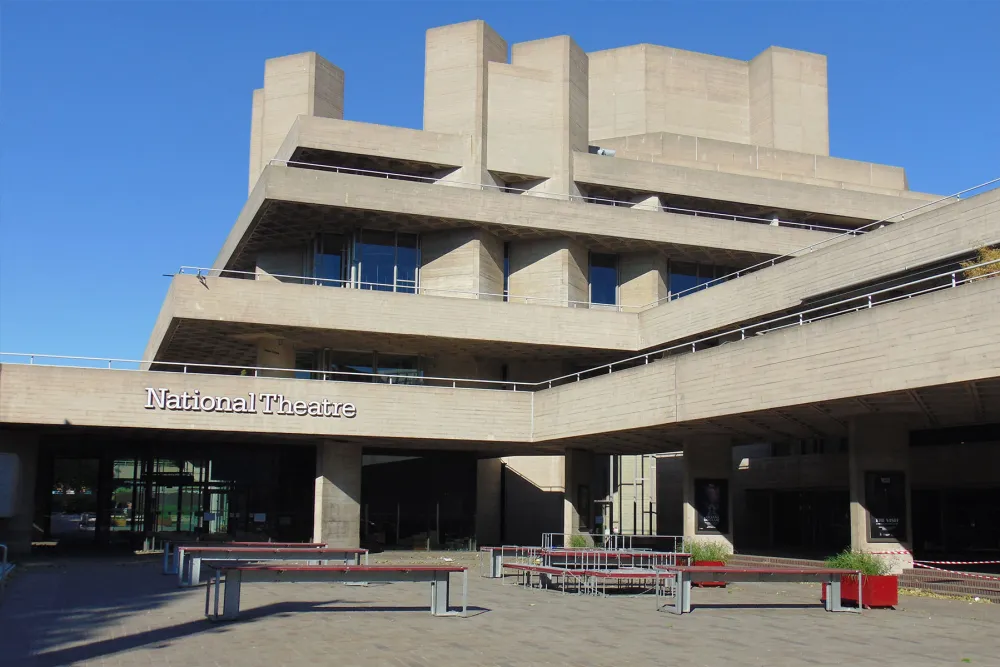
National Theatre and Bank Of America Join Forces to Power the Next Generation of Creatives
To the casual theatregoer, what happens backstage can feel invisible—magical, even. Yet behind every immersive set or well-tailored costume lies real human labour, often years in the making. According to data from the Department for Culture, Media and Sport (DCMS), 30 per cent of job vacancies in the cultural sector are impacted by skills shortages. That means nearly one-third of roles remain unfilled or understaffed, leaving theatres struggling to maintain the level of quality audiences expect.
For many, theatre has always been perceived as risky business. The hours can be unpredictable, the financial rewards uncertain. But the creative industries in the UK contribute a staggering £126 billion in gross value added to the economy every year—more than aerospace, life sciences, and automotive combined. If we let the backbone of that success, namely our skilled workforce, dwindle away, the entire edifice could start to crumble.
The National Theatre’s partnership with Bank of America arrives at precisely this juncture: a moment when theatres nationwide are craving fresh talent, yet the pipeline from school to stage is strained. As Kate Varah, executive director and co-chief executive of the National Theatre, noted, “We can’t fix this problem on our own.” It will require collective will, substantial funding, and a willingness to rethink how we train new entrants.
Inside the Skills Centre’s Grand Plan
So what exactly is this new partnership promising? For starters, the National Theatre’s Skills Centre aims to reach 15,000 people over the next three years through engagement programmes, technical training, and career support. That’s not a small number. Think of it this way: 15,000 fresh-minded enthusiasts diving into scenic construction, lighting, stage management, costume design, or prop making. It’s an ecosystem of creative potential.
One of the most enticing initiatives is the paid production placements, set to launch on every South Bank production from September 2025. Those who secure a spot will work alongside the National Theatre’s creative and technical teams, gaining first-hand experience that no textbook or YouTube tutorial can replicate. For many aspiring backstage gurus, that means building a real CV—one that can open doors throughout the industry.
The Centre will also double the reach of its Nationwide Young Technicians scheme, thereby answering a call for more specialised training in lighting, sound, and stage management. Beyond London, an online course will cater to 50 young people scattered across the UK, supplemented by five new partnerships offering in-person tuition. That’s particularly significant in an era when geographical barriers can cut talented teenagers out of the picture before they’ve even had a chance to audition for a behind-the-scenes role.
But it doesn’t stop there. New courses will delve into prop making, costume, and even design for stage. Have you ever marvelled at the intricacy of a battered trunk in a period drama, or the shimmering detail on a 19th-century gown? These are crafts that demand an artisan’s flair, often blending technology with old-world skill. By introducing a structured pathway into these disciplines, the National Theatre hopes to rejuvenate corners of the industry that have long been overshadowed by the more glamorous, onstage roles.
The Urgency Behind Apprenticeships and T-Levels
When was the last time you met a young person who said, “I want to be a stage rigger” or “I’m training to become a scenic painter”? It’s not exactly the kind of ambition championed at most career fairs. Yet the Centre’s plans to increase the number of Production Arts T-Level placements and apprenticeships could shift that narrative. T-Levels, relatively new to the educational landscape, offer a mix of classroom learning and on-the-job experience—precisely what theatre novices need to flourish.
A 2019 industry survey highlighted that 60 per cent of theatres have struggled with staff shortages since that year, a figure likely exacerbated by the pandemic and subsequent budget cuts. Meanwhile, Ravensbourne University research shows that 75 per cent of young people want to work in creative sectors, but 42 per cent struggle to access entry-level routes. This mismatch—high demand among youths, but limited openings or awareness—suggests a fixable problem. The National Theatre’s approach, forging direct links between training and actual productions, is a potent solution that could be replicated by other cultural institutions.
A Vital Yet Overlooked Field
Here’s the unique angle: The behind-the-scenes world is often less lauded than the onstage spectacle, but it is no less dramatic. Technical teams perfect illusions that allow audiences to feel intimately connected with the story unfolding in front of them. When I shadowed a lighting designer years ago, I was awestruck by how a subtle change in a bulb’s hue could shift the entire mood of a scene. Similarly, a single tear in a costume’s seam could lead to frantic backstage sewing as the actor stands in the wings.
These moments—scarcely visible to the crowd—are the lifeblood of theatre’s magic. They are also the moments that prove the sector needs thorough, hands-on training. You can’t just talk about how to fix a strobe light at a crucial cue; you need to have done it under real pressure, with the audience waiting.
A Win For the Wider Creative Industry
It’s easy to see this initiative as a win solely for theatre, but the ramifications could ripple throughout creative industries at large. Skilled technicians and craftspeople trained at the National Theatre often migrate into film, television, events production, and even theme park design. The synergy between theatre and other creative mediums ensures a cross-pollination of ideas and fosters resilience for professionals who might need to pivot in a rapidly changing employment landscape.
Bank of America’s involvement underscores the broader economic significance of the arts. After all, it’s not every day that a major financial institution invests so pointedly in artistic training. This move signals an understanding that culture, commerce, and community are inextricably linked. Strong, well-trained creative workforces don’t just fill theatres: they contribute meaningfully to local economies, driving tourism, media coverage, and global prestige. From Shakespeare’s Globe in London to local fringe festivals in Brisbane, the story remains the same: supporting the arts is supporting innovation and growth.
A Glimpse into the Future
The National Theatre’s new partnership—and the Skills Centre’s expanded ambitions—could set a blueprint for other institutions wrestling with the same shortages. If we can correct the skills gap, we might see a renaissance in stage production, a flowering of new talent, and a renewed sense that behind every iconic performance is a team of exceptional craftspeople, quietly plying their trade.
Perhaps, in just a few years, we’ll witness a generation of newly minted prop artists and stage managers who recall their time at the Skills Centre as the spark that ignited their entire career. Maybe we’ll hear from a West End lighting designer who first learned to program a board through the Nationwide Young Technicians scheme. In an industry that thrives on stories, these could be the origin tales that reshape the British theatre landscape for decades to come.
Because ultimately, what’s at stake is the continued vibrancy of live performance—its capacity to unify audiences, to challenge our thinking, and to uplift communities. If the theatre doesn’t have the workforce to keep the lights on, quite literally, we lose more than just entertainment. We lose a space where humanity meets creativity in its rawest form.
When all is said and done, the National Theatre and Bank of America’s partnership is a testament to what can happen when vision meets opportunity. Together, they’re not just training individuals; they’re safeguarding an entire tradition of craftsmanship, artistry, and storytelling. And that, my friends, is worth every spotlight they can muster.
Because the real magic of theatre isn’t just the show you see— it’s knowing that the next generation has the opportunity to keep that magic alive.