
LOVE NEVER DIES Concert Returns to London
The sequel to one of musical theatre’s most enduring works is set to return to London in concert form later this year, bringing with it a familiar sense of spectacle alongside a renewed focus on its central love story. Andrew Lloyd Webber’s LOVE NEVER DIES, which continues the story of THE PHANTOM OF THE OPERA, will be presented for two performances at the London Palladium this October, revisiting a score and narrative that has continued to evolve in the years since its original debut.
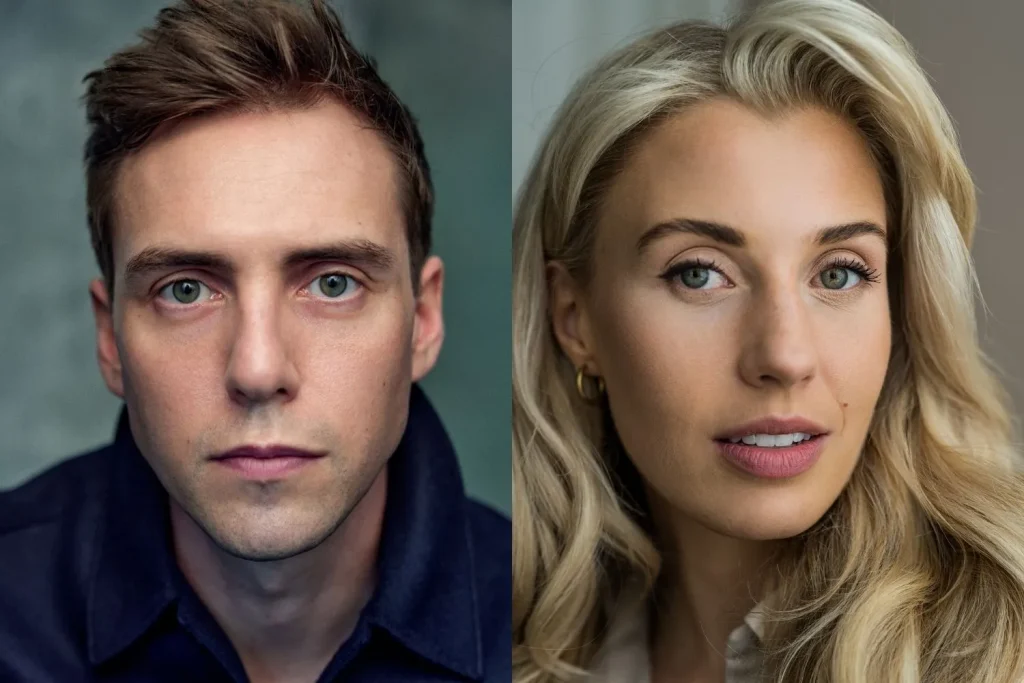
Leading the cast for this concert staging are Jamie Muscato and Celinde Schoenmaker, both performers with established connections to the piece and to Lloyd Webber’s wider canon. Muscato will take on the role of the Phantom, a character defined as much by obsession as by artistry, while Schoenmaker returns to the role of Christine, a part she has previously inhabited in earlier iterations of the work. Their casting was announced in a moment of theatrical symmetry, revealed during Muscato’s own concert and coinciding with Lloyd Webber’s birthday, adding a celebratory note to the production’s unveiling.
Directed by Shaun Kerrison and produced by Darren Bell alongside Cuffe and Taylor for Live Nation, the concert follows a previous staging that garnered strong audience support and industry recognition. That earlier version, performed at Theatre Royal Drury Lane, was notable for its scale and orchestral richness, presenting the musical in a format that foregrounded its sweeping score while retaining a sense of theatrical storytelling. The return engagement suggests an ongoing appetite for revisiting the material in a concert setting, where the music is allowed to take precedence and the narrative is distilled to its emotional core.
Set a decade after the events of THE PHANTOM OF THE OPERA, LOVE NEVER DIES relocates its characters from the shadowed corridors of Paris to the glittering, unsettling world of early twentieth century New York. The Phantom, having escaped his past, has reinvented himself as a mysterious impresario in Coney Island, a setting that reflects both spectacle and illusion. Christine, now married to Raoul and raising their son Gustave, is drawn into this world under the promise of a new opportunity, only to find herself confronting unresolved emotions and the enduring pull of a connection she believed was long behind her.
The musical has always occupied a complex position within Lloyd Webber’s body of work. While THE PHANTOM OF THE OPERA achieved near-universal acclaim and global success, its sequel has prompted more divided responses, with audiences and critics often negotiating their expectations of what a continuation should offer. Over time, however, LOVE NEVER DIES has undergone revisions and reimaginings, with subsequent productions refining both its narrative and its tonal balance. The concert format has become one of the ways the piece has been reintroduced, allowing audiences to engage with the score in a fresh context, free from some of the staging expectations that accompanied its original runs.
There is a particular resonance in presenting the work in a venue such as the London Palladium, a theatre synonymous with large-scale musical events and concert presentations. The limited nature of the engagement, just two performances across consecutive evenings, reinforces the sense of occasion, positioning the production as both a return and a moment of rediscovery. It also reflects a broader trend within the industry, where concert stagings have become a way to revisit established works, attract audiences through event-style programming, and offer performers the opportunity to explore roles in a focused, musically driven environment.
For Muscato and Schoenmaker, the production represents both continuity and reinterpretation. Muscato’s recent work has demonstrated a capacity for intensity and nuance, qualities that align closely with the Phantom’s psychological complexity, while Schoenmaker’s prior experience as Christine brings a sense of familiarity that can deepen the emotional stakes of the story. Their pairing suggests a dynamic that balances vocal power with character-driven storytelling, an approach that is particularly suited to the concert format, where the performers’ interpretations must carry the weight of the narrative.
The return of LOVE NEVER DIES in this form also speaks to the enduring fascination with the world of the Phantom, a story that continues to inspire reinterpretation decades after its original creation. By shifting the focus to the music and the relationships at its centre, the concert staging offers a way of engaging with the material that feels both intimate and expansive, allowing audiences to reconnect with its themes of longing, memory and the passage of time.
As the production prepares to take the stage once again, it does so with a sense of both nostalgia and reinvention. For those familiar with the piece, it offers an opportunity to hear the score anew, shaped by different voices and perspectives. For others, it may serve as an entry point into a work that continues to evolve, finding new forms and new audiences with each iteration. In either case, the return of LOVE NEVER DIES in concert suggests that, whatever its past, the story still has the capacity to resonate, carried forward by music that refuses to fade quietly into the background.