
How A Math Major Became The Secret Weapon Behind New York’s Immersive Phantom Of The Opera
A new interactive revival of The Phantom of the Opera is proving that backstage ingenuity can come from unexpected places, with one of its key creative contributors drawing on a mathematics degree to help make the ambitious production possible.
Masquerade, now playing in New York, reimagines Andrew Lloyd Webber’s iconic musical as an immersive theatrical experience staged across a sprawling five-floor warehouse. Unlike traditional productions, the show requires audiences to move through the story in carefully timed waves while remaining fully absorbed in the world of the Phantom. Making that illusion work, without audiences colliding with each other or disrupting the action, has become one of the production’s greatest technical achievements.
At the centre of that effort is Simon Broucke, a 26-year-old music assistant turned creative problem-solver, whose dual degrees in music and mathematics from Columbia University unexpectedly became essential to the show’s design. Broucke stepped in when producers were trying to solve one of the production’s most complex challenges, how to move six separate audience groups and a cast of 42 performers through the show on schedule in under two hours.
Producer Randy Weiner and director Diane Paulus were not simply mounting another immersive theatre piece. In Masquerade, six cohorts of roughly 60 audience members each are guided through the experience at staggered intervals, all within the same 30,000-square-foot venue. Those groups need to remain evenly spaced, never crossing paths in a way that breaks the illusion, while actors also move rapidly through the building to hit scenes, costume changes and musical cues on time.
The production marks a different approach from Weiner and Paulus’s earlier interactive success Sleep No More, where audience members were free to roam and choose which characters to follow. Masquerade demands a much tighter structure. Audiences may feel as though they are drifting effortlessly through the Phantom’s world, but behind the scenes the movement is calibrated with extraordinary precision.
To help map the flow of the show, Broucke turned to a mathematical concept better known from cryptography than theatre-making, the Caesar cipher. The circular logic behind the cipher, in which letters or numbers loop through a repeating sequence, became the foundation for the show’s staging model. Broucke used that idea to divide Masqueradeinto 15-minute cyclical story blocks, each repeated six times across the evening.
The result is a rotating structure in which each audience group encounters the same sequence at different offsets. If one group remains in a particular location, they will see that scene recur every 15 minutes as the other cohorts move through the building on their own staggered pathways. The system allows the story to repeat and overlap without audiences seeing the machinery underneath.
Arriving at that rhythm was not straightforward. Broucke reportedly trialled different timing models, including 13-minute and 18-minute increments, before the creative team settled on the 15-minute cycle as the one that felt most natural dramatically. From there, he built detailed spreadsheets using colours and coded numbers to track every performer’s location, song and scene across the full structure of the evening.
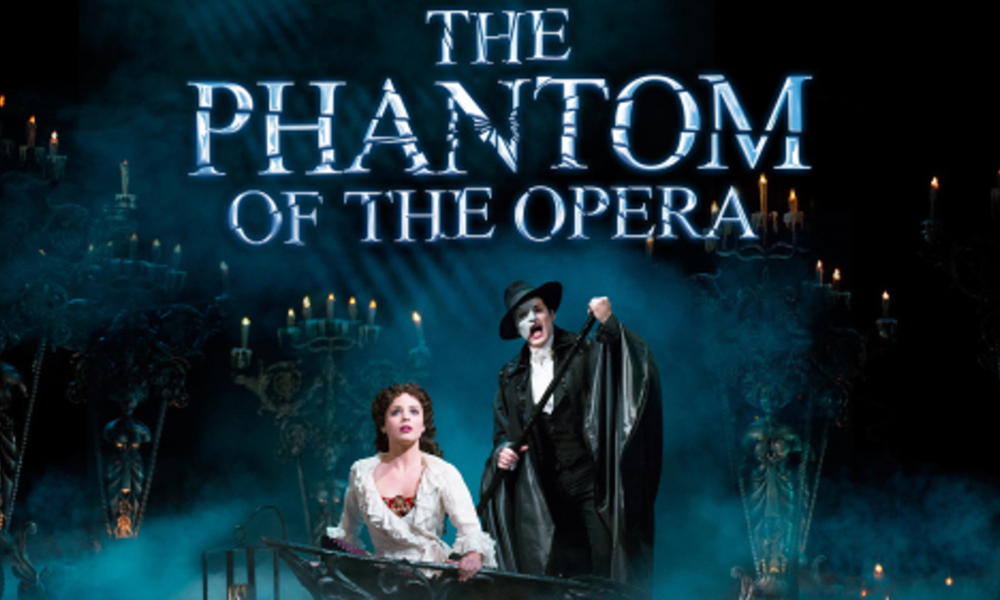
That mathematical framework supports a production that is designed to feel anything but mechanical. Audiences are guided by white mask-clad butlers through spaces including the Phantom’s hidden lair, passing features such as a two-way mirror used by the Phantom to spy on the opera house. At one point, spectators descend as the Phantom rows Christine through his subterranean world during “The Phantom of the Opera,” all while the timing of the surrounding groups remains invisible.
Broucke, now working full-time as a creative assistant and script supervisor, has said the goal was never to make the audience feel like they were solving a puzzle. Instead, the system exists to preserve emotion and immersion, allowing the show’s storytelling to feel immediate and intimate. That closeness is one of the revival’s biggest draws, with audience members positioned so near the actors they can see sweat and every physical detail of the performance.
That intimacy appears to be resonating. The first six weeks of Masquerade reportedly sold out in less than three hours, prompting an extension through September 6. For many audience members, the complexity of the staging remains completely hidden. One patron, Karolyn Martin, only discovered there were six overlapping audience tracks when a delayed flight forced her to switch to a slightly later entry time. Until then, she had no idea multiple versions of the show were unfolding simultaneously around her.
It is a remarkable feat of coordination, and one that highlights how theatre increasingly draws on disciplines far beyond the stage. In Masquerade, music, movement and storytelling may be what audiences remember, but the precision beneath it owes a great deal to mathematical thinking. In a production built on illusion, Simon Broucke’s calculations may be one of its most important secrets.