
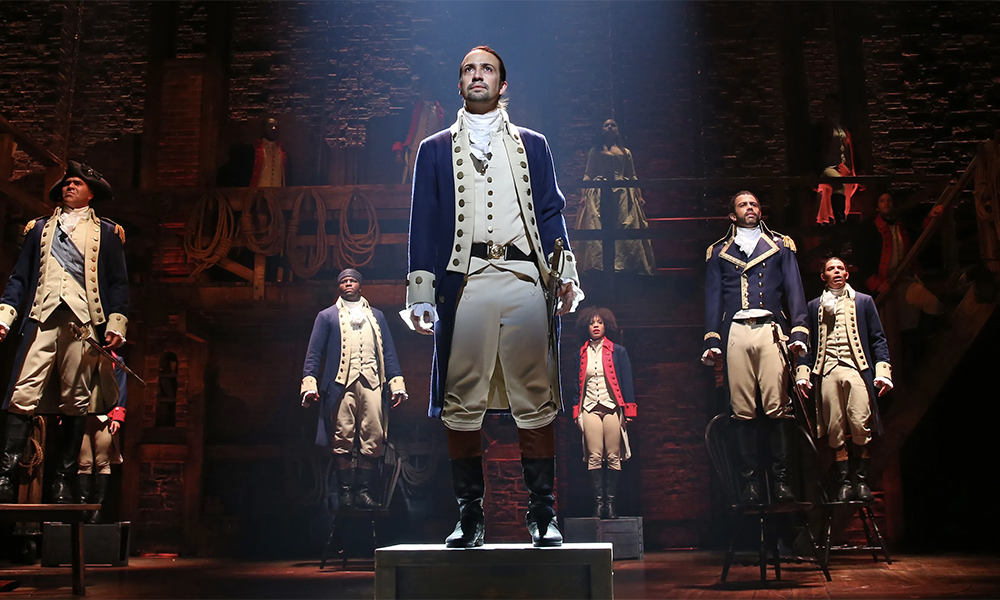
From ‘Hamilton’ to High Tariffs: What a Broadway Blockbuster Reveals About America’s Latest Trade War
Act I: A Musical That Remixed the Founding Narrative
When Hamilton burst onto the Public Theater stage in 2015, it recast the nation’s first treasury secretary as an immigrant striver whose financial acumen—central banking, federal debt funding, expansive trade—helped cement a fragile republic into an emerging power. The show’s color-conscious casting and hip-hop score framed that origin story as a celebration of pluralism and global exchange, aligning neatly with late-Obama-era optimism about immigration, open markets and America’s unfinished promise.
Act II: A Very Different Treasury Play in 2025
Fast-forward to Donald Trump’s second term and those ideals collide head-on with a revived tariff regime. Washington has imposed triple-digit duties on Chinese imports, while Beijing counters with its own steep levies. A “Phase Two” accord remains elusive, and policymakers are floating blanket tariffs—60 percent on China, 100 percent on Mexico, 20 percent on the rest of the world—to fund government and curb outsourcing. Critics warn the strategy is driving up consumer prices and suppressing demand for U.S. exports.
Act III: Lessons From Hamilton’s Ledger
Alexander Hamilton framed free-flowing commerce and robust federal credit as pillars of a durable republic. He championed revenue tariffs but viewed them as a temporary bridge toward diversified manufacturing and foreign investment—not as permanent walls. The musical distills that argument into punchy couplets about taking one’s “shot” and building “a hope that you can’t extinguish,” ideals anchored in outward-facing ambition.
Today’s tariff blitz flips that script. Instead of drawing capital and talent, Washington erects barriers that competitors are already routing around. Allies cut side deals, Southeast Asian suppliers reroute trade flows, and multinationals re-engineer supply chains to bypass U.S. ports. The risk: America could trade Hamilton’s vision of commercial ascendancy for a mercantilist cul-de-sac that accelerates rivals’ rise.
Act IV: Empires, Tariffs and the Arc of History
History offers warnings. Imperial Spain relied on colonial bullion until protectionist decrees strangled domestic industry. Britain’s Corn Laws shielded landowners but sowed unrest and ceded manufacturing leadership to freer-trading rivals. In each case, an empire’s zenith was followed by decline once it built walls instead of bridges.
The United States is hardly on the brink, but its standing still rests on the twin engines Hamilton once revved: immigration-fueled innovation and globally integrated markets. While Hamilton continues to pack theatres worldwide, its message—“a story about America then, told by America now”—lands differently amid punitive tariffs and visa clamp-downs.
Finale: Which Story Wins?
In the musical’s penultimate number, the chorus reminds the audience, “History has its eyes on you.” For today’s trade architects, that line doubles as a challenge: embrace Hamilton’s outward-looking blueprint or double down on protectionism. If the past is prologue, the choice will determine whether the United States stays centre stage—or watches from the wings as new powers claim the spotlight.