Broadway’s Badly Behaved Audiences Are Ruining the Social Contract of Theatre
The modern theatre audience has developed a strange contradiction at its core. People still crave the live thrill of Broadway, the collective gasp, the once-only electricity of performance, the glamour of going out, the cultural cachet of being seen at the show. But somewhere along the way, a growing number of patrons seem to have forgotten the social contract that makes live theatre possible in the first place.
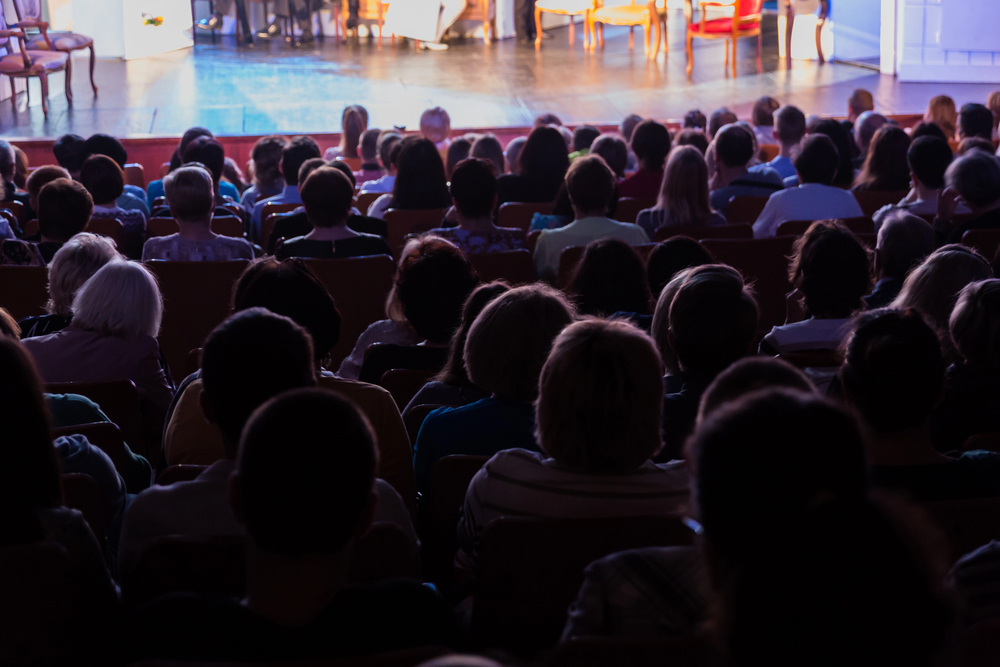
What is striking about the recent wave of horror stories from Broadway and beyond is not simply that audiences are misbehaving, but that so many now appear to experience public performance through the logic of private consumption. The theatre is no longer being treated as a shared civic space with rules, but as an extension of the living room, one in which viewers feel entitled to scroll, snack, film, chat, vape, unwrap, sing along, answer calls, and in some cases behave as though the performers are merely background noise to their own evening out.
It is tempting to blame smartphones for everything, and certainly they have made bad behaviour more visible, more frequent and more elaborate. Phones light up in darkened auditoriums, pull focus from the stage, and encourage the idea that any moment worth seeing is a moment worth capturing. Add wearable tech, social media reflexes and the impulse to document every experience for online validation, and it is easy to see why theatre staff are exhausted. But technology is only part of the story. The deeper problem is cultural. Too many people no longer seem to recognise that watching a live performance requires a degree of discipline, attention and mutual respect.
That erosion of etiquette did not begin with TikTok, even if TikTok has turbocharged it. Badly behaved audiences have always existed. What feels different now is the scale of the entitlement and the casualness with which it is expressed. The line most often cited by front-of-house staff, that because someone paid a lot for a ticket they can do whatever they want, reveals the real mindset at work. Theatre has been recast as a transactional product rather than a communal event. In that framework, the audience member is not a participant in a collective experience but a customer who believes comfort outranks consideration.
Covid almost certainly made things worse. Years of isolation, screen dependency and disrupted social habits appear to have dulled people’s sense of how to behave in shared spaces. Many theatres are now dealing not only with ordinary rudeness but with people who seem genuinely unable to tolerate sustained attention without stimulation, or to understand that their actions affect hundreds of other people in the room. The issue is not simply manners, though manners matter. It is a broader collapse in the ability to be present without constantly asserting oneself.
The irony, of course, is that theatre is one of the last places where presence still matters. Unlike film or television, it cannot be paused, rewound or personalised. It asks the audience to submit to time, to silence, to the rhythms of a room full of strangers. That is its beauty. It is also exactly what makes it intolerable for those who have been trained by digital life to expect instant control over every environment they enter.
And yet, while it is easy to mock the worst offenders, theatres themselves are not entirely blameless. Many venues have embraced a consumer experience that encourages contradiction. They market shows as events, encourage a party atmosphere, sell noisy snacks, and court casual audiences unfamiliar with theatre etiquette, only to act surprised when some patrons behave as though they are at a bar, a concert or a lounge room screening. Accessibility and welcome are important, and nobody wants a return to stuffy elitism, but there is a difference between making theatre feel open and making it feel consequence-free.
That is why the most sensible response is not snobbery but clarity. Audiences need to be told, firmly and repeatedly, what is expected of them. Theatres should feel entirely comfortable enforcing phone bans, removing disruptive patrons, and treating chronic bad behaviour as incompatible with the art form. Ushers and house managers should not be left to absorb the emotional labour of negotiating with people who think their right to text outweighs everyone else’s right to watch the show. If a magnetically sealed pouch is what it takes, then pouch away. If someone insists on filming, chatting or singing through a performance, they should be escorted out without theatrical handwringing.
The encouraging part of all this is that front-of-house workers seem to have become remarkably skilled at handling social chaos with patience and professionalism. That they need restorative justice techniques to get people off their phones at Broadway shows is absurd, but also revealing. This is no longer just an etiquette issue. It is a public behaviour issue. Theatre is simply one of the places where the breakdown is most visible.
Still, there is something worth defending here beyond nostalgia for better-mannered audiences. Theatre depends on a fragile pact between performer and audience. Actors give their labour, vulnerability and concentration in real time. In return, the audience is meant to offer attention. Not perfection, not reverence, but attention. Once that collapses, the whole form is diminished.
Theatre audiences have not entirely lost their minds, but a noisy minority has certainly lost perspective. The answer is not to shrug and call it the new normal. The answer is to insist that live performance remains one of the few spaces where other people still matter, and to behave accordingly.
Photo Credit: DepositPhotos.com