ALICE IN WONDERLAND Returns to London with Australian Roots
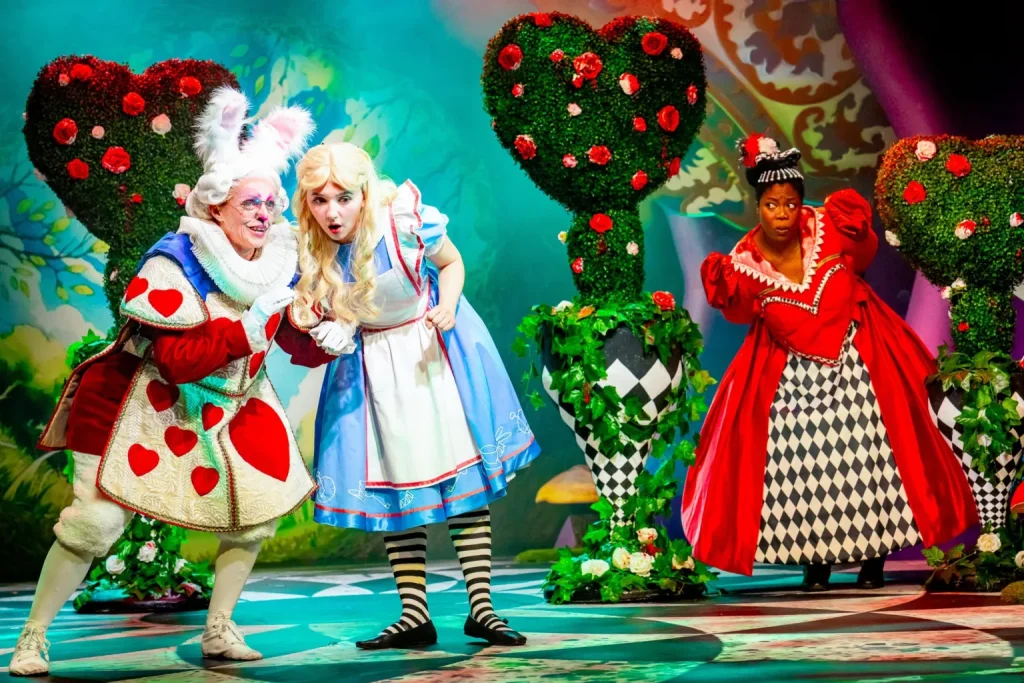
Lewis Carroll’s ALICE IN WONDERLAND has inspired countless adaptations, but few embrace puppetry and live music like Penny Farrow’s version. Originating in Australia in 2016, the show toured festivals from Adelaide to Perth and charmed 100,000 audience members before travelling abroad. In 2026, the production returns to London’s Riverside Studios (27 March–12 April) with many original cast members: Charlotte Bradley as Alice, Clare Brice as the White Rabbit and Daniel Page as the Queen of Hearts. Directed and designed by Nate Bertone, the hour‑long performance uses handcrafted puppets, projection and original music to bring Wonderland to life.
Farrow’s adaptation emphasises Alice’s curiosity and courage. The script streamlines Carroll’s episodic narrative, focusing on a few key encounters, Meeting the Caterpillar, the Mad Tea Party and the Trial, while preserving the linguistic playfulness that has delighted readers for over 150 years. Bertone’s puppets are works of art, blending Victorian and contemporary aesthetics. The Cheshire Cat floats as a glowing smile and eyes, created with LED lights and wire, while the Queen of Hearts appears as a towering figure with articulated limbs.
Original music by Australian composer Mark Seymour adds emotional depth. Songs range from folk‑inspired ballads to upbeat ensemble numbers. The lullaby In a World of My Own (written for this production) features delicate harmonies, while the Queen’s anthem Off with Their Heads mixes minor keys with percussion. Actors play instruments on stage, giving the show a concert feel.
The production’s Australian origins inform its playful tone. During its initial run, the company collaborated with Indigenous storytellers to incorporate lessons about respect for nature and community. That influence remains: the Mock Turtle’s lament is performed with a didgeridoo, and the finale encourages audiences to consider how stories shape our understanding of the world.
or Australian families visiting London, this show offers a taste of home. Many may have seen Farrow’s adaptation at the Melbourne International Arts Festival or at Sydney’s Monkey Baa. The Riverside Studios, located in Hammersmith along the Thames, provide an intimate space where children can interact with performers after the show.
Bertone plans to hold workshops teaching puppet‑making and storytelling, allowing kids to create their own Wonderland characters. These sessions align with Australian education programmes promoting STEAM (Science, Technology, Engineering, Arts and Maths), showing how art intersects with technical skills.
The themes of ALICE resonate across cultures: the search for identity, the absurdity of adult rules, and the power of imagination. For Australian audiences, these themes evoke memories of childhood reading and television adaptations like The Adventures of Alice on ABC Kids. Farrow’s version also emphasises environmental stewardship, Alice learns to respect every creature she meets, even the fearsome Jabberwock.
In addition to the London run, producers are planning a virtual reality companion experience that will allow children anywhere in the world to explore Wonderland from home. This interactive component uses 360‑degree videos to immerse users in the forest of talking flowers or the corridors of the Queen’s palace. It exemplifies how theatre and technology can partner to expand access.