William Yang discusses his journey from young photographer to Brisbane Festival
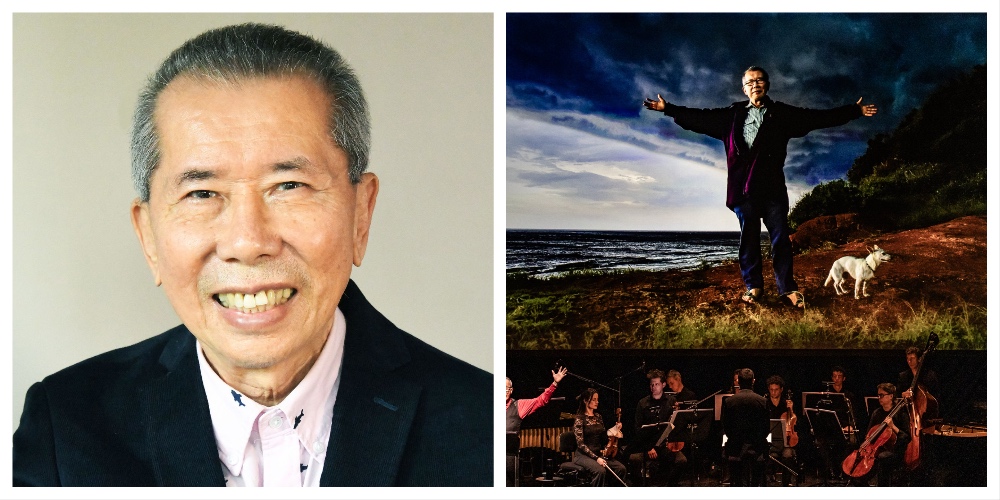
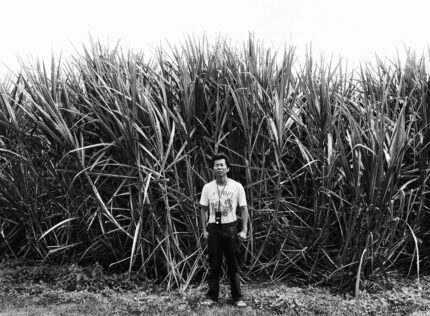
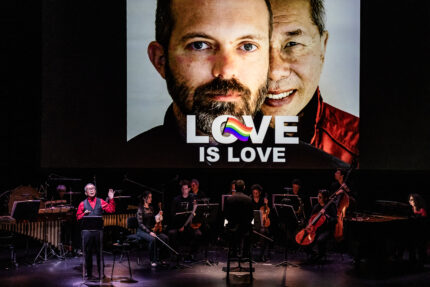
MILESTONE is the most expansive work yet from William Yang, a photographer and storyteller whose earliest theatre pieces began as intimate live slide shows, a room, a voice, projected images. Over decades that direct, talk it out style has remained, but for MILESTONE the scale has grown and the script is tight. The piece condenses a big life into a 105 minute arc without interval, shaped by dramaturg and co director Tessa Leong, who anchored the structure in a sequence of photographic self portraits that mark the years. Images meet music, with a score by Elena Kats-Chernin, co orchestrated by Lyle Chan, performed live by Camerata, with Simon Bruckard conducting. Talking engages the mind, music engages feeling, so the work creates space for both. MILESTONE is candid about adult themes and sexuality, faithful to the documentary spirit of the times it depicts, including the sharper edges of the 1970s and 1980s. It is also access forward, with Auslan, audio description, assistive listening, and a signposted visual load. Returning to Brisbane carries a charge, a homecoming to Queensland places and people. The hero image is by George Gittoes, a reminder that a life story is made through many lenses and hands.
Your earliest theatre works were live slide shows, intimate rooms, your voice, and projected images. What practices from those slide nights did you keep, and what did you intentionally abandon for MILESTONE.
For the earliest slide shows, I wrote a script which I would recite. This lasted a few years and then I started to talk them out. This was a more direct style. It got straight to the point and I still use this style today. But with speaking, there is a tendency to be discursive, you think of other things you’d like to say, and this can be attractive for an audience as they feel you are confiding with them.
In terms of length, I prefer short to long. However, with MILESTONE there is a big story to tell and we have had to cut things down. The material of Milestone has been condensed. We’ve workshopped it and asked people which bits could be left out, so I feel we have the shortest version without the piece being too skeletal. It’s got to have some meat. So we’ve ended up with a tight script, and there’s no room for discursion. You can’t have both!
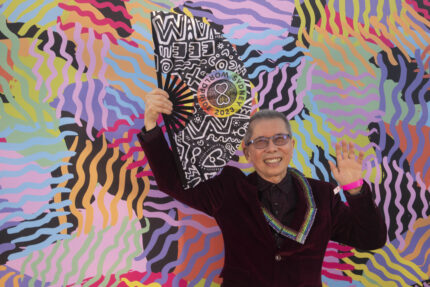 Since turning 80 you have been revisiting a lifetime of photographs. What story in your archive surprised you when you set it against your narration today, and why do you think it stayed hidden until now.
I’ve been going through my archive and have found many photos I’d forgotten I’d taken. But they will be part of a new show. They remained hidden because I’d forgotten I’d taken them.
MILESTONE includes some of these, and is a story that tells the whole of my life. I’ve never told the whole story in one before, and I’ve never told the story at this scale. A scale that really matches the historic times I’ve lived through and contributed to. It’s a scale that’s matched by projections and the extraordinary composition of Elena Kats-Chernin, beautifully performed by our orchestral partners (Camerata in Brisbane).
The score is by Elena Kats Chernin, with Lyle Chan as co orchestrator, performed live by Camerata. Can you describe one cue where the music altered the meaning of a single image for you, and what that taught you about your own work.
The music doesn’t so much alter the meaning of the image – it supplies an emotion to the image. I think talking addresses an intellectual part of the brain whereas music addresses feelings. I tend not to talk while there’s music playing so the audience can lose themselves in emotion.
Tessa Leong is credited as dramaturg and co director. What was the hardest cut she argued for, and what did that decision unlock in the overall shape of the work.
Tessa was instrumental in the overall shape of the piece, in fact this is the first time I have worked with a co-director. Usually I just work on a piece by myself and ask for opinions from director friends or my producer. Working with Tessa meant the piece has been interrogated more thoroughly than any of my previous pieces – and it’s made it a better work I think.
Tessa’s biggest contribution was the key structural underpinning of the work – the idea to use my photographic self-portraits as the milestones in the piece.
 MILESTONE carries a content warning, adult themes and images of a sexual nature, even full frontal nudity. What responsibilities do you feel when you bring deeply intimate images into a civic festival space, and what responsibilities do you ask of the audience in return.
At heart I am a photographer in the documentary style and I believe in a fidelity to the documented subject. For example, in the seventies gay people were trying to get their voices heard and the tone was often in-your-face. I try not to self-censor those photos, they are true to that time.
It’s a balance: I want to present things that are accurate to the times but could be edgy. The fact is we live in conservative times, arguably the seventies and eighties were more permissive.
The hero promotional image is by your friend George Gittoes, and you have said of that image that you “claim it as [your] own.” How do you think about authorship, credit, and self representation when a life story is told through many lenses, including other people’s.
Often I ask someone to take a photo which I have already set up. I usually credit them with assisting me. If the image is on my camera and I have forgotten who took it, I claim it as my own. If the image is on someone else’s camera then I will credit the person. I’m always happy to give credit when credit is due.
You grew up in Queensland. What shifts, memories, or tensions surface when you bring this work to Brisbane, compared with how Milestone has played in Sydney or Melbourne.
Queensland likes to claim me as a favourite son, and I’m happy about this claim. My family story originates in Queensland and it is an important part of my history. Although I have spent the last fifty years in Sydney and my recent history is very influenced by that city, it’s very important to me to bring my work home to Queensland. My genesis is Queensland and I’ve returned all through my life – particularly to Maleny and Frog Hollow where I have lifelong friends.
My partner, Scott, lives in Buderim and he is in this show. Although he’s seen it before, 17 members of his family are coming. I feel a bit nervous about this – but I’ve met them all and we get on well together so I think they’ll be generous!
Ever since my first solo exhibition, Sydneyphiles in 1977, I also know that people like to see photographs of themselves and the places they know and love. Queenslanders really respond to the images of their home and their people.
 MILESTONE runs about 105 minutes with no interval. How did that continuous arc shape your decisions about pacing, image density, and silence.
The story telling always comes first, and the piece is assembled around the story. I have learned after doing many shows how to insert a musical segment into the story. These sequences have to be created. There is a lot of stagecraft that goes into a multimedia presentation and I have a good team of people to help me. In that sense MILESTONE is a well-resourced show for which I am appreciative, none of my other pieces have had the same budget resources.
The presentation is unusually access forward, with Auslan, audio description, assistive listening, and a clearly signposted visual load. What did designing for access change in your text, your image choices, or your staging.
My work is usually quite fixed onstage. I don’t move around onstage. I don’t need to, the power of the story is through my words, the projected photographs and the orchestral music.
This means my work can easily be access-forward and it’s always been a part of delivering my work. Access is important to me – I want as many people to be able to experience my stories as possible.
MILESTONE is performing as part of Brisbane Festival
For tickets CLICK HERE