What Will be the Impact of the War in the Middle-East on Australian Theatre
Theatre has always existed in conversation with the world around it, but rarely does a conflict so geographically distant feel so immediately relevant to Australian stages. The escalating war involving the United States, Israel and Iran is not simply a geopolitical flashpoint. It is a cultural disruptor, an economic shockwave, and, perhaps most critically, a test of how resilient Australia’s performing arts sector truly is.
 At first glance, the connection between a Middle Eastern conflict and Australian theatre may seem abstract. Yet the globalised nature of the arts economy means that no major conflict exists in a vacuum. The most immediate and tangible effect is economic. The war has already triggered a sharp rise in oil prices, with disruptions to the Strait of Hormuz impacting roughly 20 percent of global oil supply and pushing prices above $100US per barrel. For Australian theatre companies, this translates quickly into higher production costs. Touring becomes more expensive, freight costs for sets and costumes rise, and even the day-to-day running of venues becomes more costly as energy prices climb.
This is not theoretical. The arts sector operates on tight margins even in stable conditions. Increased costs do not simply reduce profit, they often determine whether a production proceeds at all. Independent theatre, already operating with minimal financial buffers, is particularly vulnerable. A sustained period of elevated fuel and energy costs could quietly thin the ecosystem, leading to fewer productions, shorter seasons, and a more cautious programming landscape.
The second major impact lies in audience behaviour. Economic instability tends to dampen discretionary spending, and theatre is almost always classified as such. Global financial volatility, already triggered by the conflict, has led to declining markets and increased borrowing costs. For Australian households facing higher interest rates, fuel costs, and general inflation, theatre tickets can quickly shift from essential cultural engagement to optional luxury. The lesson from previous crises is clear. When audiences feel financial pressure, attendance softens, particularly for new or unfamiliar work.
Tourism, a critical pillar of Australia’s major performing arts institutions, is also under threat. The Middle East functions as a key global aviation hub, accounting for around 14 percent of international transit traffic. With airspace closures, rerouted flights, and rising airfares, international travel patterns are already shifting. Large-scale disruptions have seen thousands of flights cancelled and global aviation costs surge. While Australia may benefit from some redirected tourism flows, the overall effect of reduced global mobility is contraction. Fewer international visitors means softer demand for flagship cultural events, festivals, and long-running commercial productions.
Beyond economics and logistics lies a deeper, more nuanced impact. Theatre is an art form that absorbs and reflects the emotional temperature of its time. Conflict reshapes narratives, influences commissioning decisions, and alters what audiences are willing or ready to engage with. The destruction of cultural heritage sites in Iran, including historically significant palaces and mosques, has already highlighted the fragility of cultural identity in times of war. For artists and audiences alike, this reinforces the urgency of storytelling as preservation, resistance, and documentation.
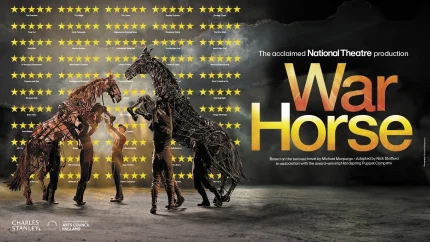 Australian theatre may begin to see a shift toward politically engaged work, or conversely, a rise in escapist programming as audiences seek relief from a relentless news cycle. Both responses have precedent. During periods of global instability, the stage often becomes either a mirror or a refuge. The question for Australian companies is not which path to take, but how to balance both without losing artistic integrity or financial viability.
There is also a structural implication for funding and policy. Governments facing economic pressure tend to reallocate resources toward defence, infrastructure, and essential services. Arts funding, historically vulnerable in times of fiscal tightening, may once again come under scrutiny. If the conflict contributes to broader global recession risks, as some analysts suggest, public investment in the arts could stagnate or decline. For a sector still recovering from the long tail of pandemic disruption, this presents a compounded challenge.
Yet it would be overly simplistic to frame the impact as purely negative. Theatre has always demonstrated an extraordinary capacity for adaptation. Disruptions to international touring may encourage greater investment in local stories and Australian talent. Rising costs may drive innovation in production design, leading to more sustainable and resource-conscious practices. Shifting audience expectations may open space for new forms of engagement, from immersive experiences to hybrid digital performance models.
There is also an opportunity for Australian theatre to assert its voice on the global stage. In a world increasingly defined by conflict and fragmentation, the arts offer a space for dialogue, empathy, and critical reflection. Australian companies, artists, and institutions are uniquely positioned to contribute perspectives that are geographically removed yet deeply connected through shared global experience.
Ultimately, the practical effects of the US-Israel & Iran war on Australian theatre will not arrive as a single, dramatic rupture. They will manifest gradually, through rising costs, shifting audiences, altered programming, and changing funding landscapes. The real challenge for the sector is not merely to withstand these pressures, but to respond with creativity, clarity, and purpose. Because if history has shown anything, it is that while war may disrupt the conditions under which theatre is made, it rarely diminishes the need for it.