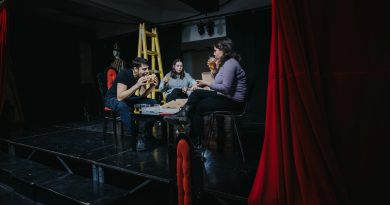

Ngoc Phan on the Balance of Bringing TORCH THE PLACE to Queensland Theatre
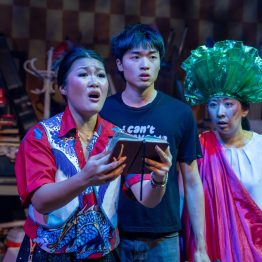
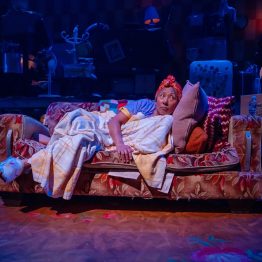
Behind the chaos, clutter and dark comedy of TORCH THE PLACE lies something far more tender, and unsettling, a story about the emotional inheritance families carry long after the boxes pile up and the words go unsaid. Benjamin Law’s play, brought to the stage by Queensland Theatre, takes the familiar idea of a family clean-up and transforms it into a theatrical reckoning with memory, grief, trauma and the fragile ways people hold themselves together. What emerges is not simply a portrait of hoarding, but a deeply human examination of what happens when pain attaches itself to objects, and when love is expressed through conflict, deflection and imperfect care. At once hilarious and heartbreaking, TORCH THE PLACE sits in that uncomfortable, recognisable space where laughter and sorrow exist side by side. It is a work grounded in the specificity of a migrant Australian family and a distinctly Queensland world, yet its questions feel universal, asking what we inherit from those who raised us, what we cling to, and what we might finally need to let go. In this interview, director Ngoc Phan reflects on bringing Law’s intensely personal script to life, balancing theatrical invention with emotional truth, and finding compassion at the centre of a beautifully messy family story.
TORCH THE PLACE sits at the intersection of comedy and emotional reckoning. How have you approached balancing the humour of this family dynamic with the deeper themes of
trauma, memory and hoarding?
The balance was already embedded in Benjamin Law’s writing. So, it was really a case of supporting those words and letting the story unfold. Hoarding is often played for shock value, what I admire about what Ben has written is that it reframes that completely. It reaches into something deeply vulnerable: the traumas we carry that slowly erode a person’s sense of worth until the only thing they feel they can control is what they keep, and yet it’s incredibly funny. There’s the joke inside the tragedy and the tragedy inside the joke, sometimes in the same breath. You laugh because the alternative is, well… unbearable.
Benjamin Law has drawn on personal family experience in writing this play. What responsibility do you feel as a director when bringing such intimate, autobiographical material to the stage?
There’s a real responsibility to approach the material, especially when it’s drawn from personal experience, with care and honesty. The play is deeply personal, but Ben has transformed that personal story into something that speaks to broader social pressures and shared experiences. My responsibility as a director is to make sure the characters are treated with humanity and complexity rather than spectacle as well as creating a space where the people telling the story feel like they can take risks and be bold. Ultimately, it’s about honouring the truth of the story while allowing audiences to recognise something of themselves in it.
Hoarding is often misunderstood or reduced to stereotype. How did you want to frame Teresa’s mother for audiences so that she is seen with compassion, complexity and humanity?
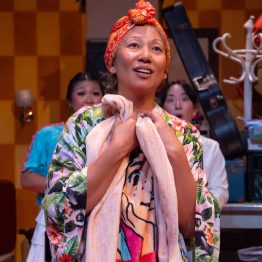
The starting point was always compassion. And that was already in the script, which is the beauty of Ben’s writing. Through the character of Teresa’s mother we see that hoarding rarely exists in isolation, it’s often connected to trauma, grief, insecurity or a loss of control. What Ben’s play does beautifully is ask us to look beyond the clutter and see the person underneath. Teresa’s mother isn’t a punchline. She’s someone navigating a world that has slowly worn her down, whether it’s economically, emotionally or socially. The goal has been to frame that experience with empathy and complexity rather than judgement.
This play is so deeply tied to objects, clutter and the emotional charge of possessions. From a directing perspective, how do you make “stuff” feel theatrically alive, rather than just part of the set?
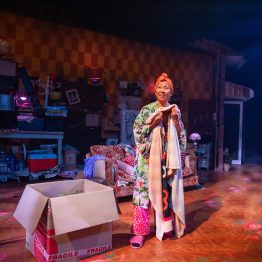
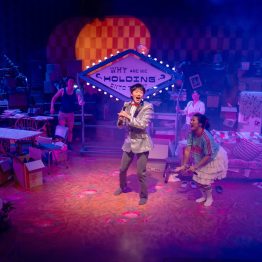
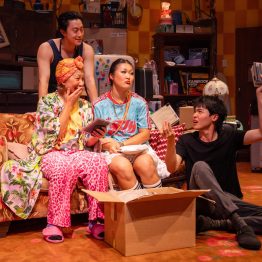
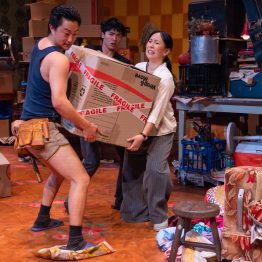
The play gives us incredible permission to let the world of objects become theatrical. And there are so many objects! Ben has written wildly imaginative sequences; game shows, flashbacks and hallucinations, where the house itself almost becomes a living thing. Our creative team has leaned into that theatricality. Boxes come alive, the house vomits, rats become life-sized. The objects aren’t just background; they actively participate in the storytelling. I’ve been saying rehearsals were like Tetris, trying to figure out where everything goes (literally with the props) and once we hit production week it was like Jenga – what could we take out that doesn’t serve the show. In this case though, the more props the better! But the anchor is always the performers and the story. No matter how surreal the staging becomes, it is imperative that the emotional truth of the characters stays grounded and the story is told.
Families often communicate through tension, deflection and humour rather than direct honesty. What have you discovered in rehearsal about the way this family loves each other, even when they’re in conflict?
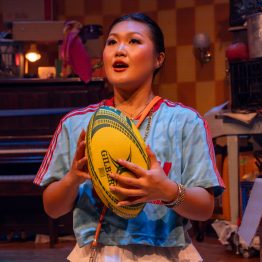
One of the big discoveries in rehearsal has been just how deeply this family does love each other. They communicate through humour, teasing, frustration and attempts to “fix” each other. It’s messy and exhausting, which is exactly what family care can look like. The play really explores what it means to love someone who can sometimes be difficult to love, and how that love often shows up in imperfect, unglamorous ways. We are so lucky with the cast we have, as they genuinely adore each other and so their connection to each other really shines through in their performances.
You’re making your main-stage solo-directing debut with Queensland Theatre Company on this production. What has this moment meant to you personally and artistically?
It’s incredibly meaningful. To make my main-stage solo-directing debut with a play that is this imaginative, heartfelt and funny and to do it with an incredible team of actors, creatives and crew feels like a real privilege. The play has invited our team to dream big and be bold with the theatricality, while still telling an intimate family story. Personally, I feel an enormous amount of gratitude for the artists involved and for what we’ve built together – brick by metaphorical brick. A highlight was hearing the first laugh from the audience. There’s no better feeling.
You have such a rich background as both a performer and now a director. How has your experience as an actor shaped the way you work with cast and build performances in the rehearsal room?
Coming from an acting background, I’m always thinking about what performers need to feel safe enough to take risks in the quest to sit in the skin of their characters. The rehearsal room becomes a space for curiosity and collaboration rather than judgement. We spend a lot of time asking questions about motivation, emotional truth and getting on the floor and playing. Because this play moves between realism and more stylised theatrical moments, it’s especially important that the actors remain grounded in the emotional reality of the story as well as being technically robust.
TORCH THE PLACE is distinctly Australian, and specifically rooted in a Gold Coast family world. What feels most culturally specific about this story, and what do you think will
resonate universally with audiences?
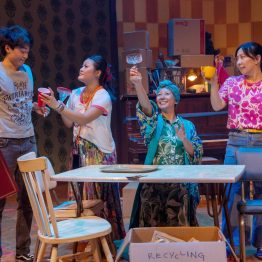
The story is very specifically rooted in a migrant Australian family and a Gold Coast world, which gives it a distinct cultural lens. There are references to living in Queensland as well as stories about growing up as a migrant family. We still rarely see these experiences represented on stage in this way, and that perspective is incredibly important. At the same time, the core of the story is universal. It’s about family, about the things we inherit from the people who raised us, and about navigating love, resentment and care all at once.
The play asks what we inherit from our families, not just physically, but emotionally. What conversations or reflections do you hope audiences leave the theatre having after
seeing this work?
I hope audiences walk away thinking about connection and care in a deeper way. We may seem more connected than ever, but we are potentially lonelier than we’ve ever been. We live in a consumerist society that’s very good at selling us things and very bad at teaching us how to sit with each other in the mess of being human. If the play encourages audiences to reflect on their own families, their histories, the things they carry with them and what they need to let of, both physically and emotionally, then it’s doing something powerful.
This production is being described as one that will make audiences laugh, cry and call their mum. What do you think theatre can do, at its best, when it takes something as ordinary as a family clean-up and reveals the bigger emotional truths underneath?
Theatre can take something ordinary and reveal the emotional universe inside it. A family cleaning out a house might seem simple on the surface, but inside that moment lives memory, grief, love, resentment and history. The objects become doorways into those deeper stories. At its best, theatre allows us to recognise ourselves in those moments. We laugh, we cry, and sometimes we walk away wanting to reconnect with the people in our lives. Strap in, folks. You’re in for one heck of a ride.
TORCH THE PLACE
For more information and tickets CLICK HERE