
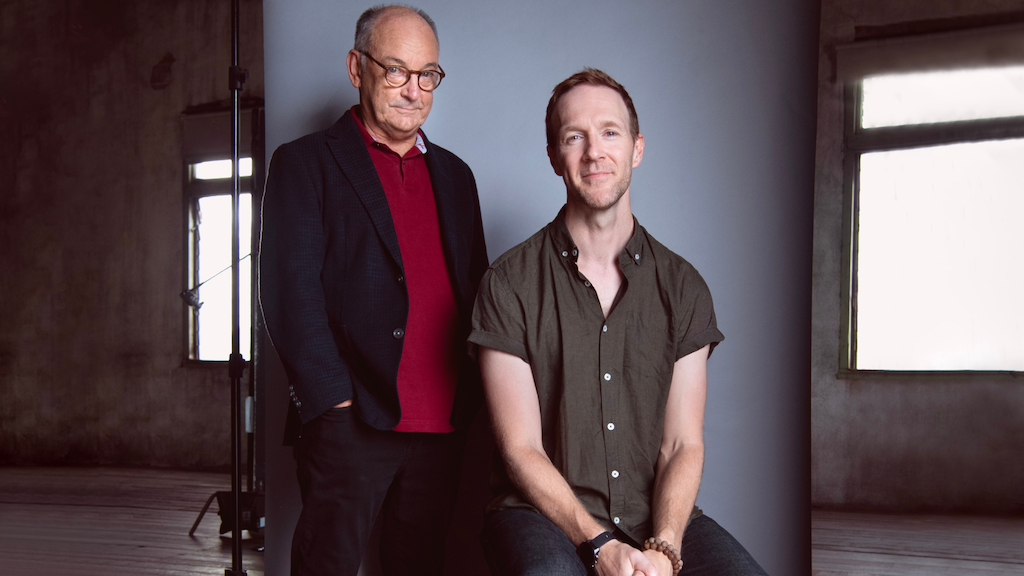
Michael Gow on Bringing His Play TOY SYMPHONY Back to the Shire
Michael Gow has spent decades writing about the pull of home. This June, he’s finally letting it pull him back.
Nearly two decades after its world premiere, Toy Symphony is returning to Sydney for its first professional staging since the original 2007 Belvoir production — and this time, Michael is directing it himself. The Sutherland Pavilion is presenting the Helpmann Award-winning play from 18 to 20 June 2026 as part of the venue’s 50th anniversary season, bringing one of Australian theatre’s most celebrated works back to the suburb that inspired it.
The play follows Roland, a writer paralysed by creative block, as his therapy sessions drag him back and forth between his present life and the memories of a Sutherland Shire childhood. It’s his most autobiographical work, and the most personal staging of it yet.
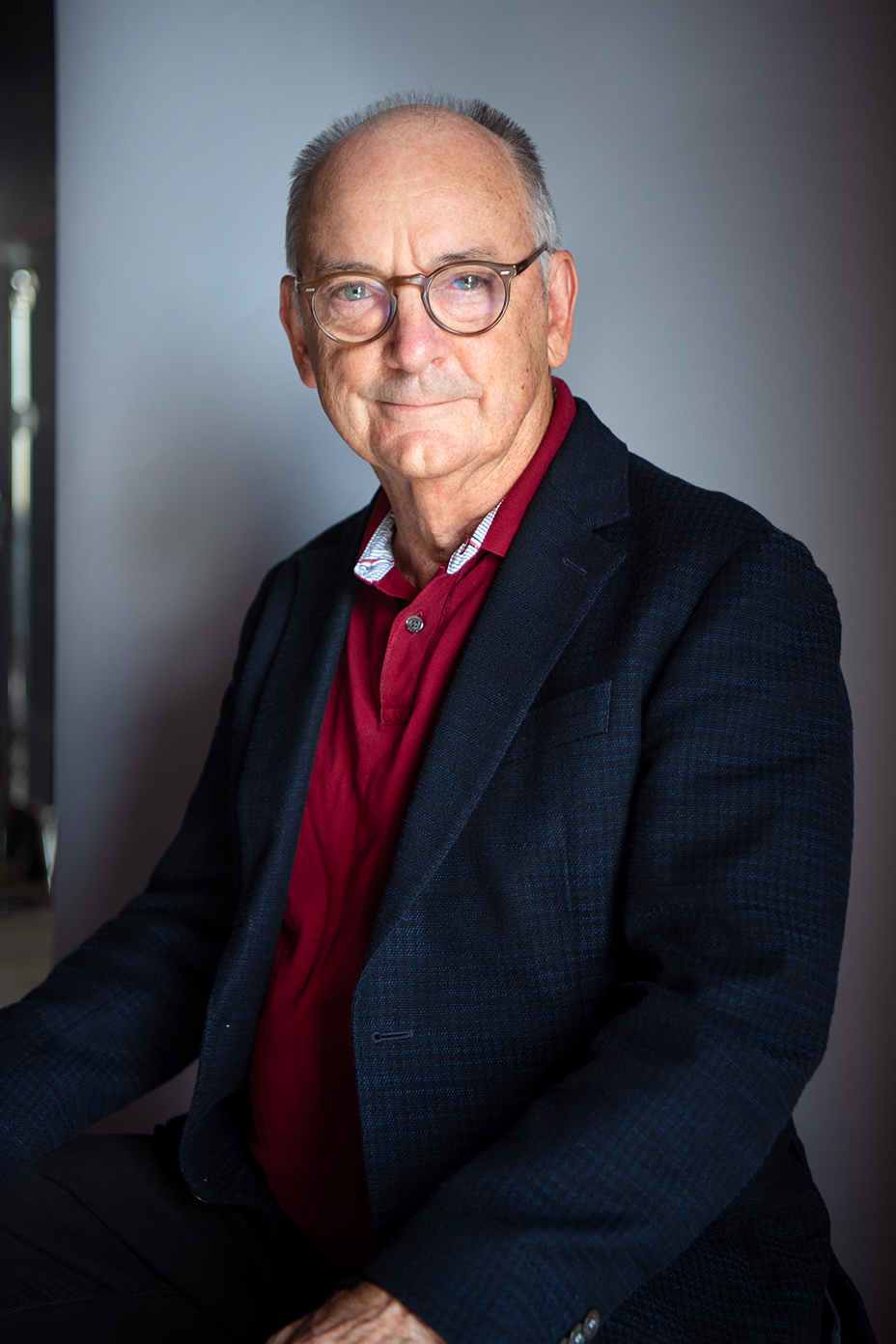
Born in Sydney in 1955, Michael studied at Sydney University before acting professionally with Nimrod, Thalia, and the Sydney Theatre Company. He made his name as a playwright with The Kid in 1983, but it was Away, first performed by Griffin Theatre Company in 1986, that established him as a major Australian playwright. He later served as Associate Director of the Sydney Theatre Company and spent more than a decade as Artistic Director of Queensland Theatre Company. His plays have been performed across Europe, Asia, and the United States, and his awards span two NSW Premier’s Literary Awards, Australian Writers’ Guild recognition, and the 2008 Helpmann Award for Best New Australian Work for Toy Symphony.
Now, he returns to that same play — not as its writer watching from a distance, but as its director, in the place that made it.
Toy Symphony is described as your most autobiographical work — how does it feel to be directing it professionally for the first time, nearly 20 years after its premiere?
Michael: There’s one event in it which is the kind of springboard, I guess, which was a legal wrangle over a play I wrote. Apart from that, it’s bits and pieces of my, and a lot of other people’s lives really. It’s not strictly the stuff. And I’m fascinated by looking at something 20 years old and coming back to look at it and see what we can bring to it. But I think the most unnerving bit is actually doing it at Sutherland. The weird thing of going back to the Shire where I’m from, which gets mentioned a lot in the play. I had these nightmares that ancient school teachers will come up to me and tap me on the shoulder. But yeah, it’s an exciting project.
For audiences who may not know the Sutherland Shire well, what do you want them to understand about what this place means to the play?
Michael: Any writer associates with a place. The Shire is such a strange place because it’s kind of this little bit of Sydney that’s tacked on at the end. On the way south, you’ve got to cross the river to get to it. It’s bounded by the ocean and then bounded by a river and then bounded by the national park. So it’s this strange free floating space, which was quite late to develop in terms of Sydney. It’s still a bit of old Sydney in a way, which is why it’s relevant to the play — it’s still hugely suburban. And although apartments are going up everywhere, it’s still that quarter acre block with a house on it that was once a big part of Australia. Botany Bay was where Lieutenant Cook first dropped anchor on this coast and came ashore there. So there’s the connection to the very earliest bits of the discovery by Europeans of the East Coast. It’s got an oil refinery at Cronulla and there’s the Atomic Energy Commission across the river at Lucas Heights, and lots of suburban houses and great sports teams and amazing high schools, but it’s always felt slightly removed, like a kind of concentrated version of Australia to me.
You’re returning to this text after two decades — do you find yourself reading it differently now? Has what the play means to you shifted?
Michael: It’s become clearer, not changed. That’s what’s interesting. It’s become more — not about just a writer. It was interesting even yesterday on ABC breakfast television. They were interviewing one of the women from the Matildas team. She was asked what do you do before the big match — do you stress, do you do a lot of preparation. She said no, we try and stay as calm as we can and stay together. And I think that’s what the play is about in a sense — someone who stumbles into a difficult part of life, and instead of just sitting back and going with it, kind of struggles and fights and tries to deny it and hide from it. And that can create chaos. Whoever you are, whether it’s a sports person or an artist. Sometimes you just don’t do it. Just keep quietly scribbling and assume one day it’ll come back in its full splendour.
This is a rare moment of playwright-as-auteur. Why now, and why this play?
Michael: Doing it at Sutherland. That closes the circle for me. When you’re a writer and particularly work in the theatre, you become such an inner city being. It’s going to be really interesting going back because not only did I grow up there, but my grandmother lived at Caringbah. I went to a whole lot of concerts and sporting stuff and Cronulla Beach at the weekend. Going back to Sutherland was the lure. If it had been somewhere else I probably would have said no.
When you’re in the rehearsal room directing your own words, what’s the hardest thing to let go of, and what’s the most freeing?
Michael: It’ll be interesting because it sort of comes from me — it’ll be interesting to see what comes from the other actors, what their position in the whole thing was. There are a number of the cast who are locals as part of the kind of deal, and that’s going to be really interesting because they’ll know exactly what I’m talking about. Whereas it’s unlikely the two fully professional actors — well, there’s one already, and he knows nothing about this. So there’s a bit of education to go on about why the Shire and what it is, and why we even bother calling it the Shire. We call ourselves Shire boys and Shire girls. Because it is a weirdly special place in a way, to us.
Is there something about this production that will be distinctly different from what audiences might have seen or read about from 2007?
Michael: It’s such a spectacular venue. It’s a fully equipped proscenium arch theatre. So beautiful. I just think physically it will be quite a different experience from the corner of the room at Belvoir. Part of the excitement of the Pavilion actually producing this rather than just buying in shows, as most regional venues do, is to exploit the possibilities of the venue. There’s a fly tower and there’s a great crew and a decent lighting rig that we can add a bit to. That’s the other real excitement — to do it in a completely different format and see what that brings out of the way they perform the characters. There are moments of incredible vision in the play that this kid has, and how we stage them and reveal them and give the audience a bit of wow. It’s not just a bunch of talking heads — there’s theatricality to it.
The play’s central theme is that childhood imagination never really lets go of a creative person. Do you still feel that pull? What does it feel like now compared to when you first wrote it?
Michael: When you’re a kid, it’s just completely free range, random stuff. But if you stick with it and as an adult work in that world, it’s all the added things of discipline and the grappling with the craft of it all — just simply how you set out a play and how you approach character. Those things never leave you. It’s not like I’ve given up writing either. I still write. It’s just whether I write to the times at the moment or whether theatre is still the medium, but you never lose that sense of the pleasure of constant writing and the anxiety of not doing it — because I think everyone who writes does it because they have to. I can’t quite ever let it go. It does mature and change. But the important thing is to always remember to go back to the beginning as well. To never lose sight of that complete openness that you had before anyone told you anything or you did anything. That’s where the way forward is — not in forcing yourself and punishing yourself. It’s a long, sad saga of writers who try to get that back using alcohol or drugs. The possibly best thing to do is to just stay small and just trust that if you just keep doing it, even if just for yourself, then that’s okay.
The play asks what happens when inspiration falters. What’s your honest answer to that question?
Michael: There’s a long discussion about whether there’s such a thing as writer’s block. A lot of people don’t say there is. But I think everyone needs time out and fallow time. If you keep flogging that dead horse, it won’t get up. If an idea or a character comes to you, you inevitably start scribbling around it and making notes about it and seeing if it goes anywhere. What would be the thing to lose would be that sense of there are stories everywhere around us — people are amazing and what they go through and put up with and achieve and lose and suffer is endless. That would be terrifying to lose. And I’ve had that ever since I can remember being a little kid, fascinated by all these insane adults around you. That’s not yet, fortunately, utterly gone. I guess if it did I’d be sad, but I’d just have to move on — at least acknowledge it. Which is kind of what he does in the play in the end. He gives the acting student something so precious as a way of handing something on, and in a way that may be some sort of release as well. The world gets more and more words, more and more things to write about constantly. And the other trick — we’re susceptible to it now so much more than before — is that we’re constantly bombarded by stuff. The temptation to not write and just sit on the couch and scroll is enormous. That’s where the discipline of no, get up and do your two hours, put the phone down, don’t listen to the news — that’s the great enemy to me. That endless distraction.
Toy Symphony plays at The Pavilion from the 18th to 20th of June.
For tickets and more information, visit The Pavilion website.