
“Leap, Risk, Repeat”: Nathan M. Wright and Andrew Bevis Build a Six-Week Launchpad for Australia’s Next Musical-Theatre Stars Under a Pressure-Cooker Rehearsal Room
“It’s not a course—it’s more like a high-pressure rehearsal crucible.”
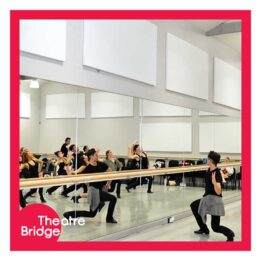
Come 14 July 2025, the mirrors at a bustling Sydney studio will steam over as 24 hand-picked performers kick off vocal warm-ups at exactly 8 a.m. They’re the newest cohort of THEatreBRIDGE, a six-week intensive masterminded by director-choreographer Nathan M. Wright.
A Visionary with Global Scale—and a Keen Eye for Auditions
Wright’s three-decade résumé spans West End hits, Olympic ceremonies, and choreographing cinematic blockbusters like Elvis for Baz Luhrmann. Best known for his long-standing work on The Rocky Horror Show across multiple continents, he has also directed large-scale movement sequences for the London 2012 and Sochi 2014 Olympic Games. A familiar name on Helpmann, Green Room, and WhatsOnStage shortlists, Wright is equally committed to nurturing rising talent—both through his production company, WrightWorks, and through his flagship project, THEatreBRIDGE.
His motivation traces back to the day he first watched auditions from the other side of the table. “Realizing how crucial those five minutes can be changed my perspective,” he says. “It taught me exactly what directors look for—and how vulnerable performers feel.”
A “Pressure-Cooker Rehearsal Room”
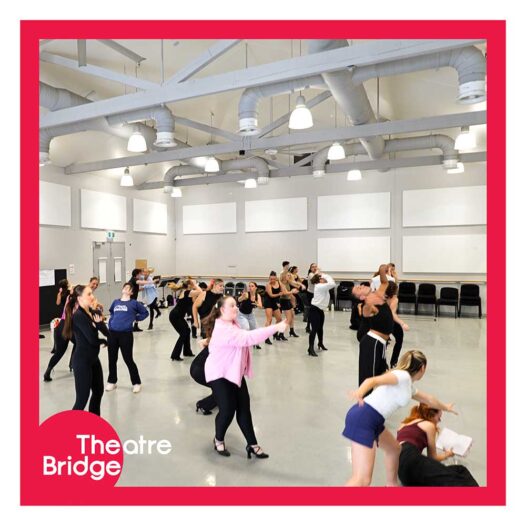
Limiting each cohort to 35, THEatreBRIDGE distills the tempo and expectations of a professional contract into six jam-packed weeks. “We don’t make any fairy-tale promises,” Wright clarifies. “We’re here to give emerging performers practical tools—discipline, adaptability, professionalism, and a real sense of self.”
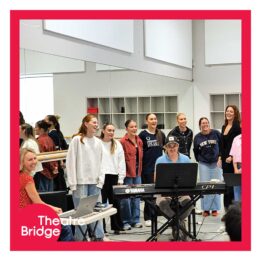
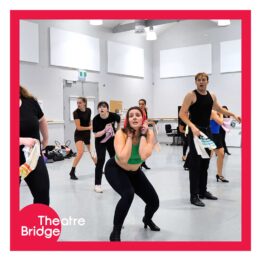
The days feel more like show rehearsals than classroom lessons, with an all-star roster of directors, choreographers, vocal coaches, music directors, and casting pros who actively scout for major productions. Daily mock auditions, scene-to-song sessions, and collaborative labs foster the real-world skills casting directors prize: story-driven performance, quick thinking, and teamwork. THEatreBRIDGE is, in short, a bridge from formal training to paid contracts, helping artists transform raw talent into industry-ready skill.
“Conservatories often polish technique,” Wright observes, sipping his coffee during a break between production meetings, “but they rarely replicate the intense, high-stakes environment of an actual job. I wanted a place where mistakes are allowed—essential, even—but where the standards match what you’d find on a professional stage.”

“An Australian Institute of Sport–Style Launchpad”
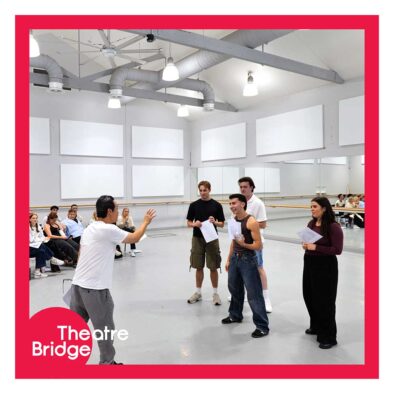
That’s how Wright describes THEatreBRIDGE: “Imagine a sports academy approach: four twelve-hour days every week, direct feedback instead of sugarcoating, and a structure that thrives on leaps and stumbles.” He’s adamant that errors—missed notes, imperfect routines—are vital. “Mistakes point to growth spots. You learn faster when you have space to fail safely.”
The teaching faculty echoes this ethos, bringing together top-tier casting agents, vocal experts, music directors, and choreographers from Wright’s extensive network. “It’s not often you find this calibre of professionals under one roof for six straight weeks,” he says with a grin.
From Performer to Creative Powerhouse
Before choreographing for Olympic stadiums or restaging Rocky Horror worldwide, Wright performed onstage for 14 years. The turning point, he recounts, was watching hopeful dancers walk into an audition clutching dreams in their eyes. “They get just moments to reveal who they are,” he remembers. “Recreating that urgency is at the heart of everything we do at THEatreBRIDGE.”
Hence the daily mock auditions, where the room simulates that brutally short window: an unfamiliar pianist, directors giving abrupt adjustments, casting staff scribbling notes. Participants cycle through repeatedly until quick uptake feels natural.
Putting Story Before Steps
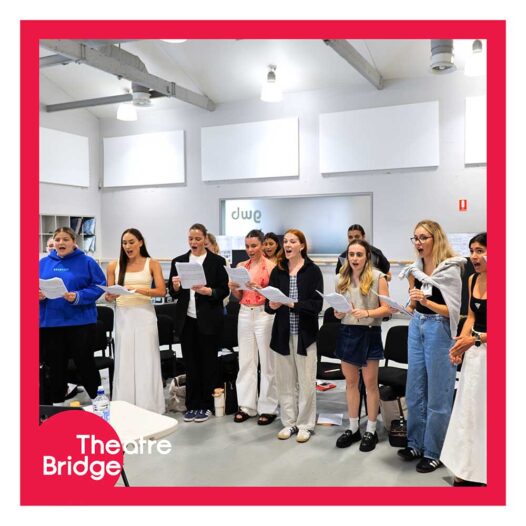
For Wright, it all starts with narrative. “Technique is your skill set,” he explains. “But it’s the story that actually moves the audience.” In practice, dancers study text before learning choreography, singers examine the character’s objectives before worrying about breath support, and actors investigate movement choices before layering in dialogue. Any time a participant’s reason for crossing the stage is, “Because that’s where the steps go,” they reset and dive deeper.
Rigor here is balanced with compassion. “We focus on improvement, not perfection,” Wright points out. “When critiques come from a place of genuine support, performers take risks that spark breakthroughs.”
Building Habits That Directors Trust
By the program’s end, participants have ingrained the discipline Wright values: showing up early, prepared, and ready to integrate direction on the spot. “We also emphasize how to speak up and when,” he notes. “Collaboration demands you know your voice—and know how to use it.”
These traits matter in any venue, from an Olympic stadium to a 200-seat theatre. “Scale doesn’t change the need for clarity,” Wright says. “Whether your audience is a billion people or a single row of seats, honest storytelling is your anchor.”
A Faculty of A-Listers
Wright has enlisted an array of mentors he calls “an unrepeatable cross-section” of the industry:
-
A casting director currently working on Disney’s The Lion King
-
Renowned theatre directors such as Gale Edwards and Darren Yap
-
Musical directors and supervisors from iconic productions like The Boy From Oz, West Side Story, and Phantom of the Opera
-
Choreographers behind celebrated productions including The Rocky Horror Show, High Society, and Calamity Jane
“Everyone who gives notes here does so from real-world hiring experience,” says Wright. “Every piece of feedback is a masterclass because these are the people deciding who goes onstage—or who doesn’t.”
Demanding, But Safe
High standards sometimes trigger anxiety, so THEatreBRIDGE embeds a performance psychologist to run weekly debriefs. Morning mindfulness sessions calm frayed nerves before criticism starts. “We applaud the attempt first,” Wright says. “Then we figure out how to make it stronger. Less fear means more creativity.”
Participants also pledge to give each other constructive, story-oriented notes rather than vague praise or personal critiques.
The Daily Grind
A typical schedule might look like:
| Time | Session |
|---|---|
| 09:30 | Company warm-up & mindfulness |
| 10:00 | Session One |
| 12:00 – 12:45 | Lunch |
| 12:45 – 14:45 | Session Two (with the same mentor) |
By the last week, each performer is armed with notebooks of micro-goals, directorial notes, and proof of their own growth.
“Your Reliability Is Someone Else’s Risk Assessment”
Wright insists that consistency wins repeat contracts. “Turn up on time, do your prep, stay open to feedback—suddenly, you’re an easy hire,” he says with a laugh. “Producers have a hundred stressors. If you’re the performer they can count on, that’s a big plus.”
Reconciling Intimate Storytelling with Epic Stages
How does one choreograph for an Olympic arena and still handle the small nuances of a two-person scene? “Whether you’re reaching billions through a TV broadcast or an audience of 50 in a fringe space,” Wright contends, “truthful storytelling translates. Details need to be razor-sharp, no matter the scale.”
Support That Continues Beyond Week Six
Periodically, alumni gather for “Bridge Reunions,” updating skills and connecting with the newest mentors. “I get messages from graduates who’ve booked national tours,” he says proudly. “They’ll text asking for a pep talk before their first rehearsal. That’s the community we’ve built.”
Who Makes the Cut?
Applications stay open until 10 June, with audition invitations issued in waves. Wright’s checklist:
-
Audition-Ready Technique: “Can they hold their own in a standard first call?”
-
Spark: “That unique element—maybe an accent, comedic timing, or a certain vocal color.”
-
Resilience: “We push people. We need to see that they can bend without breaking.”
-
Collaboration: “Ego can sink an entire cast. We want givers, not takers.”
Formal training is optional. “If they arrive ready to embrace growth, they belong here.”
Looking Beyond the Awards
His collection of Helpmann, Green Room, and WhatsOnStage nominations might sparkle on a shelf, but Wright warns against fixating on accolades. “Trophies are lovely, but if you play for judges, you lose focus on the audience,” he tells participants. “Stay in your own lane, create your own art. Recognition follows authenticity.”
A Five-Year Dream: A THEatreBRIDGE “Fingerprint” on Every Mainstage
“Success for me is when casting directors see ‘THEatreBRIDGE’ on a résumé and trust that person is ready,” Wright says, eyes lit with excitement. He wants to see alumni starring in big national tours, turning up in West End casts, returning as mentors. Above all, he wants them championing the program’s priorities: collaboration, genuine expression, and the story’s heartbeat over sheer technical prowess.
“If people leave here believing in themselves—and knowing how to keep learning—then we’ve done our job,” he adds. “The bridge doesn’t collapse after you cross it; it stretches with you into your career.”
Program at a Glance
-
Dates: 14 July – 21 August 2025 (Mon–Thu)
-
Location: Inner West Sydney. Exact location TBA
-
Places: 35 (audition only)
-
Applications: Via video submission and interview at theatrebridge.com.au
-
Deadline: 10 June 2025
Final Note from Wright: “Pack Your Courage”
“To anyone applying,” Wright says, “bring your boldness, expect to sweat, and show up ready to sprint across this bridge. We’ll guide you—then stand aside while you leap toward what’s next.”
For the select 24 who pass the audition, that leap starts at 8 a.m. on 14 July. The mirrors will cloud with effort, the pianist will play that first chord, and in that moment, a new story’s heartbeat will begin to quicken.
How to Cross the Bridge
-
Dates: 14 July – 21 August 2025 (Mon–Thu)
-
Location: Central Sydney rehearsal studios
-
Places: 24 (audition only)
-
Apply Now: theatrebridge.com.au
-
Deadline: 10 June 2025
If you’re a recent graduate or an early-career performer eager to convert classroom polish into real-world momentum, Wright’s message is clear: come with your passion, be prepared to work hard, and step onto the bridge—because the next opportunity could be just around the corner, waiting for you to seize it.’