From Stage to Balcony: How Theatre Is Reclaiming Its Political Voice
There’s a tendency, lately, to speak about political theatre like it’s a new phenomenon. As if directors have only recently found the nerve to make a statement. As if Jamie Lloyd is reinventing the musical with every on-stage camera. But theatre has always been political — not just in content, but in form, structure, and in who gets to be onstage in the first place.
From Ancient Greece to Broadway, performance has always mirrored power. Shakespeare cloaked political critique in capes and couplets. Brecht asked us not to feel, but to think. Even the Greek chorus wasn’t just for atmosphere; it was the voice of the people, questioning and reflecting. What’s shifting now is that mainstream audiences are beginning — or remembering — how to listen.
Jamie Lloyd’s current West End revival of Evita has sparked this conversation again. Known for his minimalist, actor-focused productions, Lloyd often strips a play or musical back to its rawest elements, placing emphasis on text and performance.
A quick disclaimer before I start waxing lyrical: I haven’t seen it. I don’t live in London, and short of teleportation or a miracle in my bank account, I won’t be. But I’ve read enough, seen enough, and listened enough to know that he’s not just staging a musical: he’s making a point.
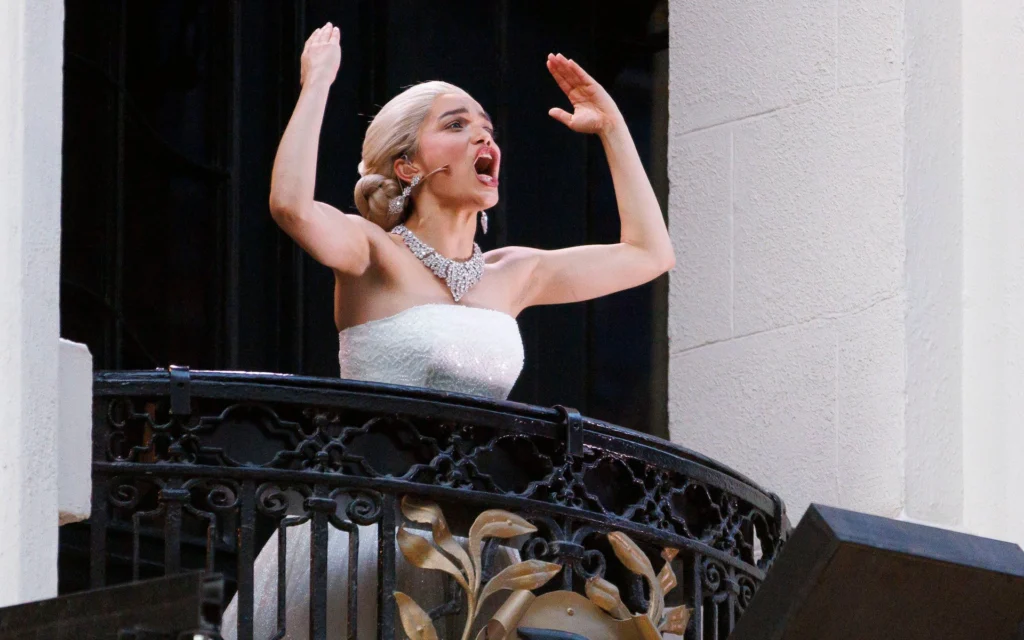
Arguably the show’s most iconic number, “Don’t Cry For Me Argentina,” isn’t performed centre stage. Instead, Rachel Zegler sings it from the Palladium’s balcony, facing out to the London streets like she’s delivering a press conference. It’s a statement. Evita has always been a story about power, performance, and the blurred line between the two.
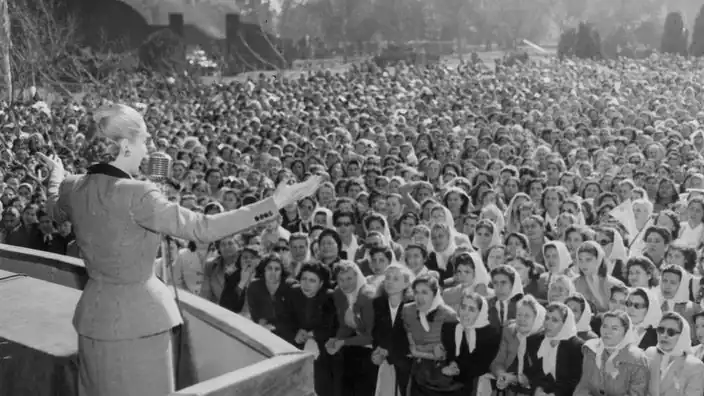
Earlier productions have been criticised for romanticising Eva’s rise or presenting her legacy through a more ambiguous lens, but Lloyd’s version draws a clearer line: Eva isn’t appealing to the elite seated inside — she’s singing to the descamisados, the working-class masses who helped build her platform. The theatre audience still witnesses the moment, but through a live broadcast.
It’s a deliberate distancing — one that reframes not only the class politics within the story, but also within the theatre itself: who is being addressed, who is represented, and who is left watching from the sidelines. This is what politically engaged theatre does best. It interrogates not just what is on stage, but how it’s being delivered — and to whom.
Brecht would be applauding from the back row.
Theatre has always had the capacity to interrogate power — especially musicals. Cabaret didn’t start subtle and then get more political over time. Hair didn’t accidentally become an anthem for peace. And Wicked is, at its core, a story about propaganda, scapegoating, and the cost of speaking truth to power. Musical theatre has always tackled hard truths: race, class, war, gender, justice. West Side Story confronts racial division and gang violence. Ragtime reveals just how empty the promise of the American Dream can be. Even Les Misérables, often remembered for its rousing anthems, is a cry against poverty, injustice, and systemic indifference. These shows haven’t changed, but the way we stage and receive them is becoming more conscious and more attuned to their deeper political resonance. There’s something vital about that shift. In a world where politics are fraught and justice is under constant negotiation, theatre can’t afford to stay neutral. Nor should it. It’s one of the last communal spaces where strangers gather, breathe the same air, and witness the same truths.
Political doesn’t have to mean joyless. It just means being conscious of what the work says — and what it could say, if we dared. We’re not in a golden age of political theatre. We’re just paying attention again. Perhaps that’s what bold theatre really is: not reinvention, but rediscovery. Stripping back the spectacle to reveal the system underneath. Reminding us that theatre has never just been about escape. It’s also about confrontation. About challenge. About choice.
And sometimes, all it takes to wake us up is a woman singing from a balcony.
Header image by Jamie Lorriman