Cloning the Self: Chenturan Aran on THE SUPPOSED TO BE
The Supposed To Be arrives as a sharp disruption to the familiar rhythms of migrant storytelling, trading nostalgia for speculative chaos and asking what happens when identity itself becomes a performance.
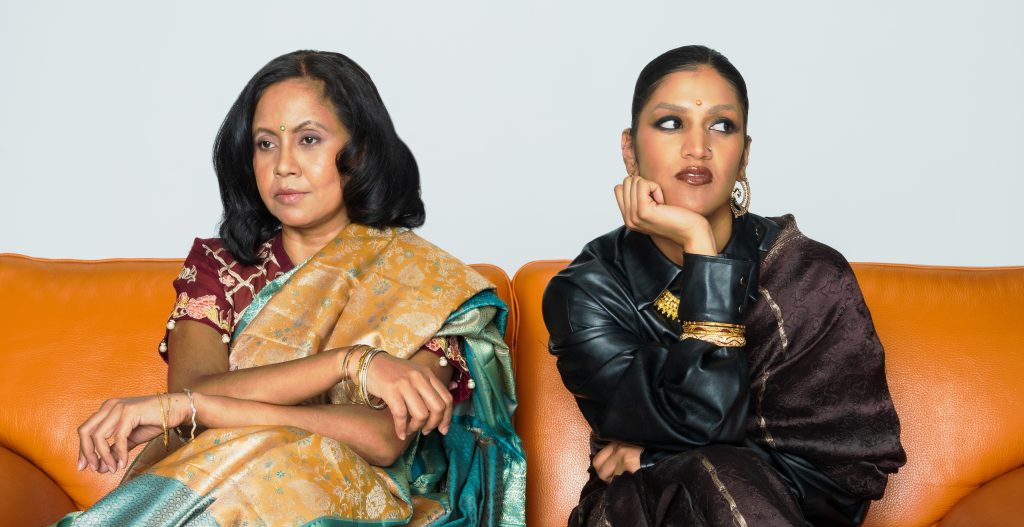
Written by Chenturan Aran, the Griffin Award-nominated new work follows Kaye, a Sri Lankan Tamil actor and OnlyFans creator who discovers her life has been shaped by forces far stranger than adoption: she is a clone, created to fulfil the unrealised ambitions of her corporate executive original, Kavitha. What follows is a collision of selves — between authenticity and artifice, inherited duty and self-determination, the person we are and the person we’ve been told to become.
Blending sci-fi satire with family drama and surreal theatrical invention, the play pushes beyond conventional narratives of migration and belonging to examine the complicated performance of identity in a world obsessed with “realness.” As reality fractures and generational ghosts begin to intrude, Aran’s writing interrogates the compromises families make, the ambitions they pass down, and the uneasy question of whether any version of ourselves is ever truly original. A three-time NSW Literary Awards nominee, Aran has built a reputation for work that is incisive, playful, and unafraid to challenge theatrical expectations — qualities that pulse through every layer of this feverish new work.
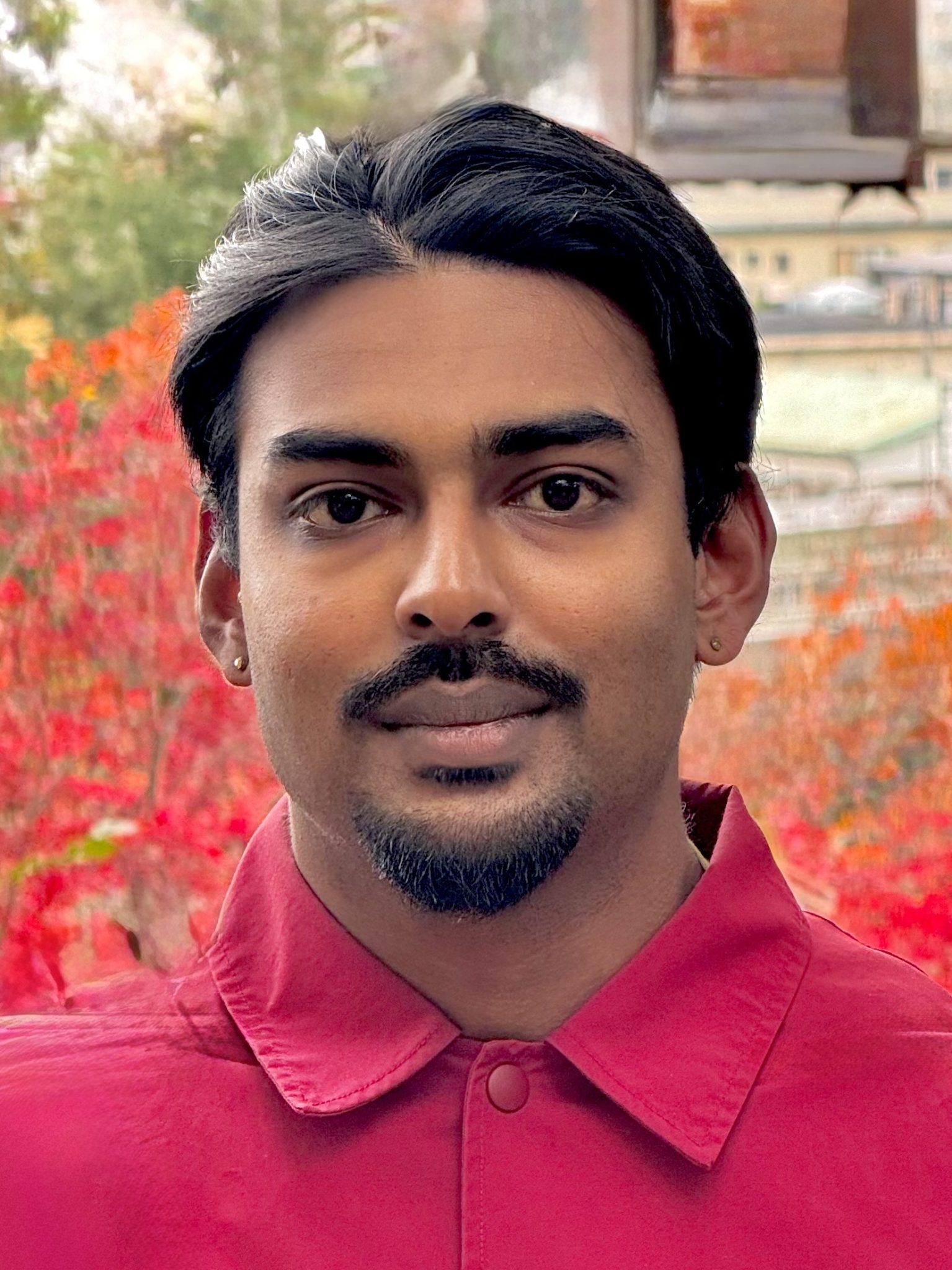
Chenturan Aran is a Sri Lankan Tamil Australian playwright, journalist, and screenwriter. His work has been described as “terrifically sharp,” “incisively witty,” and “timely and timeless.” His play Cut Chilli (2024) had a sold-out run at the Old Fitz Theatre, garnered five stars from The Sydney Morning Herald, and earned three NSW Premier’s Literary Awards nominations. Known for his sharp, irreverent voice, Chenturan’s work blends dark comedy with meta-commentary to explore memory, storytelling, modern psychology, and spiritual longing. Chenturan is an alumnus of MTC’s Cybec Electric, Malthouse Theatre’s Writers Group, and APT’s Pathways Program. He is a regular contributor to SBS Spice, and in 2023 his memoir piece “Truffled Feathers” was published in Emergence: The 30 Best New Voices with Must-Read Stories.
What was the seed of this play – the image, question, or moment that started The Supposed To Be?
Chenturan: I came up with this idea of a “serendipity encounter”… that if you created a clone, you weren’t allowed to properly meet them, only pass them in fleeting, disguised moments. A brush in a train station, or helping them cross the street. Just enough to inhale their presence, but not enough to let them know they’re a clone. That led to the image of a woman who clones herself as a kind of therapy, to watch a version of herself grow up without her wounds. At first it feels generous and healing, but over time she becomes obsessed, and begins to lose her own life.
The title suggests tension between expectation and reality. How does that play out in the work?
Chenturan: For twenty years, Kavitha believes her clone is living the ideal life she always dreamed. Within minutes of the play, she discovers Kaye is not a successful actor but a burnt-out, disillusioned stoner monetising her childhood fame through online sex work. The cloning company has deceived Kavitha, faking progress reports and enforcing distance to conceal the truth. For me, this speaks to regret and fantasy. We carry imagined versions of ourselves that harvest longing but lack real detail. Want to be an actor? Try a few weeks of failed auditions. No one wants to actually meet their fantasies. They won’t hold.
How did you approach writing this piece – did it come quickly, or was it something you wrestled with over time?
Chenturan: I wrestled with it over time. It began as a high-concept sci-fi about secret clones, serendipity encounters, and the super rich living double lives to chase self-actualisation fantasies. But as I moved closer to the relationship between Kavitha and Kaye, it shifted. Kavitha comes from a strict migrant upbringing shaped by repression and duty, while Kaye is given freedom, expression, and infinite choice, but no structure. The play became a question of who actually has it better. What surprised me was that Kaye begins to envy Kavitha’s connection to culture, ancestry, and survival. Where Kavitha initially mines Kaye for meaning, Kaye eventually mimes Kavitha to gain identity, and eventually extracts Kavitha’s stories to infuse cultural nuance into her artistry.
Are there particular voices, communities, or experiences you were centering as you wrote this?
Chenturan: I interviewed South Asian women in their 30s and 40s, predominantly Tamil women from Sri Lanka and India. I was interested in this generation’s experience of duty, and of being vessels and inheritors of culture. I kept returning to their relationships with their mothers, where eldest daughters were often positioned as second caregivers. Many spoke about the tension of building a life in Australia while living within more patriarchal family structures. There’s a deep love and respect for their mothers, but also a struggle to see them as role models in a new cultural context.
What have you learned about the play through seeing it staged and working with this creative team?
Chenturan: I’m a dialogue-driven writer, but this play needed something more physical and abstract. With this team, we explored how clones, fantasy, regret, and longing can be expressed through the actors’ bodies – mimicking, magnetising, repelling. Meeting your clone feels like an internal experience made visible, a quiet sensing of each other. We found that silence, stillness, and shape often carry more weight than words. They reveal what language can’t quite reach, and allow the audience to feel the distance between two selves, and the tension of trying to connect with a version of yourself you can never fully access.
What do you hope audiences take away from The Supposed To Be, or what conversations do you hope it opens up?
Chenturan: Kavitha’s strict Sri Lankan Tamil upbringing leads her to clone herself. Kaye grows up in an exploitative child acting world and, as an adult, tries to mine cultural nuance from Kavitha. Both characters are driven by self-rejection and this imagined truer version of themselves that might fix everything. I hope audiences question that idea. Perhaps healing is found in the body and in the present moment. There is no true self, just the life we accumulate, and real life is always richer than a fantasy. Because it’s true and is shaped by a universe of details.
The Supposed To Be plays at Footscray Community Arts, Melbourne as part of RISING festival.
For tickets and more information, visit the RISING website.
Header photo by Suze Anthony