Bringing Home Alone To Life In Concert With Nicholas Buc
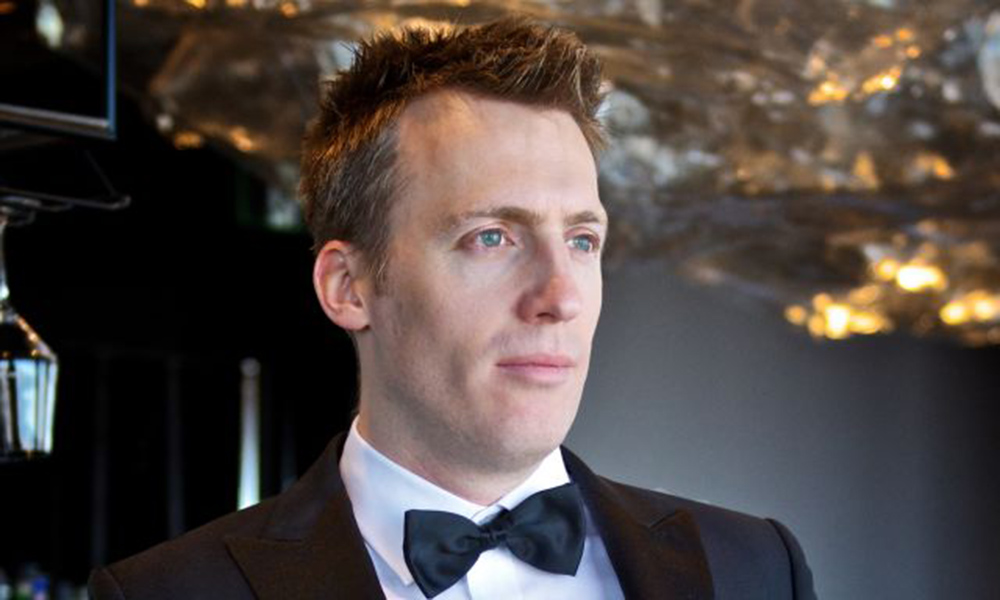
Few Christmas films have earned the level of affection that HOME ALONE continues to inspire, and at the heart of its enduring charm is John Williams’ unforgettable score. This music does more than frame the antics of Kevin McCallister. It deepens the humour, enriches the emotion and turns familiar scenes into moments that feel timeless. For conductor and composer Nicholas Buc, that combination of sophistication and nostalgia makes HOME ALONE IN CONCERT a rare opportunity to bring a beloved classic to life in a new way.
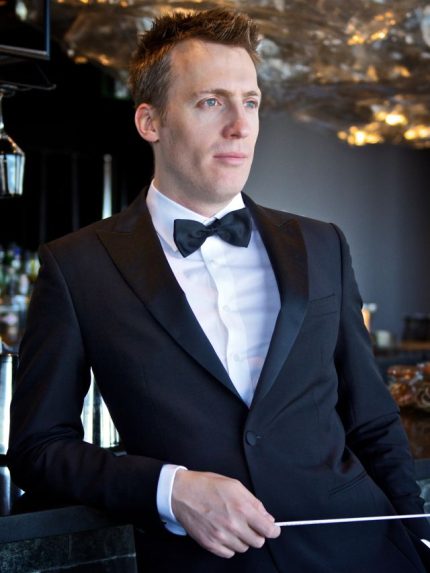
As audiences settle into the Queensland Performing Arts Centre for this special event, they will experience the Queensland Symphony Orchestra and Voices of Birralee performing the score live to picture. It is a format that demands precision and artistic sensitivity, blending rigorous technical preparation with the spontaneity of performance. Buc’s career across composing, arranging and conducting has shaped a unique approach that celebrates storytelling through sound, and his insights reveal why film concerts have become such a vital bridge between orchestras and new audiences.
 What drew you to conduct HOME ALONE, and why is it suited to live performance?
HOME ALONE is one of those films people return to every year, and a huge part of its magic comes from John Williams’ score. He writes music that is both sophisticated and immediately memorable, so the themes feel iconic yet still reveal new details when you hear them live. It’s also one of the rare live film concerts where we get to use a choir, so I’m thrilled that we have the wonderful Voices of Birralee joining the Queensland Symphony Orchestra to bring some extra Christmas warmth to the concert.
How does preparing a film-in-concert differ from a traditional symphonic performance?
The main difference is precision. In a traditional concert you can be more flexible with tempo and pacing, but with a film you’re working inside a very tight framework to make sure every musical beat aligns with the picture. My preparation becomes a mix of musical study and technical planning, marking hit points, internalising the timing, understanding the shape of each cue, so that in rehearsal we can focus on making those mechanics feel natural and expressive rather than rigid.
How does your background as a composer/arranger influence your conducting of film scores?
Composing and arranging have made me very aware of how structure, texture and orchestration all contribute to storytelling. I think of the music from the inside out: which lines carry the emotion, how harmony supports a shift in mood, how the balance between sections affects clarity. When I conduct a film score, I’m always trying to bring those inner details to the surface so the narrative is clear, and so the musicians feel connected not just to “playing the notes” but to the dramatic function of what they’re doing.
How do you maintain the connection between music and visuals in a live performance?
The technical tools, streamers, punches, and sometimes click-track, give us a framework for staying in sync, but the real work lies in making the music feel like it’s breathing with the film. I spend time learning the timing of gestures, cuts and dialogue so that phrasing and dynamics feel organically tied to what’s on screen. The goal is for the orchestra to respond to the drama in real time, so the audience experiences the music and visuals as one unified performance rather than two separate layers.
What are the biggest challenges and rewards of conducting a live film concert?
The biggest challenge is that you only get one shot at perfect synchronisation, you can’t stop and fix things, and everyone on stage has to be completely focused from the first frame to the last. But that’s also what makes it so exhilarating. The reward is feeling an audience react to a film they may know intimately, and realising that the live orchestra is allowing them to rediscover it. When you sense the whole room leaning into a musical moment, it’s incredibly satisfying.
How has your varied career shaped your philosophy as a conductor?
Working across so many different styles has really convinced me that good music is good music, regardless of the label we put on it. I’m very open to anything that has a strong voice or a genuine emotional core, whether it comes from film, the concert hall, theatre, or somewhere in between. That openness naturally leads me to seek out engagements with new audiences and to explore fresh ways of connecting with them, if a project offers a chance to bring orchestral music to people who might not normally encounter it, I’m up for it.
Do you have particular intentions around accessibility or engagement for this performance?
Definitely. Film concerts often bring in people who are hearing a live orchestra for the first time, especially families, and I want that experience to feel welcoming and exciting rather than intimidating. A film like HOME ALONEhelps because the story is familiar and the musical language is very approachable, so audiences can relax and simply enjoy the impact of the orchestra. If someone leaves thinking, “I’d love to hear more of this,” then we’ve achieved something important.
How has the demand for film-in-concerts evolved, and what role do they play today?
Demand has grown enormously, and I think composers like John Williams have been central to that because his music is so deeply embedded in our shared cultural memory. Film-in-concerts are now a major way that orchestras connect with broader audiences, bringing in people who might not initially see themselves at a traditional symphonic program. Once they experience the power of a live orchestra on a film they love, it often opens the door to exploring the wider repertoire.
Do concerts like HOME ALOME in CONCERT help elevate film music within the classical tradition?
I think they absolutely help audiences hear film music as part of the broader orchestral tradition. When these works are performed live, you notice the counterpoint, the harmonic language and the orchestral colour in a way that can be obscured in a film mix. It becomes clear that this is music crafted with the same care and imagination as the standard canon, and that it fully deserves its place on the concert stage.
Are there future films you’d be excited to bring to the concert stage?
There are many, but one I’d especially love to do is Steven Spielberg’s HOOK, which was one of my favourite childhood film scores by John Williams. It’s a wonderfully imaginative and thematic score that in many ways feels like a precursor to his Harry Potter scores. I’d also love to do INTERSTELLAR, especially in QPAC with its grand organ, although I’m not sure if we’d be able to see the organist, they’d be hidden by the film screen!
As the final notes of John Williams’ iconic score ring out, HOME ALONE IN CONCERT becomes more than a nostalgic holiday favourite. It is a reminder of how live orchestral music can transform a familiar film into a vivid shared experience, inviting audiences of all ages to reconnect with a story they love. Under Nicholas Buc’s baton, the Queensland Symphony Orchestra and Voices of Birralee offer a performance that blends precision, heart and festive spirit.
For those ready to rediscover the magic of Kevin McCallister on the big screen with the full power of a live orchestra, tickets are now available HERE.