
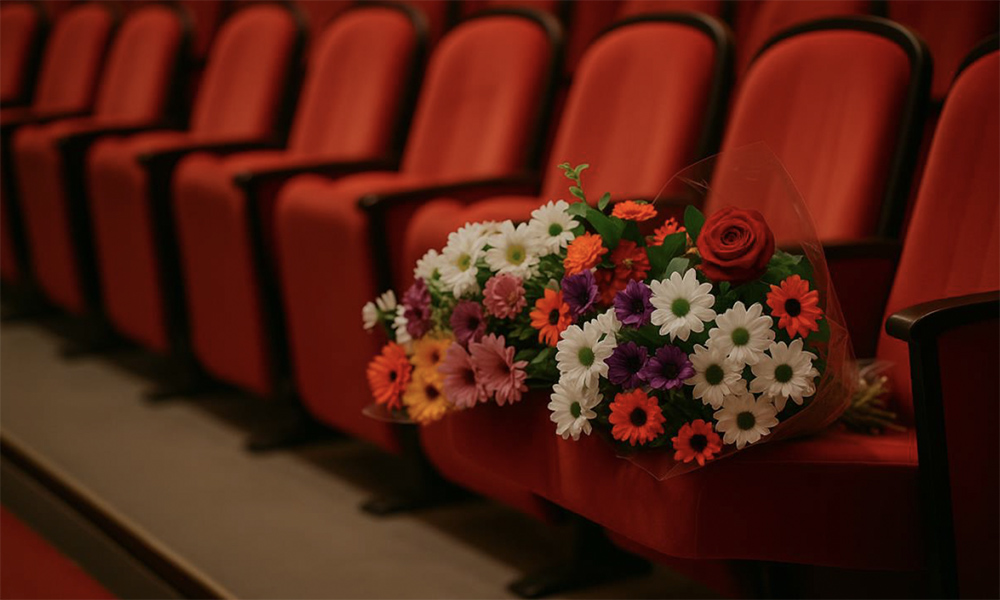
Flowers and theatre: how “thank you with flowers” became a stage tradition
Step into an Australian theatre on opening night and you can feel it before the first line is spoken. The house lights dim, the crowd goes quiet, and for a moment the whole room holds its breath. When the show ends and the applause hits, another familiar scene begins. Someone appears at the front of the stage with a bouquet, or cast and crew come back to the green room to find vases full of colour.
This habit did not appear out of nowhere. Around the world, theatre and flowers have been tied together for generations, and Australia has shaped its own version of that tradition. At the heart of it is a simple idea. When words are not quite enough, you say thank you with flowers.
From old European stages to modern Aussie theatres
The link between flowers and theatre goes back to early European stages, where audiences showed their love by throwing flowers at the performers. For a long time, especially in opera and ballet, it was common to see bouquets tossed over the orchestra pit when a star singer or dancer took their bow.
Australia picked up the habit as theatre grew here. Touring companies brought their customs with them, and local performers happily adopted anything that made a hard life on stage feel a bit brighter. Over time the style shifted. Instead of throwing flowers up from the stalls, people started handing them over more directly. Now it is normal to see a lead actor step forward after the curtain call and accept a bouquet, or to watch a director blush as the cast surprises them with flowers at the end of a run.
Flowers as a bridge between audience and stage
Theatre is live and fragile. Every show is slightly different, and once it is over, it exists only in memory. Flowers work in the same way. They bloom, they brighten the room, then they slowly fade. That is part of their charm.
When an audience member gives flowers, they are saying, “For a short time, you took us somewhere else, and that mattered.” When companies thank each other with bouquets, they are saying, “We shared this time together. Let us mark it before we all go back to normal life.”
How Australian theatre made the tradition its own
In big city venues, regional playhouses and back rooms above pubs, you will see the same basic patterns, but with a local flavour. Australian theatre is often direct, relaxed and a bit rough around the edges. Flowers sit comfortably in that world.
Front of house and backstage rituals
On opening night, it is common for producers or companies to send flowers to the front of house desk. Patrons walk in and see arrangements with cards that say, “Chookas for the season” or “Break a leg”. It sets the tone before anyone finds their seat.
Backstage, dressing rooms might be bare during rehearsals, then suddenly fill with blooms after the first performance. A lead actor might find a bouquet from a partner. A stage manager might get flowers from the cast. Designers and lighting techs might share a vase in the green room. The space changes from a work zone into a celebration zone almost overnight.
Community and youth theatre
In community and youth theatre, the tradition can feel even more personal. Parents bring flowers for kids taking their first steps on stage. Friends club together to buy a bouquet for a director who gave up countless nights to pull a small show together.
In these spaces, the bouquets are rarely perfect or expensive. Sometimes they come from a supermarket, sometimes from a backyard garden. What matters is the intention. The message is always the same. “We see the work you put in. We are proud of you.”
Who receives flowers, and why it is not just about the lead
The stereotype is simple. A leading lady stands at the centre of the stage, holding a giant bouquet while the crowd claps. That still happens, but traditions have widened a lot. Modern Australian theatre loves a team effort, and the flowers often reflect that.
Flowers for visible stars
Lead performers still receive a lot of bouquets, especially on opening and closing nights. They carry a huge load, and people naturally want to thank them. For many actors, that first time stepping forward in costume to accept flowers is a moment they remember for the rest of their life.
Flowers for the hidden workers
More and more, companies also make sure people behind the scenes are not forgotten. Directors, assistant directors, producers, stage managers, choreographers, musical directors and designers often get their own bunch. At the end of a season, it is common to line everyone up, say a few words, and pass flowers down the line.
That gesture matters. Theatre can be a hard grind. Long rehearsals, tight budgets, late nights. A small bouquet in someone’s arms can be the difference between feeling invisible and feeling valued.
Traditions, superstitions and little quirks
Theatre folk are known for their superstitions, and flowers have gathered a few of their own over the years. Different groups have different beliefs, but a few patterns pop up again and again.
When the flowers arrive
Some people prefer not to receive flowers before the show. They feel it adds pressure or “jinxes” the performance. They would rather the bouquet come after they have done the work and know how the night went. Others are happy to see flowers waiting in the dressing room as a boost of confidence.
In many companies, there is an unspoken rule. Big, formal thank you arrangements come on opening or closing night, or on a special anniversary. Smaller, personal gifts can arrive at any point in the run.
What goes into the bouquet
Some traditions say that red roses belong to opening nights, while white flowers suit more serious or classical pieces. Australian theatre often takes a looser view. You will see bright natives mixed in with imported roses, or wild, textured arrangements that echo the mood of modern plays.
For thank you gestures that reach beyond one show, it can be easier to use a curated range. Collections like thank you with flowers are designed to match gratitude rather than a specific character or costume, so they fit a wide range of theatre people and productions.
Bringing old rituals into modern productions
Even as theatre shifts to include more diverse voices, new writing and different forms, the tradition of flowers remains surprisingly strong. Small independent companies, big mainstage houses and school productions all keep some version of it alive.
A mix of old and new
You might see a classic “star and bouquet” moment at the front of the stage, followed by a casual drinks gathering where everyone shares snacks and laughs in the foyer. Photos of flowers end up on Instagram, but the feeling is the same as it was decades ago. Someone did something brave under lights. Someone else wanted to honour that courage.
Modern theatre workers also use flowers to support each other through the less glamorous parts of the job. Bouquets arrive for directors who lose funding but keep pushing. They arrive for actors coming back after illness or injury. They arrive for crew members who have done countless quiet favours and never asked for praise.
In all these cases, the flowers say, “We see you, even when the audience does not.”
Sending your own thank you with flowers
For fans, families and friends who want to be part of this tradition, it has never been easier. You do not have to hunt down a florist between work and a show. You can choose a bouquet online, add a note and send it straight to the theatre, rehearsal room or home.
When you pick from a dedicated gratitude range like thank you with flowers, you know the arrangements are suited to exactly this kind of moment. They are big enough to feel special, but practical enough for someone who might be catching a late tram home after curtain down.
A simple card message is all you need. One or two honest lines about how the show moved you or how much you appreciate their effort will stay with them long after the petals fall.
Keeping the magic human
Theatre is built on human connection. Writers, actors, designers and crew give their time and hearts so that strangers can sit together in the dark and feel something. When you answer that gift with flowers, you are joining a long line of people who chose a real, living gesture instead of just a quick word.
In Australian theatre, where budgets are often small and passion does most of the heavy lifting, that kind of kindness matters. A bouquet on a cluttered green room table or a simple bunch in a tiny share house kitchen can be proof that the work reached someone.
That is why the tradition will not disappear any time soon. As long as people tell stories on stage, there will be someone in the seats who wants to say thank you with flowers, and someone backstage who needs to hear it.