Cost Blowout Puts Future Of Riverside Theatres Redevelopment Under Pressure
The cost of transforming Parramatta’s Riverside Theatres into a major performing arts hub has almost doubled, forcing councillors to consider stripping back key parts of the long awaited project.
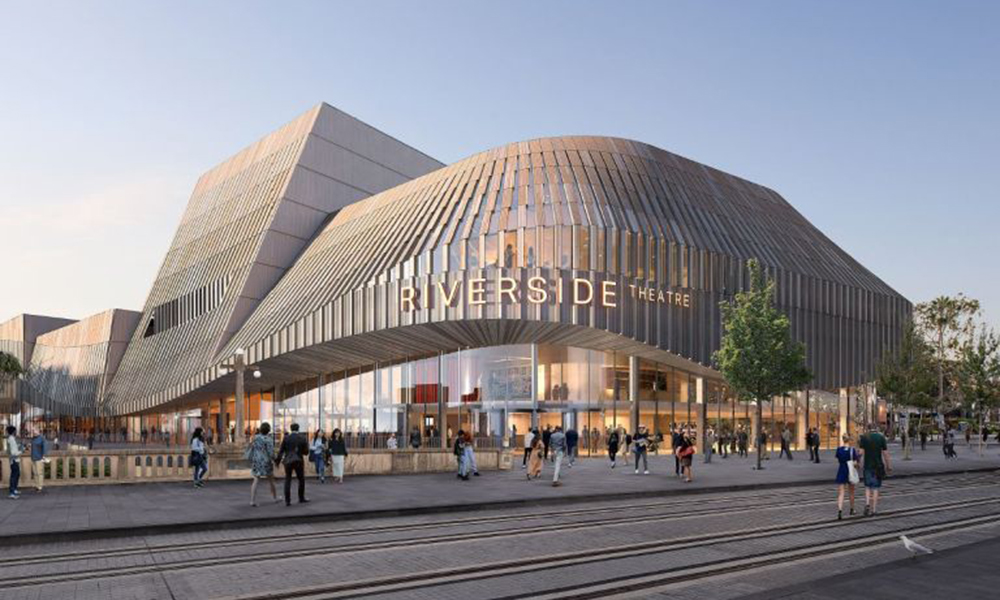
The City of Parramatta initially budgeted about $188 million to replace the ageing 37 year old complex with a larger precinct, including a 1500 seat Broadway style theatre, a new black box space and a cinema. However, tender responses now before council have priced the redevelopment at about $355 million, according to multiple sources familiar with the process, lifting the project far beyond earlier estimates and well above the $276 million figure endorsed when detailed design work was approved.
The sharp increase comes after the NSW Audit Office previously flagged “extreme risk” around the financial assumptions underpinning the plan, and it has triggered a fresh round of internal discussions about how to bring costs back under control.
Key cultural spaces on the chopping block
To close the gap, councillors are being asked to examine options that include cheaper building materials and the possible removal of several elements regarded as vital by the local arts community, including the 325 seat black box theatre, the planned cinema and new rehearsal rooms.
These smaller spaces were designed to support independent companies, education programs and local creatives, complementing the proposed 1500 seat lyric theatre and refurbished playhouse that would anchor a reimagined Riverside precinct on the northern edge of the CBD.
Arts administrators involved with the project fear that cutting those components would undermine the long term vision for western Sydney, turning what was pitched as a comprehensive cultural hub into another compromised build that fails to keep pace with the region’s rapid growth.
One senior figure, who is not authorised to speak publicly, has warned privately that the funding imbalance between inner Sydney and Parramatta risks repeating earlier mistakes, when parts of the site were left underdeveloped for decades because money ran out midstream.
Funding gap widens as council chases partners
The cost escalation adds to an already tight funding picture. The council has revamped the way it manages interest on funds quarantined for Riverside, diverting interest earnings back into the project budget to increase available cash. It has also committed to using capital reserves and philanthropy to close an earlier $93 million shortfall.
Even so, the latest tender prices far exceed the current funding envelope. The City of Parramatta is still waiting on a decision from the federal government following a February application for $50 million under the Urban Precincts and Partnerships program. At state level, arts funding is heavily concentrated on the $915 million Powerhouse Museum development further along the river, with no dedicated contribution yet announced for Riverside’s rebuild.
Council has framed Riverside as a flagship piece of cultural infrastructure for western Sydney, arguing that the expanded venue, riverfront public spaces and new pathways and gardens would support a 24 hour economy and attract hundreds of thousands of visitors each year.
Balancing ambition and affordability
Lord Mayor Martin Zaiter has reiterated that the city remains committed to delivering a “project of scale and ambition” while staying within its financial capacity, promising tight project controls and regular reporting as design and funding talks continue.
For artists and producers who have spent years planning around the promise of a fully equipped, modern complex, the coming months will be critical. If additional support does not materialise from state and federal governments, councillors may be forced to choose between a leaner, cheaper version of Riverside or the possibility of further delays while new funding sources are pursued.
The choice now before decision makers is stark. Western Sydney can either secure the complete cultural precinct that has been envisioned for more than a decade, or accept a scaled back compromise that could lock in another generation of underinvestment in its main theatre.