
Trump’s New Visa Rules Could Complicate Broadway’s Global Talent Pipeline
Broadway’s reputation as the world’s premier stage for international talent could face new hurdles under U.S. immigration changes introduced by President Donald J. Trump.
Last month, Trump signed a proclamation imposing a $100,000 fee on American employers hiring foreign workersunder the H-1B visa program, a dramatic increase from the previous cost of less than $10,000. The administration claims the move is aimed at curbing abuse of the system by companies replacing U.S. workers with cheaper foreign labor.
“The large-scale replacement of American workers through systemic abuse of the program has undermined both our economic and national security,” Trump said in a statement. “It is necessary to impose higher costs on companies seeking to use the H-1B program while still permitting them to hire the best of the best.”
Ripple Effects Beyond Tech
While the H-1B visa program primarily targets specialized fields such as technology and finance, arts professionals could also feel the effects. Broadway producers and U.S. arts organizations often rely on foreign performers, many of whom enter the country under the separate O-1B visa, designated for artists with “extraordinary ability.”
However, immigration experts warn that the steep H-1B fee could lead to a surge in O-1B applications — not all of them legitimate.
“There will be more demand for O-1s, though not necessarily from qualified people,” said New York-based immigration attorney Karin Wolman. “It is definitely not the case that everyone who qualifies for an H-1B would also qualify for an O-1.”
London immigration lawyer George Lake agreed, suggesting approval rates for O-1B visas might drop if unqualified applicants attempt to “squeeze into the incorrect category.”
Delays and Scrutiny
Even for legitimate artists, delays may worsen. Processing times for O-1B visas already stretch between two and six months. With additional applications expected, waiting periods could increase, potentially disrupting Broadway production schedules.
Further complicating matters, the U.S. Citizenship and Immigration Services (USCIS) has intensified efforts to combat immigration fraud. The recent “Operation Twin Shield” in Minnesota uncovered 275 suspected fraud cases. USCIS Director Joseph Edlow hailed the operation as a “tremendous success” and vowed “an all-out war on immigration fraud.”
But attorneys fear this heightened vigilance could backfire on genuine applicants in the performing arts, where last-minute production changes are common.
“Legitimate changes to an artist’s itinerary — such as when a project is delayed or a director becomes unavailable — are sometimes misinterpreted as fraud,” Wolman cautioned. “Officers are incentivized to see fraud under every rock, when it is just the normal course of how the industry functions.”
Impact on Broadway
Theatre producers have long relied on transatlantic collaborations, importing top British and European talent to New York stages. This season, English stars Mark Strong and Lesley Manville will headline Oedipus at Studio 54, while Two Strangers (Carry a Cake Across New York) will feature Sam Tutty at the Longacre Theatre.
Industry insiders fear that tighter visa rules and slower processing could jeopardize such cultural exchanges, raising barriers for international performers and the creative teams who bring them in.
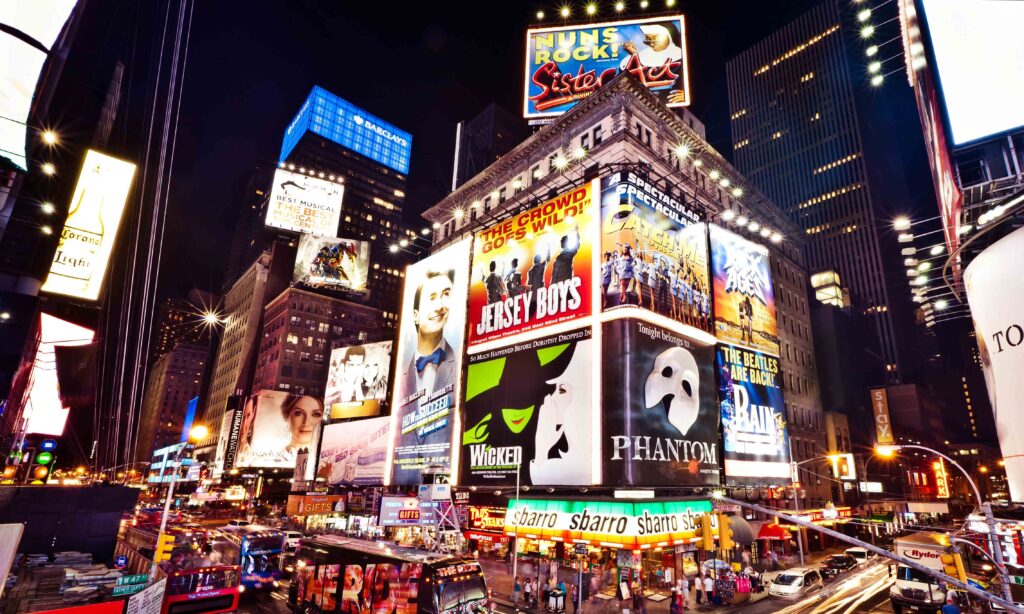
Broadway thrives on global artistry, but if new immigration hurdles turn red carpets into red tape, its famously bright lights may start to dim for the world’s brightest talent.
Photo Credit: DepositPhotos.com