Laughter, Grief and Song, Inside CONGRATULATIONS, GET RICH with Merlynn Tong
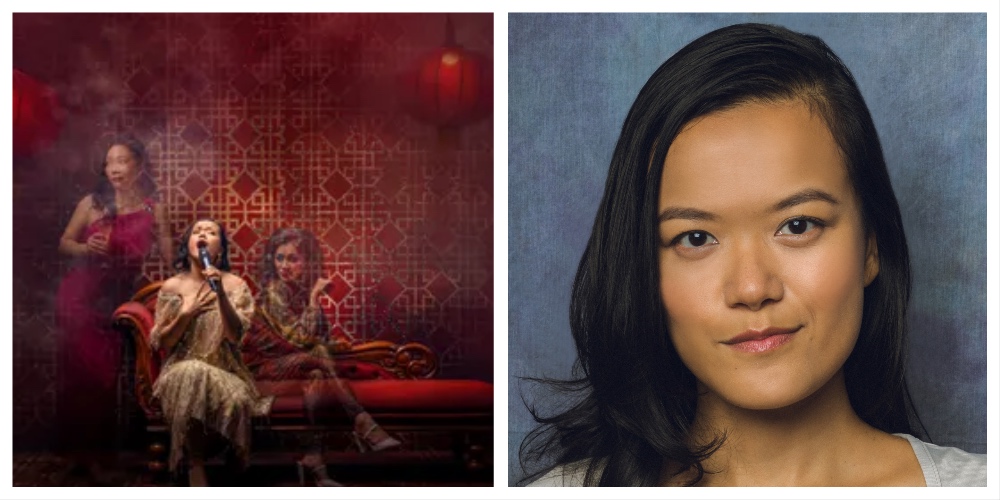
CONGRATULATIONS, GET RICH! pairs a Lunar New Year blessing with Ren Ri, Human Day, when, in myth, Nuwa shaped people from clay and everyone shares a birthday. Merlynn Tong sets that idea inside a karaoke room, a sanctuary where private voices become brave. On the opening night of a new karaoke, Mandy waits for a crowd. Instead, the ghosts of her mother and grandmother arrive. Songs unlock what speech cannot. Laughter sits beside grief. Prosperity meets personhood in a story about inheritance, legacy, and the will to choose a future.
Tong writes and performs. She protects what should stay private, then lets the line blur when the play needs her voice. Courtney Stewart directs a company that speaks in two cities at once, Singapore rhythms and Queensland slang. Seong Hui Xuan and Kimie Tsukakoshi sing with power and wit. Composer and sound designer Guy Webster builds original songs with music director Alex Van den Broek. The show is tender, funny, and fierce.
The premiere is a partnership between La Boite, Sydney Theatre Company, and Singapore Repertory Theatre.
The title pairs a Lunar New Year blessing with Renri. What do prosperity and personhood mean in this story, and why put them together inside a karaoke bar?
Ren Ri meaning “Human Day” is the seventh day of Chinese New Year. In Chinese mythology, it is the day the goddess Nuwa created mankind out of clay. It is also one of my favourite days of the Lunar New Year celebrations as it’s everyone’s birthday! The Chinese tile of the show “恭喜发财, 人日快乐” is a greeting we would say to each other on Ren Ri.
CONGRATULATIONS, GET RICH! explores what prosperity really means in our lives. It does so through the lens of personhood that extends into multigenerational inheritance and legacy.
Karaoke has always been a very sacred space to me. In Asia, this is not a public experience where you sing for the whole bar. These are private individual rooms where you often go with a small group of friends. I have had so many key life moments happen in Karaoke rooms. These rooms have always been a safe space to express one’s deepest emotions and passions, free of judgement; it is a sanctuary and a kaleidoscopic portal from the regular world. In this regard, it is also the perfect setting for a theatrical play.
I also grew up in lush Karaoke bars in Singapore that my parents owned. I was always mesmerised by how each individual Karaoke room felt like doorways into whole universes of heartaches and longings, joys and triumphs. My parents passed when I was young and I never got to experience their Karaoke as an adult. Perhaps this show is my portal into my past.
Why stage a reunion dinner inside a karaoke business, and what can singing reveal in a family argument that spoken dialogue cannot?
The show is actually set on the Opening Night of a brand new Karaoke. My character, Mandy, is desperate for just one person to show up to what she calls her ‘Extravaganza’ but sadly, no one does. Until a woman joins her, and then another, and Mandy realises they are the ghosts of her mother and grandmother.
I think singing can reveal much deeper layers of not only emotional depth but also comedy when spoken dialogue is simply not enough. In our show, singing is also a way for the ghosts to demonstrate their powers and reveal parts of themselves that they have never been able to express before.
Mandy meets the ghost of her mother, and another unexpected woman. How did you find comic light beside grief, and what choices helped you protect the tenderness of those scenes?
Perhaps it’s to do with my personality: I find that the harder the subject, the more need there is for lightness and comedy to approach it. Not to deflect from the gravity of the grief but I think I can look at grief a little more clearly when I allow myself to laugh at life’s absurdities too. Tenderness then feels more natural and earned too.
You are both writer and performer. Where do you protect your own life on stage, and where do you let the line blur because the play needs your voice?
In my first draft I tend to write absolutely everything I want to say with no filter. Then when I revisit the drafts, it becomes clear to me that parts that I would prefer remain private. I would exclude those bits but also interrogate myself on what it is I was trying to convey in those moments. Having a team of trusted collaborators is invaluable in this process, I would lean on their recommendations strongly too.
You are led by Courtney Stewart, and you share the stage with Seong Hui Xuan and Kimie Tsukakoshi. What did that mix of Singapore and Queensland change about rhythm, humour and language in the room?
Courtney and I worked very closely with our collaborators from Sydney and Singapore even in the writing process to ensure that we got creative input from all our partners. It is wonderful to hear the Singaporean rhythms and language via Kimie and Hui Xuan (who are both also extraordinary singers). Equally wonderful too to contrast it with my real-life partner Zachary Boulton’s (who is playing my partner in the show) Australian rhythms and slangs too. The play was written to celebrate all these different sounds and it is a delight to hear it all come alive via these incredible performers.
This premiere is a partnership between La Boite, Sydney Theatre Company, and Singapore Repertory Theatre. What does a three way partnership make possible in scale, casting, and risk?
It is such a delight to make a new work that already has an inbuilt tour to these incredible theatres. It has made so much more possible. I’m especially thrilled that we got to cast from all three venues and then get to play for the audience at each of our homes.
The Festival frames the show as one of transformation and hope, and it asks whether we are bound to fate or can slip its hold. What answer did rehearsals reveal that writing alone could not?
Theatre is fundamentally collaborative and the rehearsal process has taught us so much more than writing alone could not. Around the idea of transformation, each actor showed us how much more potential the story had via the body, via the power of their incredible voices. Our creative team has been astonishing to work with too. James Lew’s set, Gabriel Chan’s lights, Guy Webster‘s sound and music, Alex Van den Broek’s musical arrangements and NJ Price’s fights have been magical to work with. The idea of transformation, led by the superhuman director Courtney Stewart, has taken on a whole new meaning with her wonderful direction, these lights, sound and set that we could not have merely envisaged on the page. Even our stage management team, Peter Sutherland and Briana Clark, have contributed so much to the creative journey of the show.
Your team includes composer and sound designer Guy Webster, and music director Alex Van den Broek. How did you decide when a song should be a crowd pleaser and when it must carry plot or character?
First of all, it has always been a fantasy of mine to make music and it’s been a thrill to get to create these original songs with Guy Webster. Alex Van den Broek’s musical arrangement skill is awe inspiring and I’m so grateful for her helping me find my singing voice.
When we were making the songs, we were fairly clear about where they sat in the story and what its function was. I’m hoping that all our songs are crowd pleasers in their own way and that they all advance the plot and character. The big considerations we had were what kind of emotional direction these songs can and must propel us into. It has been such a fun process to create them.
Golden Blood cracked open Singapore for Australian audiences. What new facet of Singaporean womanhood does this musical let you share, and where did you want to depart from Golden Blood?
We encountered a modern male Singaporean gangster in GOLDEN BLOOD, in CONGRATULATIONS, GET RICH! we get to meet a Singaporean female gangster from the 60s, and we meet her multi-generational descendants too! I love getting to drop audiences into pockets of unexpected Singaporean culture that is rarely seen on stage.
An aspect of womanhood I am keen to explore in this show is the symbolism of “38”. There is a lot of symbolism in the show about being 38-years-old. All three female characters are this age. And we meet my character Mandy the night she is turning 38-years-old. Three, Eight in Mandarin means ‘bitch’ and March the Eight also happens to be International Women’s Day. I found this so potent to write about. Coincidentally, I am also turning 38 years old during the seasons of this show!
If a teenage Merlynn walked into Mandy’s bar after a hard day, what would she sing first, who would sit with her, and what would the ghosts tell her to do next.
This is a great question. I think if teenage Merlynn went to Mandy’s bar, I hope she would be surrounded by so many good friends who are there to support her. I hope all of our individual ghosts are there too, and that they are at peace and enjoying the music and wonderful atmosphere of Mandy’s Karaoke. I think teenage Mandy will sing our angsty and spiky original song “Bucket of Durians”. I hope the ghost will dance, will laugh, and will tell teenage Merlynn to keep going as she is, because she is more than enough.
CONGRATULATIONS, GET RICH! is playing as part of Brisbane Festival.
For Tickets CLICK HERE.