Cast announced for A FEW GOOD MEN at QPAC
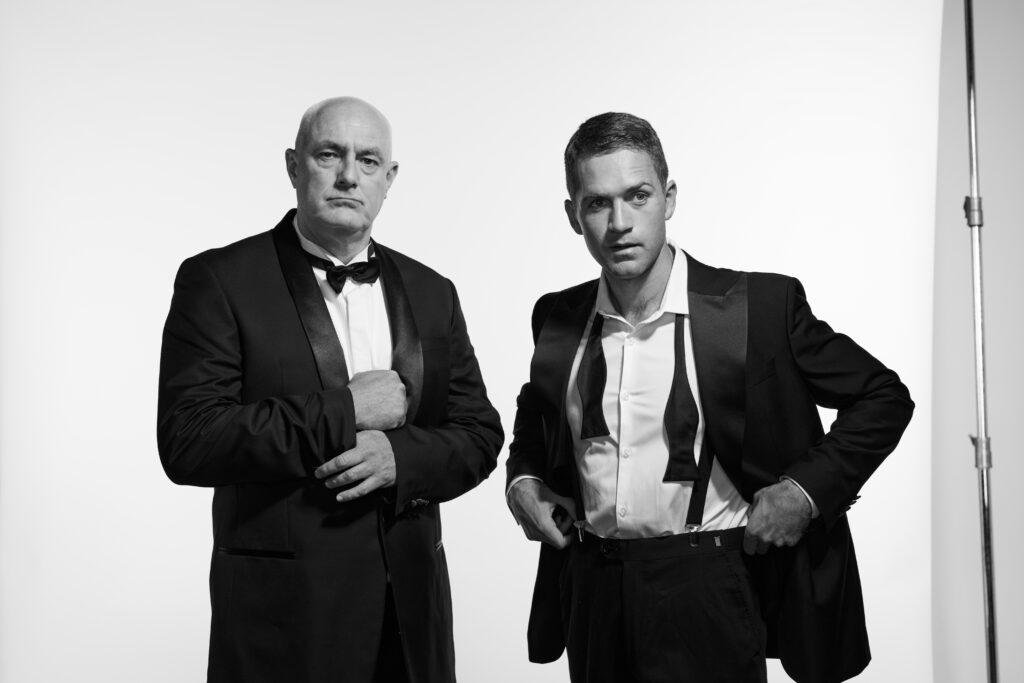
A FEW GOOD MEN returns to the Queensland main stage this November, a centrepiece of Queensland Theatre’s blockbuster 2025 season and a signature event in QPAC’s fortieth birthday celebrations. Court is in session in the Playhouse, and the stakes could not be higher. Two outstanding Australian actors will lead this revival. Rising star George Pullar (Home and Away, A Place to Call Home, Playing for Keeps), joins acclaimed theatre veteran Hayden Spencer (Mystery Road, Deadloch). Three time Matilda Award winner Daniel Evans directs, bringing a sharp theatrical lens to Aaron Sorkin’s sizzling legal drama. Long before the film became a cultural reference point, Sorkin’s play dominated Broadway. Now Brisbane audiences will see why. A misfit United States Marine is dead. Two others stand accused. A team of young military lawyers begins to pull at a thread that could unravel a chain of command.
This production carries the snap and urgency that define Sorkin’s writing. Dialogue moves like a volley. Ideas clash in the open. Characters who are certain of the rules discover how quickly certainty can fail under pressure. The Independent once called Sorkin’s script brilliant, intelligent, cutting, shivering, and even nasty. That praise goes to the heart of the play’s power. It is thrilling and dangerous at the same time. It invites audiences to enjoy the cut and thrust of a courtroom contest, then asks them to sit with the cost of winning and losing inside an institution built on obedience.
A FEW GOOD MEN is inspired by actual events at Guantanamo Bay in 1986. It begins with a tragedy that could be explained by a few bad actors, then expands to interrogate the culture that shaped them. How far does loyalty extend. What happens when a private code collides with the public law. Who gets to decide what counts as honour, and who pays the price when that decision goes wrong. Sorkin’s signature quickfire repartee, familiar from The West Wing, The Newsroom, and The Social Network, draws an audience into the momentum of pursuit. The young lawyers chase a neat story. Higher ranking officers defend their world with calm authority. The truth sits between them, moving, resisting, reshaping itself as each witness speaks. The play refuses a simple answer. It stages the difficult space where duty, ambition, and morality overlap. It shows what happens when people believe that patriotism can excuse anything, and it asks whether unquestioning loyalty is a virtue or a risk.
The Queensland stage is the right place for this debate. Queensland Theatre has a track record of mounting work that entertains with craft and provokes with ideas. QPAC’s Playhouse is a room built for clarity, pace, and emotional punch. As part of QPAC’s fortieth birthday celebrations, this revival speaks to the role that great performing arts centres play in civic life. They hold space for stories that test a community’s values. They invite audiences to spend two hours in a room where words matter, where evidence matters, and where the cost of silence does not stay offstage. Brisbane audiences have a long appetite for strong ensemble acting and muscular direction. This production aims to meet that appetite with a company of rising talents and stage legends who can fill the room with tension you can feel in your seat.
Director Daniel Evans brings a precise sense of rhythm to text driven theatre. Three Matilda Awards point to a career shaped by bold choices and detailed craft. In a courtroom play, staging is a choreography of attention. Where you look matters. Who is silent matters. How a pause lands can be as consequential as a flourish of rhetoric. Evans builds productions that understand this grammar. Expect a focus on clean lines, strong sightlines, and the human stakes inside procedural formality. Expect a world where military order meets theatrical economy. Expect rooms that feel real enough to stand in, then tilt toward the psychological when pressure peaks. Above all, expect a director who trusts actors to play the long game of persuasion, point by point, objection by objection, until the room itself feels like a scale tipping.
Casting drives a courtroom drama, because the argument lives in the people making it. George Pullar arrives with the spark of a rising star, a presence that reads as intelligence in motion. He brings the restless energy of a lawyer learning how to fight for something more than a plea bargain. Hayden Spencer brings the gravity of a veteran. His work carries the weight of long experience, a sense that he understands how a room breathes and how power moves through protocol. Together they promise a charge that is central to Sorkin’s world. One actor seeks leverage through speed and wit. The other anchors the scene with stillness, control, and a knowledge of how institutions protect themselves. Around them, a company of rising talents will go head to head with stage legends. The chemistry that emerges is the difference between a good courtroom and an unforgettable one.
The story of A FEW GOOD MEN is also the story of a form. It is theatre that uses the rules of a trial to run live wires between audience and action. The audience becomes a kind of jury, not because they deliver a verdict, but because they weigh each scene as if their decision might come next. The Broadway success confirmed that a courtroom can be as kinetic as any battlefield. Sorkin wrote a play where exposition is propulsion, where jargon turns into poetry, where the structure of testimony allows character to reveal itself line by line. The move from stage to screen brought the story into the wider culture, but the stage has a power that film cannot duplicate. You feel the argument build in real time. You hear the air change when a witness hesitates. You sense a tide turn when a line lands and the room leans forward.
At its core, A FEW GOOD MEN is a study of courage. Not the courage of combat, although that shadow always falls across the stage, but the courage to speak plainly. The young lawyers must decide whether they will take the safe road or risk everything on a claim that calls their superiors to account. The accused must decide who they are without the cover of a unit code. The officers on the stand must decide how to defend a system that demands obedience at any cost. The audience watches people choose between comfort and consequence. The play understands how institutions shape those choices. It shows how language can keep a truth hidden in plain sight. It shows how an internal culture can train people to accept what should never be acceptable. It asks whether protecting the image of strength can become a weakness that harms the very people a uniform is meant to serve.
Evans and the creative team will build a world that foregrounds clarity and momentum. The courtroom must feel like a machine, precise and unrelenting. Each scene must connect with the next so that the pressure rises without visible strain. The design will likely privilege clean architectural lines, a restrained palette, and light that can shift from institutional brightness to the heightened focus of a cross examination. Sound will underscore the ticking pace of procedure without distracting from speech. Costumes will signal rank and role in an instant. Nothing fussy. Nothing that gets in the way of words. The staging will give actors space to move, then tighten to hold them still when silence becomes the most persuasive argument. The result should be a production that feels classic and contemporary at once, respectful of the play’s origins and alert to the way its questions land in 2025.
Audiences who love Sorkin’s screen work will recognise the patterns. The walk and talk energy. The pleasure of watching smart people use language like a blade and a shield. The way humour slips into a serious moment, not to deflate it, but to set the next turn of the screw. The legal strategy that doubles as moral inquiry. The relentlessness of a character who refuses to settle for a neat version of events. These pleasures belong to theatre as much as they belong to television and film. In the Playhouse, you hear the craft land in a live acoustic. You feel a laugh ripple and rebound. You share the collective intake of breath when a character steps over a line that cannot be uncrossed. That communion is why this story returns to the stage. It thrives in the presence of an audience that tracks every beat.
The return of A FEW GOOD MEN comes inside a milestone year for Queensland Performing Arts Centre. Forty years is a civic marker. It speaks to the way a city grows around its stages. QPAC has welcomed generations of artists and audiences into rooms where craft and conversation thrive. Marking that birthday with a courtroom drama makes a kind of elegant sense. A performing arts centre is a public forum. It is a place where ideas are tested in full view. It is a place where community gathers and decides what it wants to applaud, what it wants to argue with, and what it wants to carry into the world the next day. This revival honours that tradition. It offers the pleasure of suspense and the satisfaction of great acting. It also offers a prompt to think about power, responsibility, and the ethics of service.
Expect pace, clarity, and heat. You can expect a company that understands how to listen in public. You can expect a director who knows how to shape a room so that a single question can turn a scene. You can expect a night where the line between theatre and civic conversation grows thin. You can expect to leave the Playhouse with the sound of an argument still ringing in your ears. A FEW GOOD MEN is a courtroom tour de force. It is also a mirror held up to a culture that can confuse loyalty with virtue and silence with strength. Brisbane audiences will recognise the pull of those ideas. They will also recognise the relief that comes when a story allows people to speak plainly and be heard.
A FEW GOOD MEN asks for attention and gives back momentum, intelligence, and the charge of live performance. It is a highlight of Queensland Theatre’s 2025 season and a proud chapter in QPAC’s fortieth year. George Pullar and Hayden Spencer lead a powerful ensemble under Daniel Evans’ exacting eye. The Playhouse becomes a courtroom. The audience becomes a kind of jury. The questions feel uncomfortably close to the bone. The pleasures are real. The craft is razor sharp. The truth, as ever, is contested.
Can you handle the truth?
A fEW GOOD MEN will play at QPAC
For Tickets CLICK HERE