From Quill to Synth Laura Murphy’s on THE LOVERS
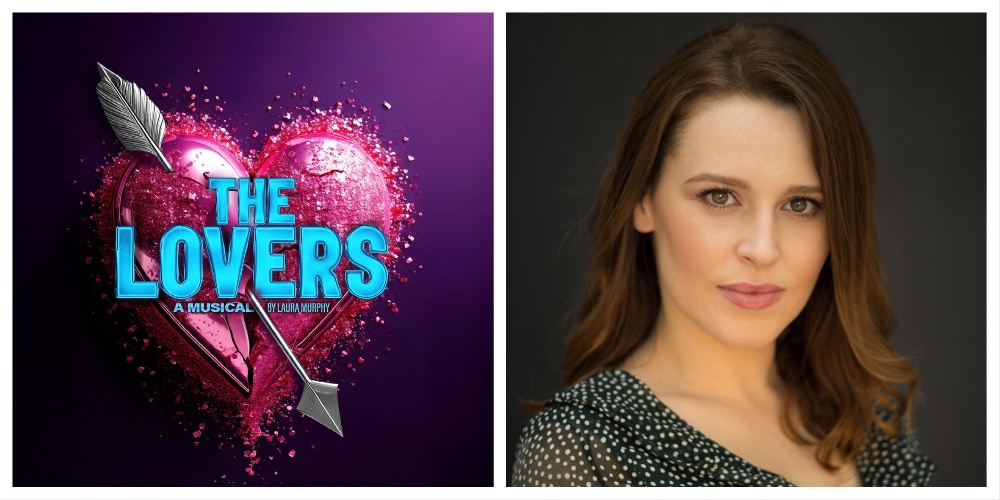
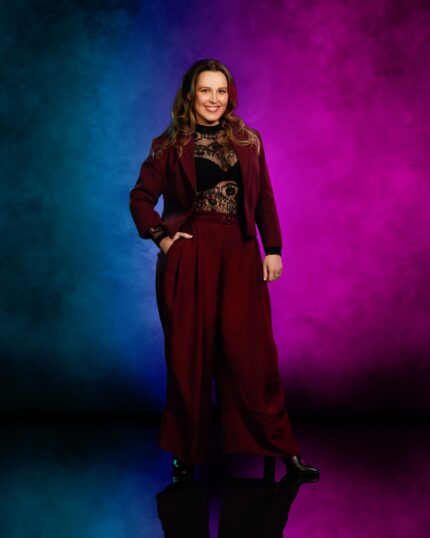
Shakespeare meets synths and stadium hooks in THE LOVERS, a new musical that opens a four hundred year old text and lets it sing in the language of pop. In this interview Laura Murphy, discusses her role as the creator & writer who treats the Bard with affection, then adds curiosity. Her rule is simple, yes and. Honour what is on the page, ask new questions, and listen for the beat that reveals each character’s heart. A live fairy band keeps time. From the Beatles to Bowie to Billie Eilish, the score channels seven decades of pop and distils big feelings into hooks you can hum on the way home. THE LOVERS also questions the myths of romance we inherit. It wonders where fantasy ends and real care begins. It suggests that the chase for a perfect happily ever after can crowd out family, friends, community, and the self. Born in workshops and table reads, the piece clicked in a 2020 development and has grown with collaborators ever since. With Brisbane audiences in mind, and with eyes on universality, THE LOVERS welcomes everyone to the forest to laugh, to dance, and to rethink what love can be, right now.
THE LOVERS is rooted in Shakespeare yet reimagined through your voice. If Shakespeare himself were to sit in the audience on opening night, what do you think his reaction would be?
Shakespeare’s writing is so lyrical and rhythmic and playful so I like to think that if you swap his quill for a synthesiser, you get THE LOVERS. I imagine that he would be stoked that 400 years later, his play is still speaking to such a wide breadth of audiences, and inspiring so many artists to infuse his work with new perspectives and explore new forms to tell his stories. Of course I may need to find him at interval to explain what “DTF” means.
Many shows modernise classics with a wink to the audience. How do you balance respect for the original text with your desire to break away and create something entirely fresh?
I love this story and I love the rich tapestry of words that Shakespeare used to tell it. So my general rule of thumb was to “yes, and” what was already inside Shakespeare’s original text. Yes, and how can this speak to a modern audience? Yes, and what has happened in this character’s past to make them see the world this way? Yes, and what sub genre of pop music would best express what this character is trying to say? Yes, and what can I take away from this story as a woman in the 21st century? Honouring the text and asking more questions created a springboard for me to create something entirely fresh.
The word “love” has been staged in every imaginable form. What new lens are you deliberately offering the audience in The Lovers that you feel has not been explored before?
If you add all of the songs and stories and art over the centuries, it may very well paint a picture that “romantic love” is the single most essential ingredient for a fully realised life, at the expense of all other kinds of loving relationships: family, friends, community and even the relationship with one’s self. Things have shifted in the last decade or so where we’ve begun to question that narrative. In giving these four hundred year old characters a modern voice, I knew that when they tell their story this time, they have to find something different at the end of their journey through the forest. And while The Lovers explores romantic love from a lot of different angles, I would say the key perspective it offers is that chasing the dream of a happily ever after might actually be destroying us. The Lovers doesn’t completely burst the love bubble, but it certainly asks where is the line between fantasy and reality and how do we balance it while ensuring we don’t lose ourselves in the intoxicating magical forest of romantic myths.
Brisbane Festival audiences can be very eclectic. Did the local context shape how you wrote or staged this work, or is the show designed to exist outside of geography and culture?
On the page, the show exists outside of time, geography and culture. So it can be very abstract and open to interpretation. But musically I was definitely drawing on pop music influences from the past 70 years: from The Beatles to Bowie to Billie Eillish. I was also very interested in exploring language and pairing Shakespeare’s original text with modern vernacular to draw the connection between past and present, and explore which idealised notions of romantic love have lasted throughout the centuries.
In your creative process, was there a particular moment where the piece suddenly “clicked” and became something larger than what you first imagined?
After finishing my 2nd or 3rd (or 4th?) draft of the show in early 2020, I ran a development workshop which ended in a reading of act one. I had done quite a few table reads and music workshops before that, but this time I invited some theatre folk who I respected to watch the reading and let me know if I had something worth pursuing. I was overwhelmed with the response and it gave me the courage to take it seriously and start exploring options to have it staged. A great reminder for budding writers to put yourself out there and show your work, even when you think it’s not “ready”. Spoiler: it’s never “ready”.
What role does music play in THE LOVERS? Is it simply an emotional enhancer, or does it act as an active character in its own right?
The music (and the live fairy band) act as a conduit between these classic characters and a modern audience. It gives them a new language to tell their story: the language of *pop music*. Pop music wasn’t just a way to modernise the story, it was a way I could explore each of their inner worlds in a way that was accessible and vibrant and could amplify their emotional stakes to get straight to the heart of their dreams and fears. With Shakespeare’s text being so wonderfully dense and intricate, I felt that pop music was a natural soul mate to help distill and demystify his language for an audience of all ages and backgrounds. Because the magic (and the challenge) of pop music is taking something huge and complex and human and concentrating it into one catchy hook that can have a stadium full of strangers singing and dancing along to it.
Many creators fear being too contemporary because it risks dating the work. How do you future-proof a show that speaks so directly to modern audiences?
I think the key is ensuring that at its core, the show speaks to something universal. A CHORUS LINE was contemporary at the time, but it was exploring the timeless themes of purpose and passion. As time has gone by and it continues to be performed all over the world, it has become a snapshot of a moment in time and a fly on the wall look into the delights and struggles of a broadway dancer in the 80’s. Long live leg warmers! Similarly, I hope THE LOVERS will continue to appeal to people for its very humorous and relatable exploration of romantic love through the lens of the generations that grew up with pop songs, rom coms and instagram posts that fed us ideas of what romantic love should look and feel like.
You are both the creator and interpreter of this new work. How do you protect your original vision while allowing space for collaborators, performers, and even the audience to reshape it?
This will be the fourth time one of my musicals is coming to life in a production, and I’m still experimenting with various levels of a “hands on approach” to discover which process best serves the work. I think I’ve learnt that as the creator of the work, my biggest responsibility is to ensure that the vision and intention bursts off the page in the script and the score so that it is potent enough to come to life in any interpretation of the staging, design and characters. But you also don’t want the vision to be too spoon-fed and restrictive, because that limits its endless potential to have new creative minds infusing the story with something fresh and exciting. I also make sure that I have filled the pages with enough easter eggs and clues so that each artist that approaches the piece can understand the characters and the story and what each moment is serving for the overall vision of the work, while still leaving enough space for interpretation, innovation and originality so that the work can continue to offer something new each time it comes to life.
Finally, what conversation do you most hope audience members will have in the foyer afterwards, once the lights have come back up?
I hope that audiences share with each other their own history of love-sick follies. And perhaps reflect on whether there are any romantic dreams that they may still be chasing in their own lives.
THE LOVERS is playing at QPAC as part of Brisbane Festival
For Tickets CLICK HERE