
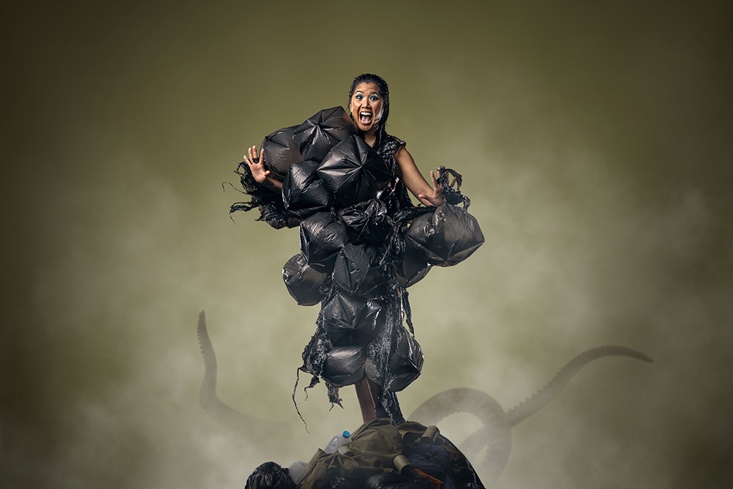
Maddie Nixon on Death, Drama and Deadlines
Maddie Nixon has never been one to pick just one medium. From the nuance of feature journalism to the raw intimacy of podcasting and the visceral thrill of theatre, her storytelling instinct thrives across forms. In WE’RE ALL GONNA DIE!, presented with the visual wizardry of Dead Puppet Society, she delivers a timely sci-fi eco-horror comedy that somehow manages to be as local as it is universal. With a journalist’s eye for what matters now and a playwright’s gift for theatricality, Nixon examines our collective dread of death with wit, heart and searing relevance. Here, she reflects on the power of storytelling to comfort and confront, the creative dilemmas of writing the end of the world, and why this deeply Brisbane show might just be her love letter to a city on the brink.
You’ve explored storytelling through journalism, podcasts, and plays. How does your journalistic instinct influence the pacing or dramaturgy of WE’RE ALL GONNA DIE!?
I started working on the play before I even started in journalism! But it’s definitely newsworthy. I wanted to write something timely and hyperlocal (but relevant to many). In theatre we ask, ‘why this play now’ and in journalism we ask, ‘what is newsworthy about this story’? Part of the reason I started working in feature journalism is because it’s just a faster paced, non-fiction version of a play – it’s all storytelling.
The show dives into our collective anxiety about death, but through a “sci-fi eco-horror comedy” lens. Did you find the process to be more like writing a eulogy, a protest, or a love letter?
Can I say all three? It’s a eulogy to what we’ve already lost, a protest about what we can still do and a love letter to Brisbane.
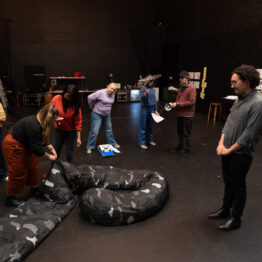
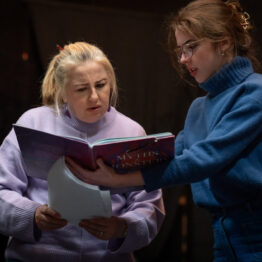
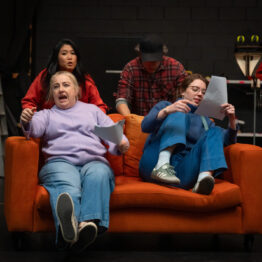
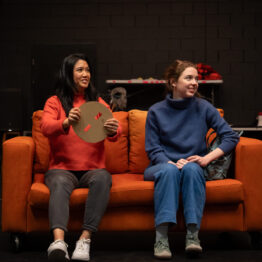
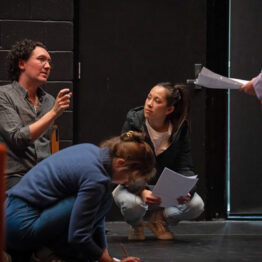
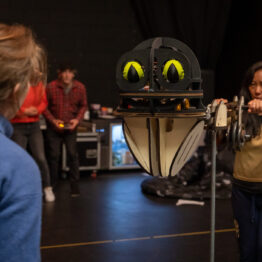
Writing for Dead Puppet Society involves visual metaphor and scale. What’s one moment in the show where you consciously broke traditional theatre form, and why?
I don’t tend to think about form as traditional or non-traditional when I write. I think more about what form is going to best serve the story. Working with Dave and Courtney has been incredibly collaborative in this manner. We all love theatricality. This isn’t a play-text as much as it’s a full-blown show.
In confronting mortality, what creative decision did you wrestle with the most and what did it teach you about your own fears or beliefs?
The end of the play. How do we leave the audience with a call to action without being overly didactic or dystopian?
With the climate of existential dread globally, what responsibility, if any, do you think theatre has in soothing, provoking, or redirecting that energy?
I think theatre can be a collective space to feel things deeply. A play isn’t going to change the world, but it can remind us of what we’re capable of when we leave the theatre.