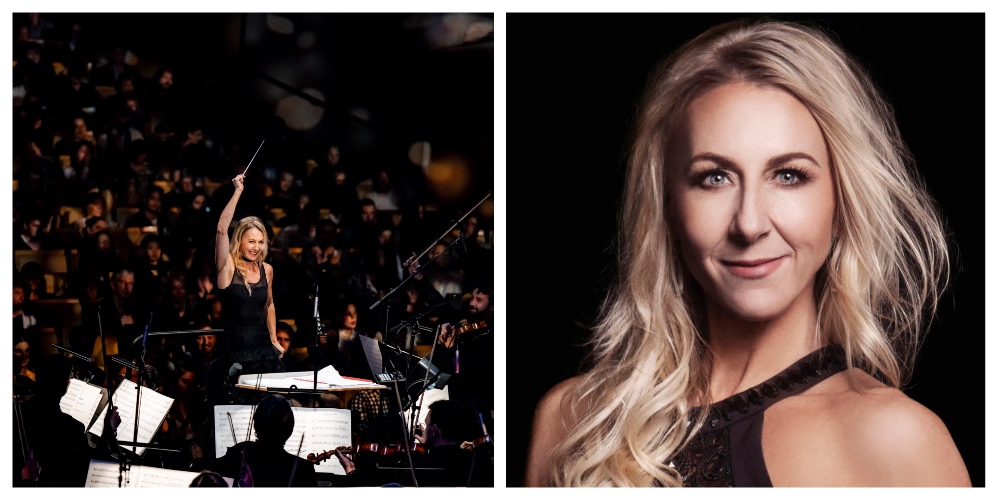
Vanessa Scammell Gives Us A Peek Behind the Baton of THE ART OF THE SCORE
When Vanessa Scammell raises her baton for Hans Zimmer’s evocative film scores, the audience embarks on a journey where cinematic storytelling and live orchestral magic intersect seamlessly. Renowned for her exceptional versatility and keen interpretative skills, Scammell brings a unique perspective to Zimmer’s compositions, transforming iconic film moments into dynamic concert experiences. Her insight into the nuances of Zimmer’s distinctive sound—from the relentless, brooding rhythms of the Batman Suite to the ethereal electronic textures of Inception—demonstrates an intuitive grasp of music’s power beyond the screen.
Scammell’s diverse career, spanning classic opera, ballet, and contemporary collaborations, has sharpened her ability to switch effortlessly between genres, embracing both traditional orchestral fluidity and modern rhythmic precision. Her deep understanding of Zimmer’s layered compositions highlights not just their cinematic origins but also their standalone emotional and structural brilliance, captivating audiences who may be experiencing the grandeur of live orchestral music for the first time.
In this exploration of her artistry and vision, Scammell shares valuable insights into how Zimmer’s groundbreaking approach is reshaping the symphonic repertoire, bridging genres, and opening new horizons for audiences eager for an immersive orchestral encounter.
1. Zimmer’s compositions are often deeply tied to visual storytelling. When preparing for The Art of the Score, how do you approach interpreting music that was originally designed to accompany film?
Having seen most of the films that are featured in the Zimmer programme it is easy to shift straight into the conceptual framework of what the composer was aiming for. For example the dark and brooding Batman Suite, it requires a relentless ostinato with the minor melodies building over the top as it progresses. The challenge is how to deftly. layer and build the music so they peak with maximum impact, and, although the music is designed for film, they stand alone as compositions.
2. Your portfolio reflects a remarkable versatility. How do you shift your mindset when moving from conducting classic opera like La traviata to the bold, modern soundscapes of Zimmer’s Inception or Interstellar?
Whereas opera requires fluidity, rubato and strong attention to the singers breath, the soundscapes of these works you mention are the complete opposite. Strict meter and precision. The colour and interest comes with the ‘Zimmer build’. My early experience in theatre and also when I was with the Australian ballet means that I have had extensive experience with keeping time. This helped enormously in the preparation of this programme.
3. Do you see film scores like Zimmer’s becoming more widely accepted in the traditional symphonic repertoire — and should they be?
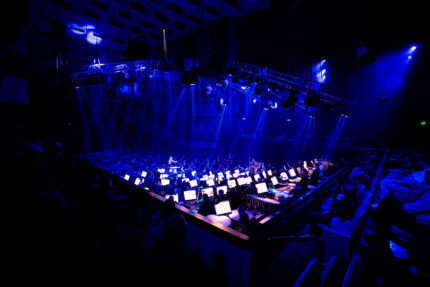
After seeing every concert packed to the rafters I think it is obvious that they deserve and need to be.
4. You’ve worked with a vast array of artists across genres — from Lea Salonga and Idina Menzel to The Bamboos and Birds of Tokyo. How does collaboration influence your interpretation of a score, especially when working with living composers or iconic brands like Hans Zimmer?
Again, it’s attention to detail. If I work with a band or popular artiest, I always listen to their originals first. I need to know how the work was originally conceived, or the sort of approach that the artist takes. Only then will I look at the orchestral score and determine what that can bring, what diMerences that will make, what needs to be drawn out to enhance the band or artist within an orchestral setting.
5. Hans Zimmer often blends electronic textures with traditional orchestration. How do you and the orchestra navigate that fusion live, especially in a concert setting where every nuance is front and centre?
Again, having worked in music theatre for so long, technology is not foreign to me. I began my career playing keyboards in shows. I understand what needs to be heard and focused on to keep a synchronised orchestral experience. I still can’t believe how eMective some of the keyboard sounds can be. The sound patch that is used in Zimmer’s Inception is so unique, so perfect and so Zimmer…You hear it and immediately know it’s his music! Just from a piano sample! The way he orchestrates means that so many of the eMects used blend seamlessly with the orchestra.
6. You’ve conducted scores for other film concerts like Blue Planet II andHarry Potter. What sets Zimmer’s music apart when performing it live —emotionally, rhythmically, or structurally?
Again, the Zimmer build! Use of osinati, gradual layering of orchestral instrumentation to get the maximum out of minimal. There are of course more melodic and traditional orchestrally conceived works. Pirates of the Caribbean, Lion King. The sheer beauty of these works hold up to the very best of any orchestral repertoire.
7. As a conductor and music director who’s broken so many boundaries in genre and format, what do you think the future of symphonic performance looks like — and how might projects like The Art of the Score influence that future?
It seems that curiosity is not dead! Audiences who go to these types of programs want to learn, want to listen to discussion about the nitty gritty of how such works come together, they come out feeling like they were ‘involved’ and a part of the show. The concert is hosted of course, and as a conductor, being part of the discussion and collaboration with the hosts somehow breaks down the barriers between the music and the audience.
8. You’ve said you enjoy the diversity of your career — is there a genre or collaboration still on your bucket list, perhaps inspired by your recent work with cinematic scores?
I would love to see a similar concept apply to a classical music program, perhaps something that involves both cinematic music and classical music, to show the audiences that it is all worth listening to. There is no distinction when it comes to great music.
9. Finally, when you raise the baton for Zimmer’s music, what do you hope the audience feels — especially those who may be hearing a live orchestra for the very frist time?
I would love the audience to feel joy.