
From Fringe to Broadway: How Operation Mincemeat Won Over America
When a scrappy, eccentric World War II musical launched in a small London venue in 2019, few would have predicted its eventual ascent to Broadway. Fewer still would have guessed that this resolutely British piece — brimming with dry humour, fast costume changes, and historical farce — would not only thrive in New York’s theatre capital but earn four Tony Award nominations in the process.
But Operation Mincemeat has always thrived on the unexpected.
Based on the stranger-than-fiction wartime ruse that used a corpse and forged documents to deceive Hitler, the show blends slapstick, satire, and sincerity in equal measure. Think Monty Python by way of The Producers, with a dash of Hamilton’s quick wit and staging. Created by the comedy-theatre troupe SpitLip, the production has evolved from humble beginnings to become a cult hit — complete with a devoted fandom known as “Mincefluencers.”
Yet even as it leapt from West End success to Broadway acclaim in April, Mincemeat remained stubbornly British. No major script rewrites, no pandering tweaks for an American audience — just one new addition: a wry declaration at the show’s start clarifying that yes, this madcap story is indeed true. It’s a nod to cultural translation more than adaptation, a single concession in an otherwise proudly offbeat theatrical export.
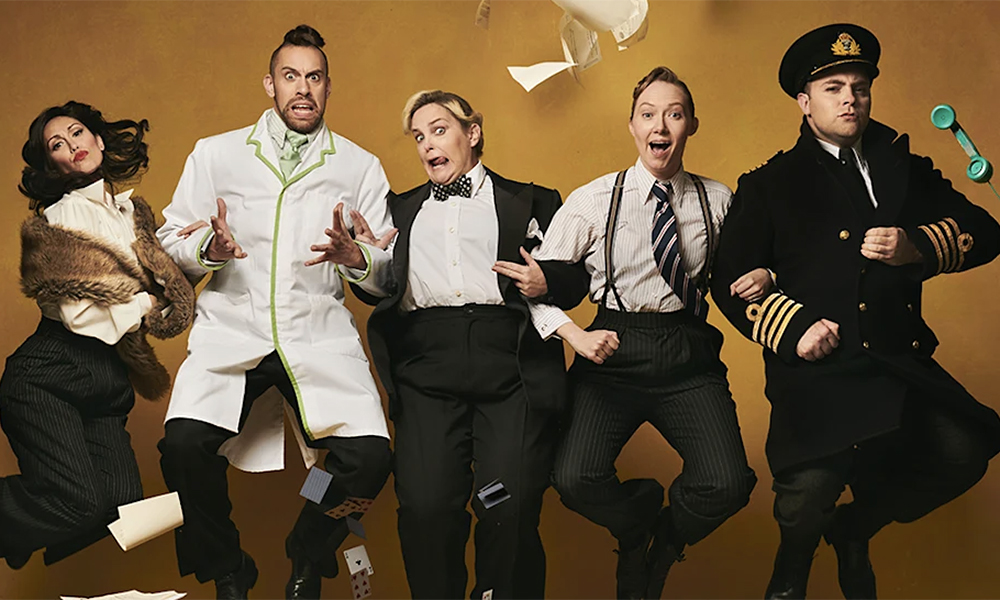
If the show seems larger-than-life, it’s partly because it is — or at least, it appears to be. In reality, five performers power the entire production, rotating through an astonishing 82 roles. The frantic, often gender-swapped character changes were born out of necessity during the troupe’s early days, when funds allowed for only two additional cast members. That creative workaround ultimately became the show’s signature — a chaotic yet precise theatrical feat made possible by a backstage crew orchestrating lightning-speed wig swaps, prop handoffs, and set shifts with military precision.
Behind the whirlwind of quick-changes and comedic absurdity, Mincemeat reveals an emotional core that audiences might not expect. Amid the camp and chaos, the show reflects on deeper themes of resistance, identity, and institutional power. One line in particular — a pointed warning about the dangers of blind obedience — has taken on new weight during the Broadway run, drawing spontaneous applause from American audiences. In London, it passed quickly in a blur of farce; in New York, it’s become a quiet moment of political resonance.
This shift in tone underscores Mincemeat’s surprising capacity to straddle the ridiculous and the real. It’s a show that laughs at war while honouring the absurd bravery behind its central mission. It entertains with breathless energy while offering sobering truths — all under the veil of song, dance, and delightful British absurdity.
As the show prepares for a global tour spanning the U.S., U.K., Australia, China, and New Zealand, its creators continue to ride the wave of an improbable journey. What began as a low-budget, long-shot musical now holds its own under Broadway’s bright lights — not in spite of its quirks, but because of them.
Operation Mincemeat may be deeply British, but its appeal is universal: a bold, bonkers reminder that sometimes the best way to tell the truth is with a wink, a quick change, and a catchy tune.