
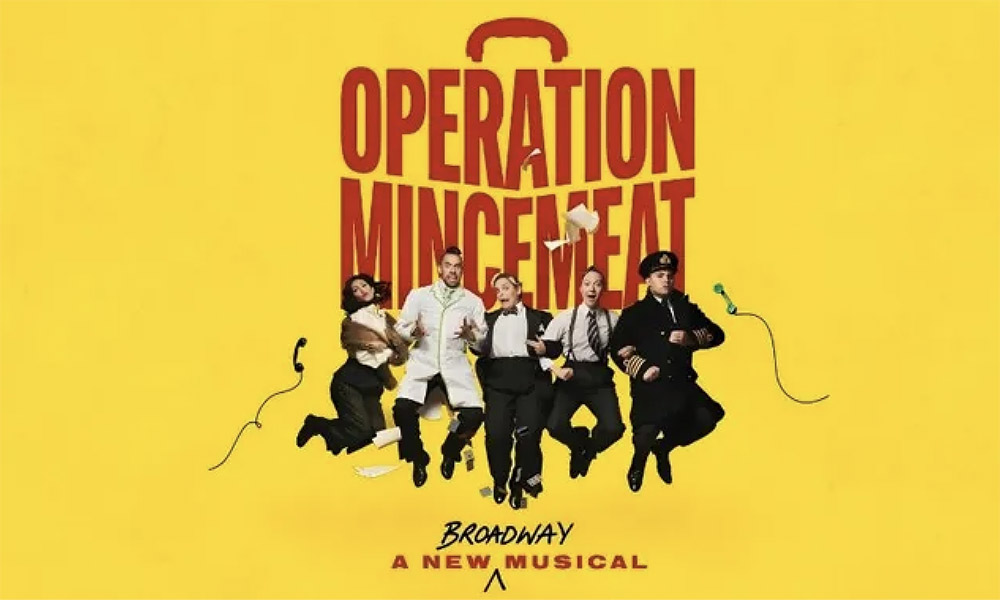
A Very British Invasion: The Daring WWII Ruse That Inspired a Hit Musical—and Now Heads to Broadway
On a bright November morning in Manhattan—one made all the more surreal by news that Donald Trump has just been elected the 47th President of the United States—an unlikely bit of British wartime history is taking center stage. Inside a sparsely furnished rehearsal studio on 8th Avenue, theatre director Rob Hastie leans forward on a folding chair, guiding a hopeful American actor through the nuanced meaning of a certain quintessentially British expletive.
It’s a fitting moment of transatlantic cultural translation for a show that is, in every sense, “very British.” The production in question? Operation Mincemeat, an offbeat musical about one of World War II’s most audacious spy operations—an elaborate ruse in which British intelligence used a homeless man’s corpse to dupe Adolf Hitler and alter the course of the war.
From Bestselling Book to Broadway Stage
The real-life story of Operation Mincemeat has been told many times before—through popular historian Ben Macintyre’s bestselling book, a star-studded Hollywood film featuring Colin Firth and Matthew Macfadyen, and even earlier accounts like The Man Who Never Was (a 1950s movie based on a 1953 memoir). Yet the musical version is something else entirely: an irreverent, genre-bending spectacle that opened in a tiny London theatre in 2019, before conquering the West End and, in a twist almost as implausible as its subject matter, now preparing to conquer Broadway.
Slated to open on 15 February 2025 at the John Golden Theatre, Operation Mincemeat marks a massive leap for its creators, a small collective of friends and relative unknowns who met as students at Warwick University. With a limited budget—and practically no formal musical-theatre training—they’ve catapulted a tale of British derring-do and stiff upper lips into the hearts of London audiences. Now, they hope to do the same in New York.
The Audacity of a Wartime Hoax
Originally hatched in 1943 by MI5 and Royal Navy officers, Operation Mincemeat involved floating a corpse—dressed as a Royal Marines officer—onto the Spanish coast. The body carried “top-secret” documents suggesting the Allies would invade Greece, not Sicily. Adolf Hitler swallowed the bait, redeploying forces away from Sicily and saving countless Allied lives when the real invasion took place there instead.
Macintyre, whose 2010 book Operation Mincemeat became a bestseller, calls it “the boldest, strangest and most successful deception” of World War II. “They went completely over the top,” he says. “They stuffed ‘wallet litter’ into the corpse’s pockets—stamps, receipts, even a fake letter from a fiancée—just to sell this fictional identity to the Germans.”
The story’s inherent drama, mixed with its eccentric British humor, made it irresistible not only to filmmakers but also to a young theatrical troupe named SpitLip, who stumbled upon the scheme via a podcast episode.
From Camden to the West End—And Beyond
The first iteration of Operation Mincemeat: The Musical debuted in 2019 at the 80-seat New Diorama Theatre in north London. Written by four friends—Natasha Hodgson, Zoë Roberts, David Cumming, and Felix Hagan—it blended comedic sketches, catchy show tunes, and a playful irreverence toward its subject matter.
Their approach mixes swinging sea shanties and rock-ballad love duets, reimagined as cheeky, gender-bending performances. Five actors slip in and out of 87 roles, portraying everyone from Cockney shoeshine kids to Nazi officers in a techno chorus line. The cast itself, lacking any major West End stars, relied on comedic timing, energy, and a slightly anarchic spirit.
Word of mouth and rave reviews propelled Operation Mincemeat into bigger venues across London—eventually landing at the Fortune Theatre in the West End, where it began a run that extended no fewer than 12 times. Critics were charmed. Audiences kept coming back. Soon, celebrities like Robert De Niro, Colin Firth, Phoebe Waller-Bridge, and Ian McKellen were seen in the seats.
A Very British Affair Goes Stateside
Flash-forward to a rehearsal studio in New York, November 2024. The city is grappling with a new political reality—Donald Trump’s return to the presidency—while British creatives wrestle with how to explain “Cholmondeley” (pronounced “Chumly”) to American actors. The comedic mismatches keep piling up, from transliterating “snakes and ladders” to “chutes and ladders,” to teaching Americans how to embody the quiet, apologetic British manner.
Then there’s the matter of potential political landmines. The script, after all, includes a moment when Nazi chorus girls belt out, “Make America Great Again!” in a pointed wink to real-world politics. The team debates whether that line will remain in the Broadway run, concluding that, for now, it stays—unless it feels too risky once they see how New York audiences respond in previews.
The Montagu Legacy
For Sarah Montagu, granddaughter of real-life mastermind Ewen Montagu, the musical’s brash comedic tone is oddly fitting. She believes her grandfather—decorated in WWII for this very operation—would appreciate the irreverence.
While Colin Firth’s dramatic film adaptation Operation Mincemeat skewed closer to a traditional war story, the musical finds its heart in the tension between the comedic spectacle and the deep pathos of war. In “Dear Bill,” the love letter discovered on the corpse becomes a poignant refrain: “Why did we go and meet in the middle of a war?”
Taking a Risk on Broadway
The show’s producer, Jon Thoday, admits there were doubters when it came to raising funds for the Broadway transfer. Critics wondered if the production was “too British,” or if it needed a high-profile American star. Despite these concerns, the success of Operation Mincemeat in London—plus enthusiastic feedback from visiting American tourists—helped to quell some fears.
Still, the stakes are enormous: while mounting the musical in London cost around £2 million, taking it to Broadway will run closer to $11.5 million. Despite the daunting numbers, Thoday and the cast remain hopeful that their brand of witty, weird, and unapologetically British theatre will resonate in the U.S.
A Playful Approach to a Serious Story
Regardless of financial forecasts or uncertain political climates, Operation Mincemeat carries something that’s increasingly rare—a sense of fun and mischief that defies conventional expectations. Far from a solemn war drama, it’s a high-energy romp where the comedic and the tragic find curious harmony.
As auditions wrap up and Hastie finalizes his new team of understudies—still occasionally clarifying baffling British turns of phrase—Operation Mincemeat looks poised to bring its improbable blend of history and hilarity to Broadway. In a crowded season stacked with Hollywood icons and classic Shakespeare revivals, a musical about a homeless corpse duping the Nazis could very well become the most surprising theatrical juggernaut of the year.
Curtain Up
Come 15 February 2025, the lights will dim in the John Golden Theatre, and American audiences will get their first taste of this “very British invasion.” Will they embrace the gender-bending comedic anthems, the brash Montagu, and the awkward genius of Charles “Chumly” Cholmondeley? Will jokes about “bollocks” and “rotters” land on 44th Street as successfully as they did on Drury Lane?
If history is any guide, Operation Mincemeat—once just another top-secret mission filed away by MI5—now has a life of its own, shape-shifting from dusty war records into a cross-genre phenomenon. From classic cinema to comedic musical, it’s a testament to the power of a great story—and the allure of thoroughly British wit—to captivate audiences worldwide.
BOX: WHAT IS OPERATION MINCEMEAT?
-
The Ruse: In 1943, British intelligence placed false documents on a corpse dressed as a Royal Marine, which was then floated off the coast of Spain.
-
The Objective: Trick Nazi Germany into believing the Allies were set to invade Greece rather than Sicily.
-
The Impact: Hitler took the bait, redeployed his forces, and helped pave the way for a successful Allied invasion of Sicily—saving countless lives.
-
The Aftermath: The operation remained classified for years, eventually surfacing in memoirs, historical accounts, films, and most recently, a hit musical.